

Written by: Sonia Strueby, M.A., CCC-SLP, Founder of Enrichment Therapy & Learning Center Originally Published: April 10, 2024 | Updated: August 19, 2026
Most babies are ready to start solid foods around six months old, but the right time depends more on your baby’s individual development than on the calendar. The American Academy of Pediatrics recommends introducing foods other than breast milk or formula at about six months, once your baby shows specific developmental skills. Below are the four key readiness signs to look for, plus how to get started safely once your baby is ready.
What Are the Signs My Baby Is Ready for Solid Foods?
Look for these four skills together, not just your baby’s age, before introducing solids.
1. Baby Can Sit Up on Their Own
Your baby should be able to sit independently, or with minimal support in a high chair, before starting solids. Upright posture keeps the airway aligned, which makes swallowing safer and lowers the risk of choking.
2. Your Baby Has Strong Neck Control
If your baby can’t hold their head steady and controlled, they don’t yet have the stability needed to coordinate a safe swallow. Head and neck control usually develops alongside sitting, so these two skills tend to show up around the same time.
3. They Can Bring Objects to Their Mouth
When your baby reaches for toys and brings them to their mouth, they’re practicing the same hand-to-mouth coordination they’ll need to eventually self-feed. This skill also shows their oral motor system is maturing and ready for new sensations.
4. Your Baby Is Showing an Interest in Food
Watching you closely while you eat, reaching for food on your plate, or leaning in and opening their mouth are all signs of behavioral readiness. This interest often means your baby’s digestive system is maturing too, since babies typically show curiosity about food around the same time they’re developmentally ready to digest it.
Why Do These Skills Matter?
These four skills aren’t just a checklist, they work together to keep your baby safe. Sitting and neck control protect the airway during swallowing, hand-to-mouth coordination supports self-feeding down the road, and genuine interest in food signals your baby is developmentally, not just chronologically, ready. Starting before these skills are in place can increase the risk of choking or a frustrating feeding experience for both of you.
How Do I Get Started Once My Baby Shows These Signs?
Once your baby has these skills, here’s how to introduce solids safely:
- Start with single-ingredient, smooth purees or well-cooked, soft finger foods
- Introduce one new food at a time and wait 3-5 days before adding another, so you can watch for any reaction
- Offer iron-rich foods early, since babies’ iron stores begin to decrease around 6 months
- Avoid common choking hazards such as whole grapes, nuts, popcorn, and hard raw vegetables
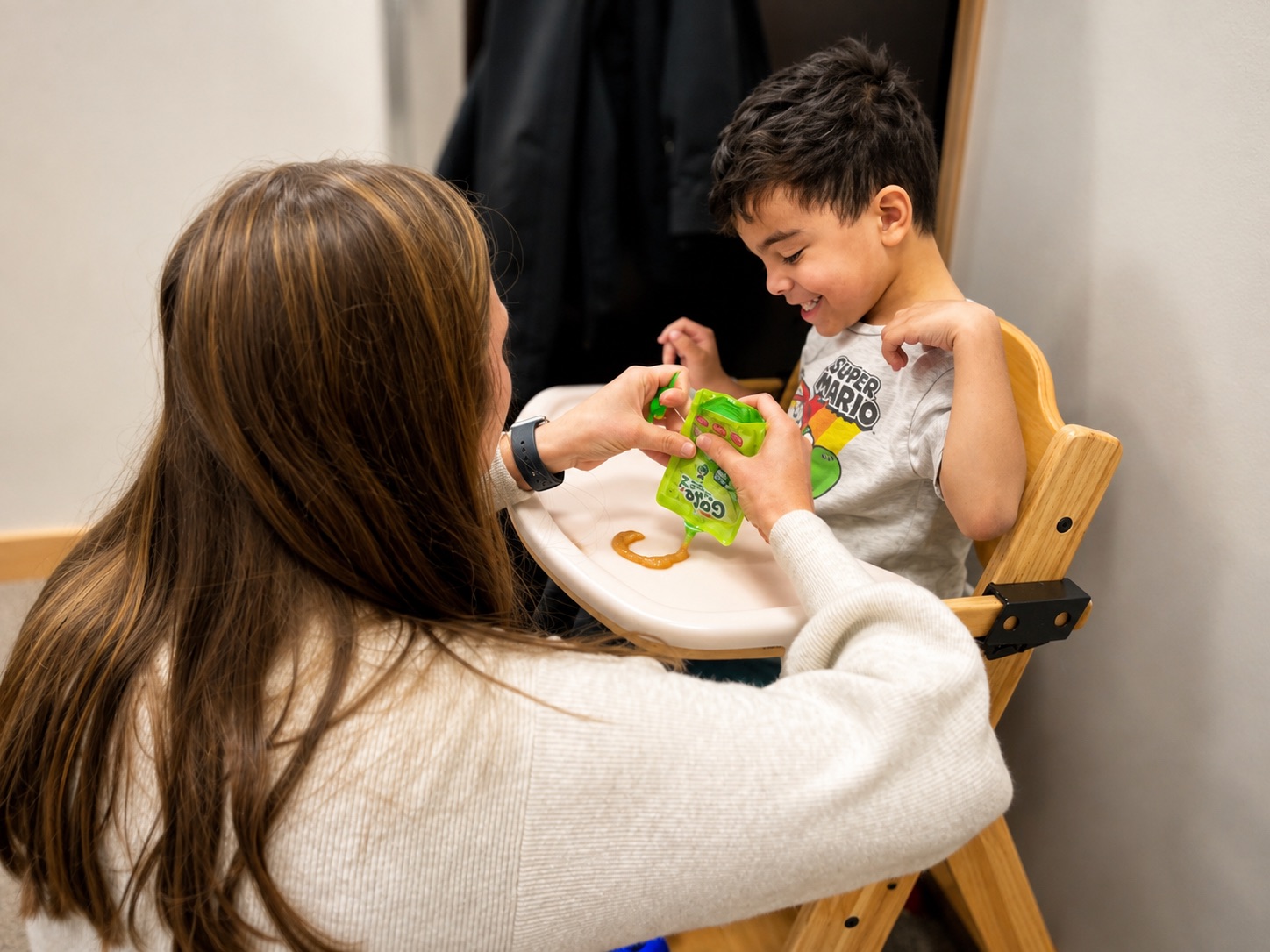
- Always have your baby seated upright in a supportive high chair during meals, never feed a baby who is reclined
- Let your baby explore food at their own pace. Messy meals are a normal part of learning to eat
What Feeding Challenges Should I Watch For?
Some gagging is a normal, protective reflex as babies learn to manage new textures, and it usually looks and sounds different from choking. However, a few patterns are worth paying closer attention to:
- Frequent coughing, gagging, or watery eyes during most meals
- Consistent refusal of all textures beyond thin purees well past 9-10 months
- Long, stressful mealtimes or a baby who arches away and refuses to eat
- Any signs of true choking, such as difficulty breathing, or a change in skin color
When Should I Seek Help?
If your baby is struggling to reach these readiness milestones, showing ongoing difficulty progressing to new textures, or you’re seeing any of the feeding challenges above, it’s a good time to reach out. Feeding difficulties are common and very treatable with the right support, and getting guidance early can help mealtimes feel positive again for the whole family.
0 Comments