

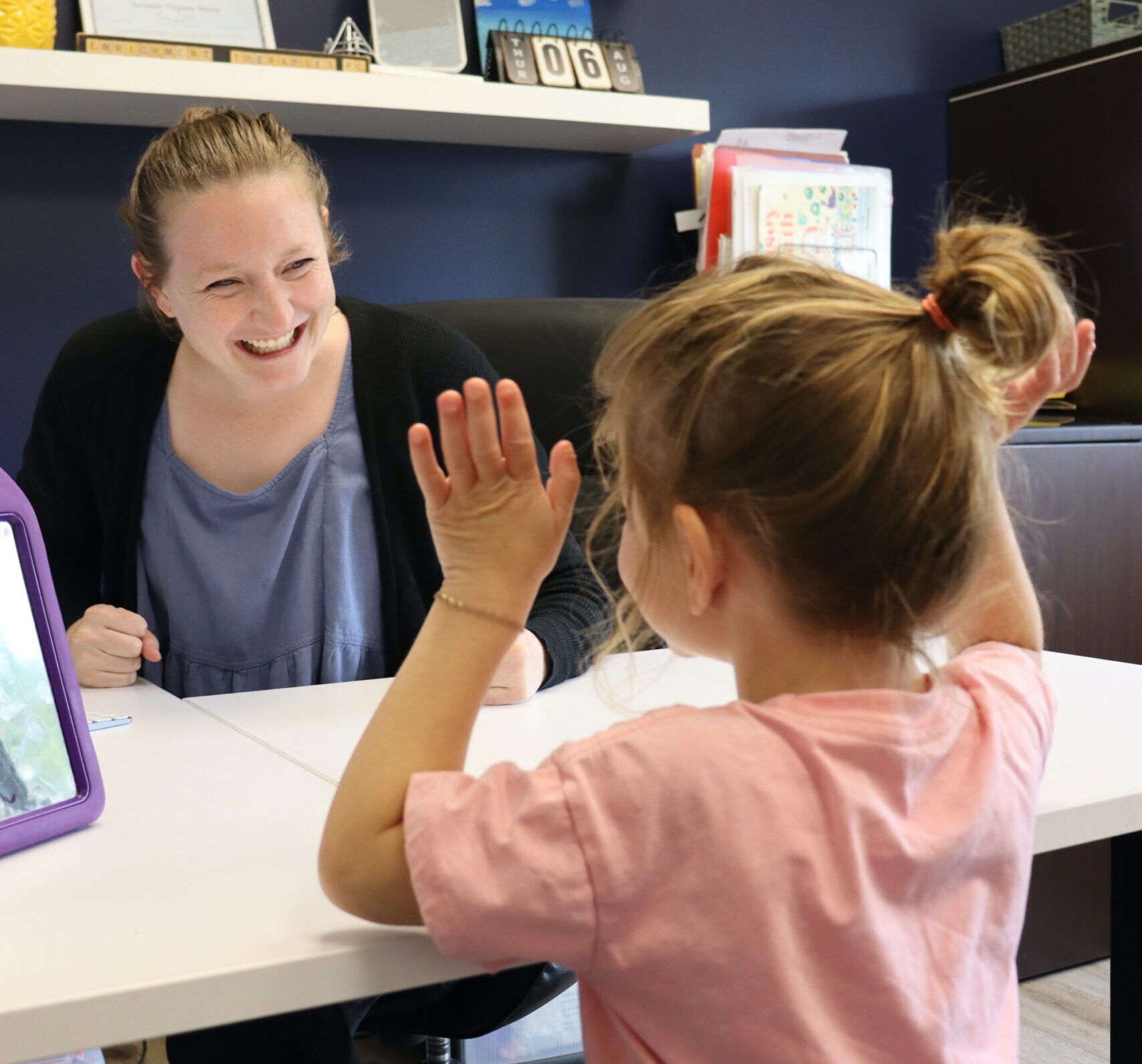
As a speech-language pathologist, one of the most common questions I hear from parents is, “What’s the best way to help my child practice speech sounds at home?” It’s a vital question because consistent home practice is one of the most important factors in a child’s progress.
Your role as your child’s practice partner is essential. The more opportunities a child has to correctly produce their target sounds, the more muscle memory and confidence they build for clear speech.
This guide explains how speech-language pathologists work on speech sounds and provides simple strategies and games to make your at-home practice sessions effective, positive, and successful.
How Do Speech-Language Pathologists Work on Speech Sounds?
According to ASHA’s practice guidance on speech sound disorders, articulation therapy typically follows a step-by-step hierarchy. Depending on your child’s current skill level, therapy doesn’t always start at step one.
- Isolation: saying the target sound all by itself, such as “sssss”
- Syllable: adding a vowel to the sound, such as “so”
- Word: saying the sound inside a word, such as “soap”
- Phrase: using the word in a short phrase, such as “use the soap”
- Modeled sentence: the SLP or parent says a sentence and the child repeats it, such as “I use soap when I wash my hands”
- Generated sentence: the child comes up with their own sentence using the target word
- Conversation: the SLP or parent listens for the sound during natural conversation to see whether the child uses it correctly on their own
Sounds also show up in different positions within words, not just at the beginning. A child working on /s/, for example, might need to practice it at the start of a word (“soap”), in the middle (“dresser”), and at the end (“floss”). Your child’s SLP will let you know exactly which level and word position to target, along with materials like picture cards, word lists, or sentence prompts.
Three Core Strategies for At-Home Practice
When your SLP sends home a list of sounds or words, use these techniques to practice them.
Provide a Clear Model (Show and Tell)
This is the most direct way to teach a sound. Say the target word or phrase yourself, then ask your child to repeat it.
Key tip: Have your child look directly at your mouth. The visual cue of seeing how your lips, teeth, and tongue move is often just as important as hearing the sound itself.
Use Written Cues for Readers
For children who are beginning to read, seeing the print word can be a powerful tool for self-correction.
Key tip: Write down a practice word and use a highlighter on the letter (or letters) that make the target sound. For the “sh” sound, for example, highlight “sh” in the word “shoe.” This visual aid helps your child focus on the specific sound they need to produce.
Give Gentle, Specific Feedback
When your child makes a mistake (for example, says “wabbit” for “rabbit”), your response is crucial. Instead of just saying “No,” guide them toward self-correction.
Example: You could say, “That was a great try! I heard the ‘w’ sound. Let’s try it again with your ‘r’ sound. Watch me: /r/ /r/ rabbit.” This validates their effort while gently redirecting them, giving them a chance to fix the error themselves.
Fun Ways to Practice Speech Sounds at Home
Articulation practice can piggyback on almost any activity your child already enjoys. A few easy ways to work it in:
- Play a game: have your child say their target sound three times before each turn.
- Matching: ask your SLP for a duplicate set of picture cards, cut them apart, and lay them face down. Every time your child makes a match, have them say the word three times.
- Hide and seek: hide cut-up picture cards around a room, and each time your child finds one, say the word three times together. It works just as well in reverse, with your child hiding the cards while you search.
- Draw from a hat: drop picture cards in a hat or bowl and take turns drawing one out, saying each word three times.
- Make a craft: before handing over a crayon, marker, or pair of scissors, have your child say their sound three times.
If you want more picture cards or fresh ideas to keep practice fun, just ask your child’s SLP.
Tips for Making Practice Time Go Smoothly
- Reinforce the sound, not the letter: say “That was such a great ‘sss’ sound!” rather than “That was a great ‘S.'” Kids are working on producing a sound, not naming a letter.
- If a word isn’t clicking, move on: that’s completely normal, so praise the effort with “Great trying! You’re working so hard!” Getting stuck on one word can turn practice into a frustrating experience fast.
- Know when to stop: if your child hasn’t gotten the target sound after three to five tries, wrap up for now and let your SLP know. That is useful information for adjusting the plan, not a sign anything went wrong.
Setting the Stage for Success
The environment you practice in matters. To make your sessions as effective as possible, create a focused and positive space.
- Find a quiet space: Turn off the TV, music, and other background noise so your child can clearly hear the sounds.
- Eliminate distractions: Put away toys, tablets, and other devices during your short practice time.
- Keep it short and sweet: Daily practice for 5 to 10 minutes tends to work better than one long, infrequent session.
- Stay positive: Use a simple reward system, like a sticker chart, to celebrate effort and completion. Keeping it fun is the key to keeping your child engaged.
If you’re ever unsure whether your child’s speech development is on track, you can review our Development of Speech Sounds chart for helpful guidelines.
Frequently Asked Questions
How long and how often should we practice?
Consistency matters more than duration. Aim for one or two short sessions of 5 to 10 minutes every day. This builds routine and prevents burnout for both you and your child.
What if my child gets frustrated or refuses to practice?
Stop the session before true frustration sets in, and keep the tone light and playful. Try turning the word list into a game like Go Fish, Memory, or a scavenger hunt. If refusal becomes a pattern, discuss it with your SLP, who can suggest ideas tailored to your child’s personality.
Should I correct every mistake I hear throughout the day?
No. Constant correction can be discouraging and make a child hesitant to speak. Save direct feedback for your short practice times. Outside of that, simply model the correct production yourself. If they say, “Look at the wabbit,” you can respond, “Wow, it is a fast rabbit!”
My child’s SLP sent home a list of words. What’s the best way to use it?
Use the list as a foundation for the strategies in this guide. Don’t just drill the words. Pick a few to focus on each session and work them into fun activities. The goal is to make practice feel less like a test and more like a game.
How ETLC Can Help
Home practice helps most when it targets the right sounds in the right order. A therapist can show you what to practice and how, so your time counts. Enrichment Therapy & Learning Center has locations in Johnston and North Liberty, IA, with virtual services also available.
Learn more about speech sound disorder support at ETLC or schedule a free consultation to talk with a member of our team.
You may also find these pages helpful:
About the Author
Sonia Strueby, M.A., CCC-SLP, is the founder of Enrichment Therapy & Learning Center. With over 25 years of experience as a speech-language pathologist, Sonia has dedicated her career to helping children overcome complex communication and academic challenges. She has advanced training and a special focus on treating dyslexia and childhood apraxia of speech, and she is passionate about providing families with a clear path to success.


0 Comments