

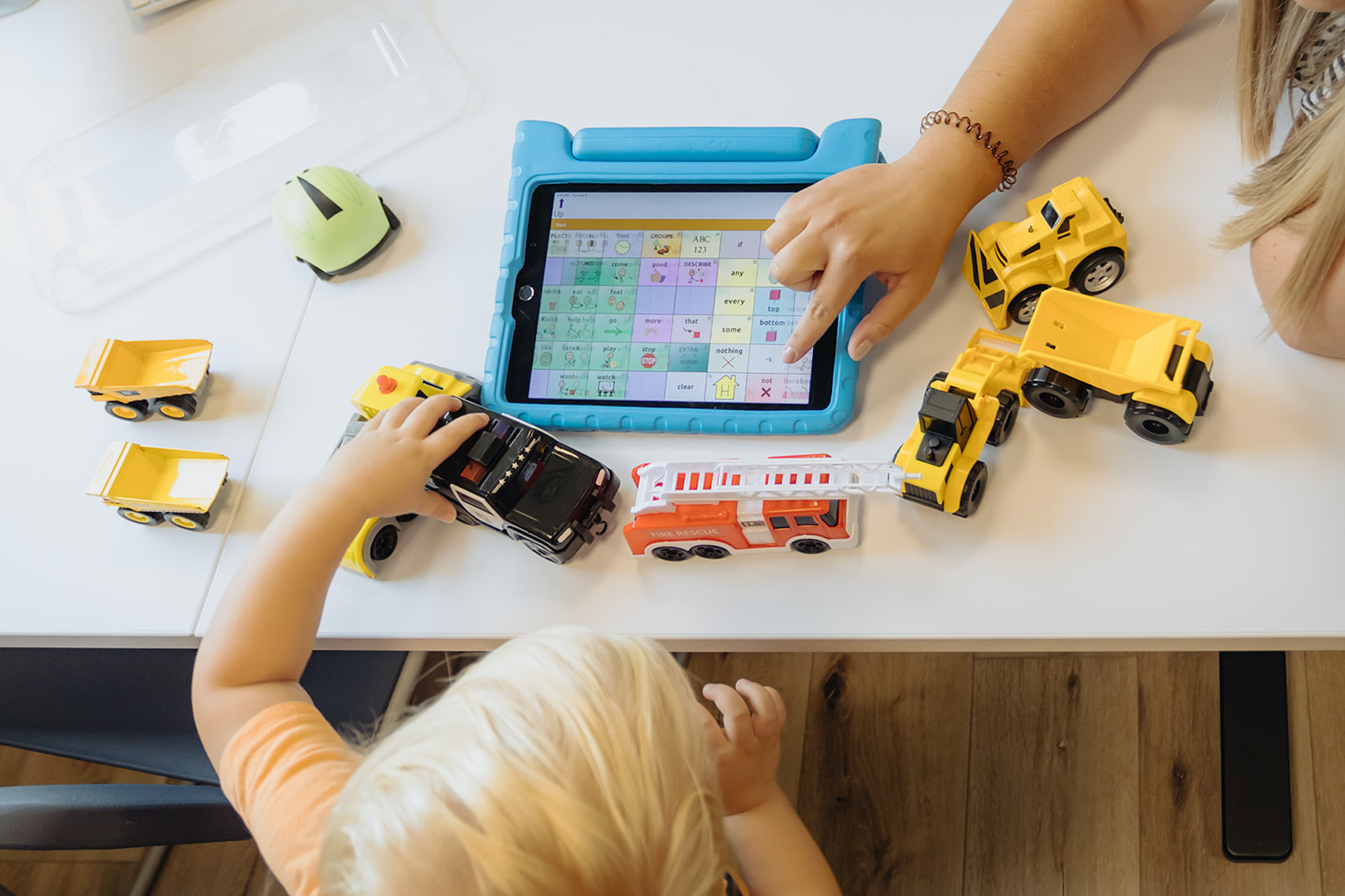
Do you find it hard to support your child’s speech and language at home? You are not alone. One of the best ways to build language is through play, because young children learn language best during natural routines. You do not need fancy toys. Here are five toys to target language skills at home, with ideas for what to say and do with each.
5 Toys to Target Language Skills at Home
1. Farm With Animals
Farm animals are fun and engaging. You can target many action words, including eat, sleep, play, open, and close. Model single words or two-word phrases, such as “play,” “eat apple,” “pig sleeping,” and “open door.” You can also label the animals and practice your best animal sounds.
2. Mr. Potato Head
This toy is great for body parts. While you put it together, label the eyes, nose, arm, and feet. You can also target on and off, such as “nose on.” In addition, use sense words like smell, see, and touch, and adjectives like “blue eyes” and “long arm.”
3. Bubbles
Because bubbles are a hit with kids of all ages, you can play indoors or out. Model verbs such as open, go, and blow. Also, model pronouns with verbs, such as “I blow” and “You blow.” You can also take the wand out and put it in. Bubbles also work well for turn-taking, with phrases like “my turn” and “your turn.”
4. Toy Food
Young kids love toy food, and it can target many skills. Label the food and ask what your child wants. Yes or no questions and wh questions work well, such as “Do you want the apple?” and “What color is the apple?” Model “eat banana,” “more cookies,” and “cut pizza.” Other verbs to try are stir, scoop, and drink. You can also comment, such as “It’s hot” or “I like it.”
5. Toy Vehicles
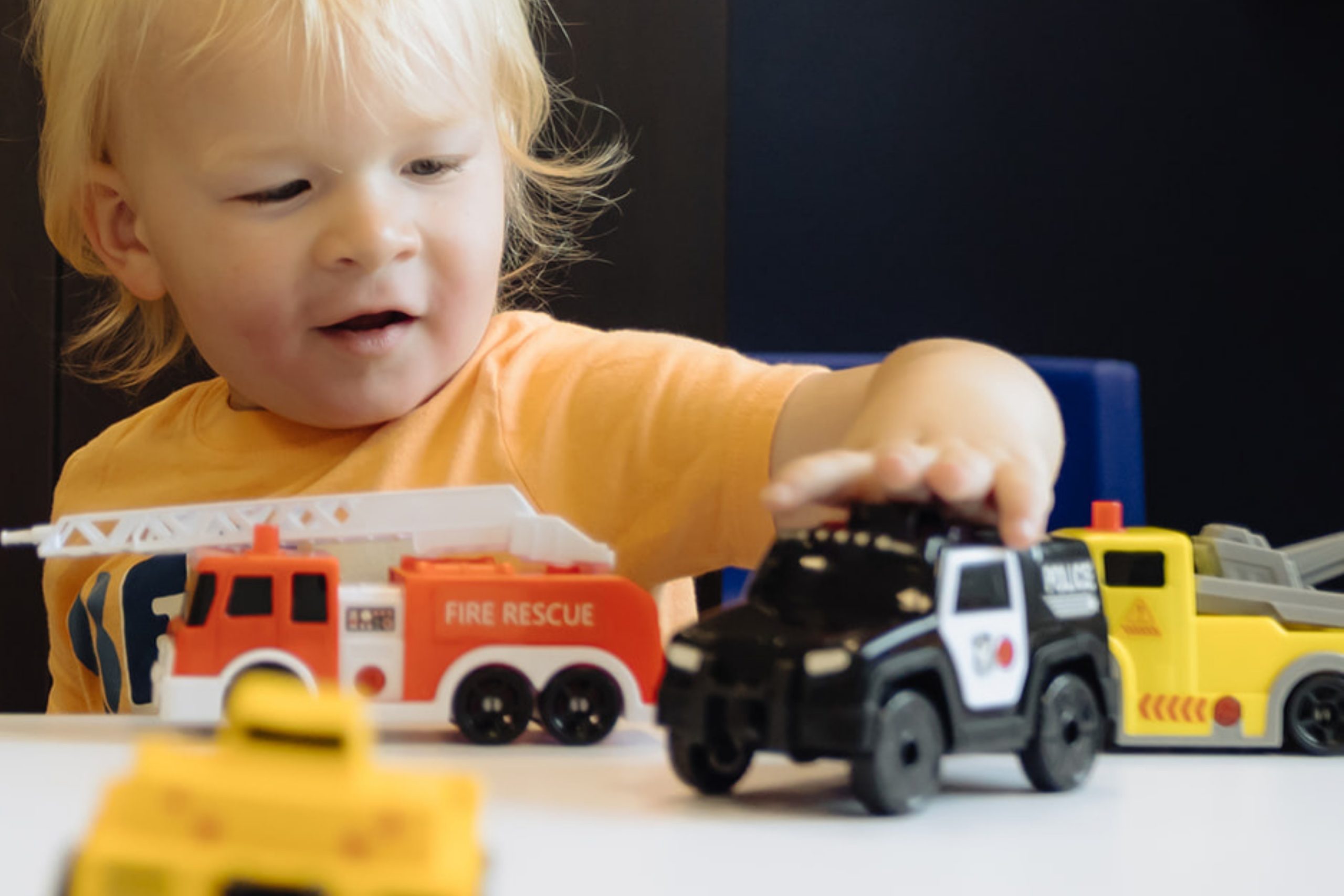
Trains and cars are fun and motivating. First, build ramps so the vehicles go up or down. Then see which vehicles go fast and which go slow, and make them go or stop. Model vehicle noises like “vroom,” “beep,” and “choo choo.”
Frequently Asked Questions
What toys are best for building language at home?
Toys that allow lots of action and talking work best, such as farm animals, Mr. Potato Head, bubbles, toy food, and vehicles.
How do I use toys to teach language?
First, label items, model short phrases, and follow your child’s lead. Repeat key words in a natural way as you play.
When should I talk to a speech-language pathologist?
If your child is not using words or phrases as expected for their age, a speech-language evaluation can help. Our guide to language development by age shows what to expect.
How ETLC Can Help
If you think your child could benefit from extra support with speech and language, our team can help. Enrichment Therapy & Learning Center has locations in Johnston and North Liberty, IA, with virtual services also available.
Learn more about language therapy at ETLC or schedule a free consultation to talk with a member of our team.
You may also find these pages helpful:
About the Author
Sonia Strueby, M.A., CCC-SLP, is the founder of Enrichment Therapy & Learning Center. With over 25 years of experience as a speech-language pathologist, Sonia has dedicated her career to helping children overcome complex communication and academic challenges. She has advanced training and a special focus on treating dyslexia and childhood apraxia of speech, and she is passionate about providing families with a clear path to success.
0 Comments