


Long summer days can leave parents searching for quality things to do with their kids. The good news is that summer learning games don’t need to be complicated, and they can fit into the activities your family already enjoys. Here are simple summer learning games for reading, math, writing, and social skills, plus sensory play ideas for younger children.
Summer Learning Games for Reading
Reading games are fun and easy to create. For example is a life-sized board game. First, use colored sheets of card stock or laminated paper to make a winding trail through an open area of your home or on your driveway. Next, have your child roll dice to decide how many spaces to move. Then, on each turn, they read a few sight words from their list.
As a result, this is a simple way to combine movement with learning. You can use a life-sized board game for many skills, like vocabulary, spelling, and comprehension questions.
Summer Learning Games for Math
Students often enjoy Math Ball, and all you need is a ball. It is most fun with several players. First, sit or stand in a circle, and choose what to count by, such as 2’s, 5’s, or 10’s. If your child is working on a certain fact family, use the game to help them learn those multiples.
For example, if you are counting by multiples of 3, one player says “1” and throws the ball to someone else. The next player says “2,” and so on. Then, when a player reaches a multiple of 3, they say “buzz” instead of the number. If someone misses it, the game starts over. This way, it helps children picture number families in their minds.
Summer Learning Games for Writing
Cloud watching is a summer favorite, and it is a great way to get creative juices flowing. Next, take time to find shapes in the clouds and begin to build a story. For example, if you spot a carrot or a pirate ship, you can turn it into a writing prompt like, “There once was a pirate ship, filled to the brim with golden carrots, sailing across the deep blue sea. As they neared the shore, suddenly…” Because of this, kids find these wacky prompts fun and engaging.
Summer Learning Games for Social Skills
With a little effort, any game or activity can become a chance to practice social skills. Summer is the perfect time to try new things, like cooking or kitchen experiments, and to bring out the board games that have sat in the closet since winter break. For example, experiments, recipes, and board games all offer chances to practice following directions, taking turns, and solving conflicts.
They also teach that, even when planned well, not every recipe or experiment turns out, and that is okay. Learning to handle that disappointment is a valuable skill.
Sensory Play for Younger Children
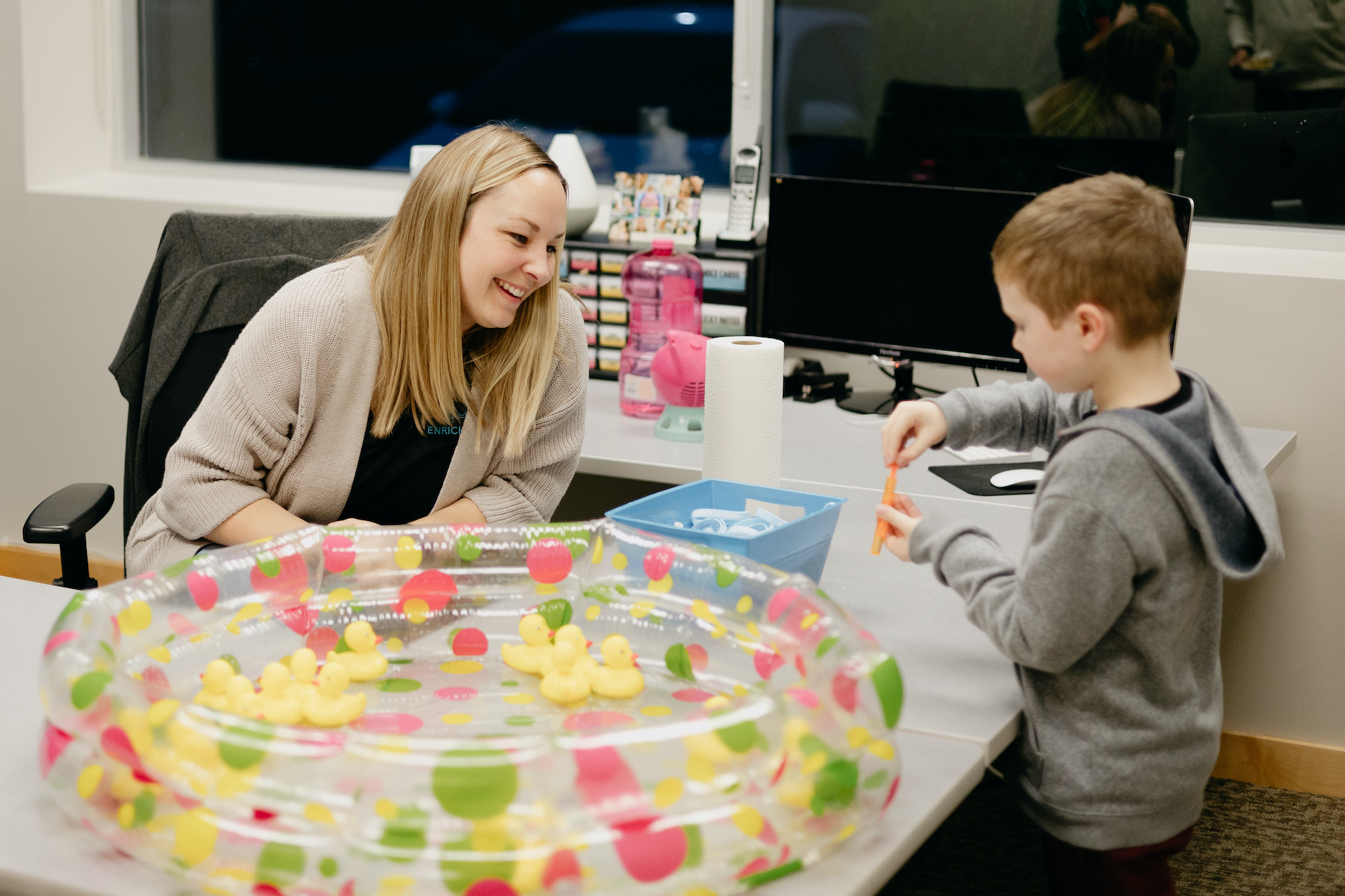
Is your child obsessed with slime? Or maybe you can’t get them out of the sandbox? Playing with different materials helps children develop their senses and encourages exploration, creativity, and imagination. Summer is a great time to try sensory activities, because you can take the mess outside. If you spread a plastic drop cloth or tablecloth on the floor, you can also do them inside on a rainy day. Here are some sensory bin ideas to try:
- Beans or rice: fill a tub with dried beans or rice and hide small plastic toys in it. Add scoops and shovels so your child can bury and dig up the toys.
- Dirt and rocks: fill a tub with dirt and rocks and add toy cars and monster trucks.
- Animal or car wash: set out a tub of dirt and a tub of soapy water, plus toy animals, toothbrushes, and towels so your child can wash the dirty animals. Toy cars work well for a car wash.
- Pasta: fill a tub with dried or cooked (and cooled) pasta and add toy dishes, silverware, and plastic food.
- Pom poms or cotton balls: add tweezers or kiddie chopsticks and small containers to build fine motor skills.
How to Make Kiddie Chopsticks
You will need two wooden chopsticks from a takeout restaurant or two pencils, a small piece of paper, and a rubber band. Roll the paper tightly and place it between the two chopsticks near one end. Then wrap the rubber band around both sticks right above the paper, closer to the short end.
Frequently Asked Questions
How long should summer learning games last?
Short is fine, since ten to fifteen minutes of a game your child enjoys is usually better than a long session that leads to frustration.
What if my child doesn’t want to play a learning game?
Offer a choice between two games, or let your child lead. Also, join in yourself, since kids are more likely to take part when a parent is playing too.
Are sensory bins safe for young children?
Always supervise sensory play, and avoid small items that could be choking hazards for children who still mouth objects, and choose bin fillers that are safe if tasted.
How ETLC Can Help
These summer learning games can add a splash of inspiration to your summer break. If your child needs more support with reading, math, writing, or social skills, our team is here to help. Enrichment Therapy & Learning Center has locations in Johnston and North Liberty, IA, with virtual services also available.
Learn more about tutoring and academic support at ETLC or schedule a free consultation to talk with a member of our team.
You may also find these pages helpful:
- How to Prevent the Summer Slide: 12 Ways to Keep Kids Learning
- Summer Structure for Kids Without Losing the Fun
- Family Game Night Ideas for Building Language Skills
About the Author
Sonia Strueby, M.A., CCC-SLP, is the founder of Enrichment Therapy & Learning Center. With over 25 years of experience as a speech-language pathologist, Sonia has dedicated her career to helping children overcome complex communication and academic challenges. She has advanced training and a special focus on treating dyslexia and childhood apraxia of speech, and she is passionate about providing families with a clear path to success.


0 Comments