

Written by: Sonia Strueby, M.A., CCC-SLP, Founder of Enrichment Therapy & Learning Center
Originally Published: March 20, 2017 | Updated: August 31, 2026
B and d confusion is one of the most common letter mix-ups in early readers, and in most cases, it’s a normal part of learning to read rather than a red flag. Because “b” and “d” are mirror images of each other, young children’s brains have to work harder to tell them apart than they do with most other letters. The good news is that a few simple, multisensory tricks can help your child build that distinction quickly. Below are three go-to strategies, plus how to know if it’s time to ask for extra support.
Why Does B and D Confusion Happen?
Early readers are still learning that letter orientation matters. A chair is a chair whether it faces left or right, but with letters, direction changes the sound completely. Since “b” and “d” are the same shape simply flipped, they’re the pair most likely to trip kids up, especially between ages 4 and 7, while visual discrimination and reading skills are still developing.
Is B and D Confusion a Sign of Dyslexia?
Not on its own. Letter reversals are extremely common in kindergarten and first grade, and most children outgrow them with practice as their reading skills mature.
According to reading experts featured by Reading Rockets, there’s no evidence that children with dyslexia actually see letters backwards. Reading specialists better identify dyslexia by difficulty with the sounds inside words, such as struggling to hear that “mat” is made up of three separate sounds (/m/ /a/ /t/), not by reversals alone. That said, if reversals are frequent, persist past age 7-8, or come along with other reading struggles, it’s worth having your child evaluated for signs of dyslexia.
3 Tricks to Help Your Child Tell “b” and “d” Apart
Try one or two of these, then practice consistently. Repetition, not the number of tricks, is what makes it stick.
- The Bat and Ball Trick. Explain that the letter “b” is made up of two objects: a bat and a ball. As you write the letter, say “bat-ball, buh,” like this: “First you grab the bat, then you hit the ball.” Writing the letter while saying the phrase out loud connects the shape, the sound, and the motion together.
- The Doorknob and Door Trick. Explain that the letter “d” is made up of two objects: a doorknob and a door. As you write it, say “doorknob-door, duh,” like this: “First you grab the doorknob, then you open the door.”
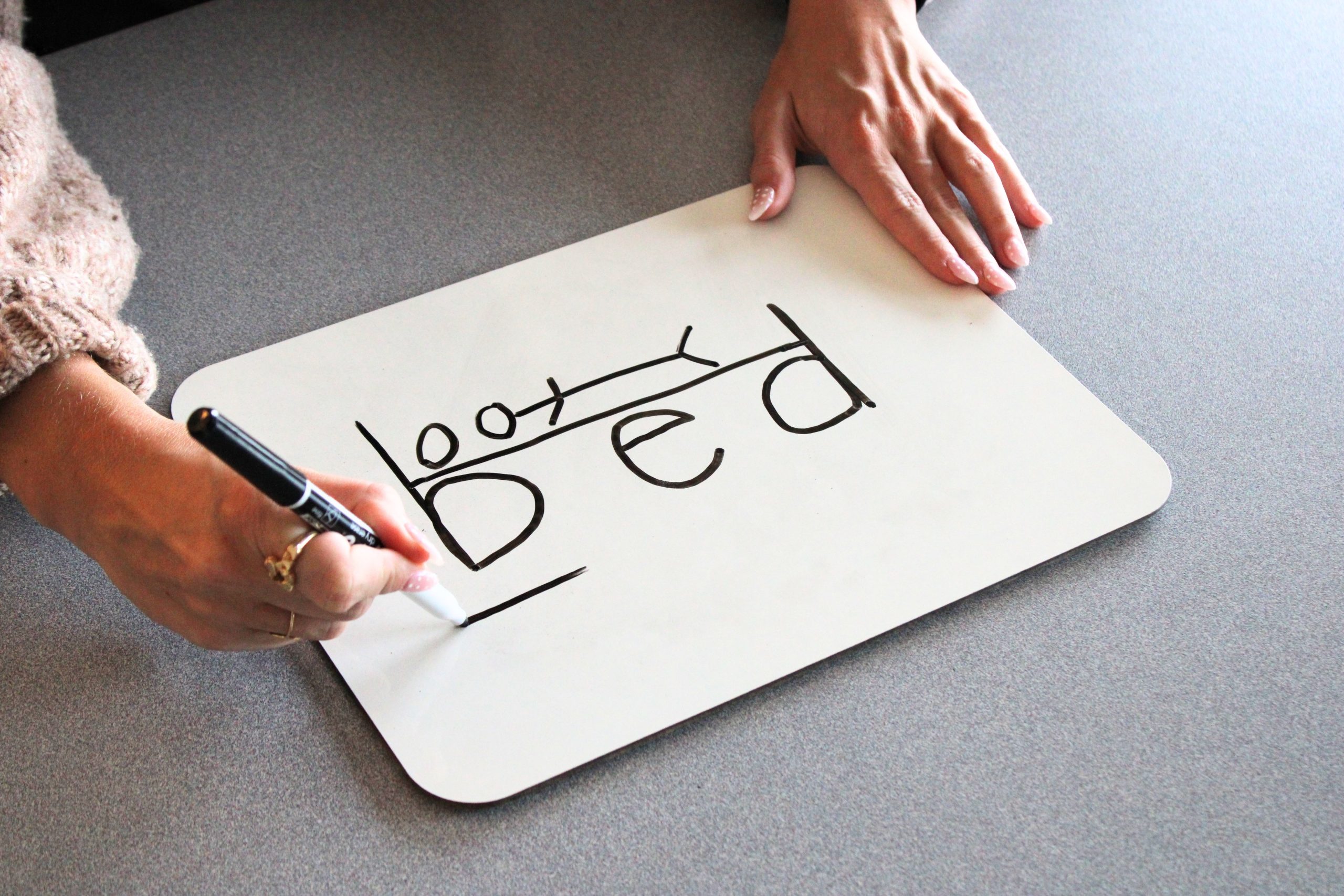
- The “Bed” Trick. Draw a simple bed shape using both letters: “b” forms the headboard and makes the first sound in the word “bed,” while “d” forms the footboard and makes the last sound. This visual keeps both letters anchored to a single, familiar image your child can picture during reading or writing.
Bonus: The Fist Trick
Have your child make fists with both hands and stick out their thumbs, palms facing away from them. The left hand forms a lowercase “b” (thumb up, fist below), and the right hand forms a lowercase “d,” spelling “bed” left to right, just like the word appears on a page. This gives your child a quick, portable reference they can use anywhere, even without paper.
How to Practice These Tricks
- Say the phrase out loud every time your child writes or reads the letter, not just occasionally
- Practice during handwriting time, not only reading, since writing the letter reinforces the motor pattern
- Keep sessions short and low-pressure. A minute or two of focused practice works better than a long drill
- Praise effort and progress, not just correct answers, to keep practice positive
When Should I Seek Help?
If your child is still mixing up “b” and “d” past age 7-8, if the confusion is affecting their reading fluency or confidence, or if you’re noticing other reading or writing challenges alongside it, it’s a good time to have their skills evaluated. Early support can make a real difference, and a screening simply helps you understand what’s going on, so there’s no need to wait until you’re certain something is wrong.
We’re Here to Help
If you have questions about your child’s reading development, contact our team at ETLC to learn more or schedule a screening.
0 Comments