

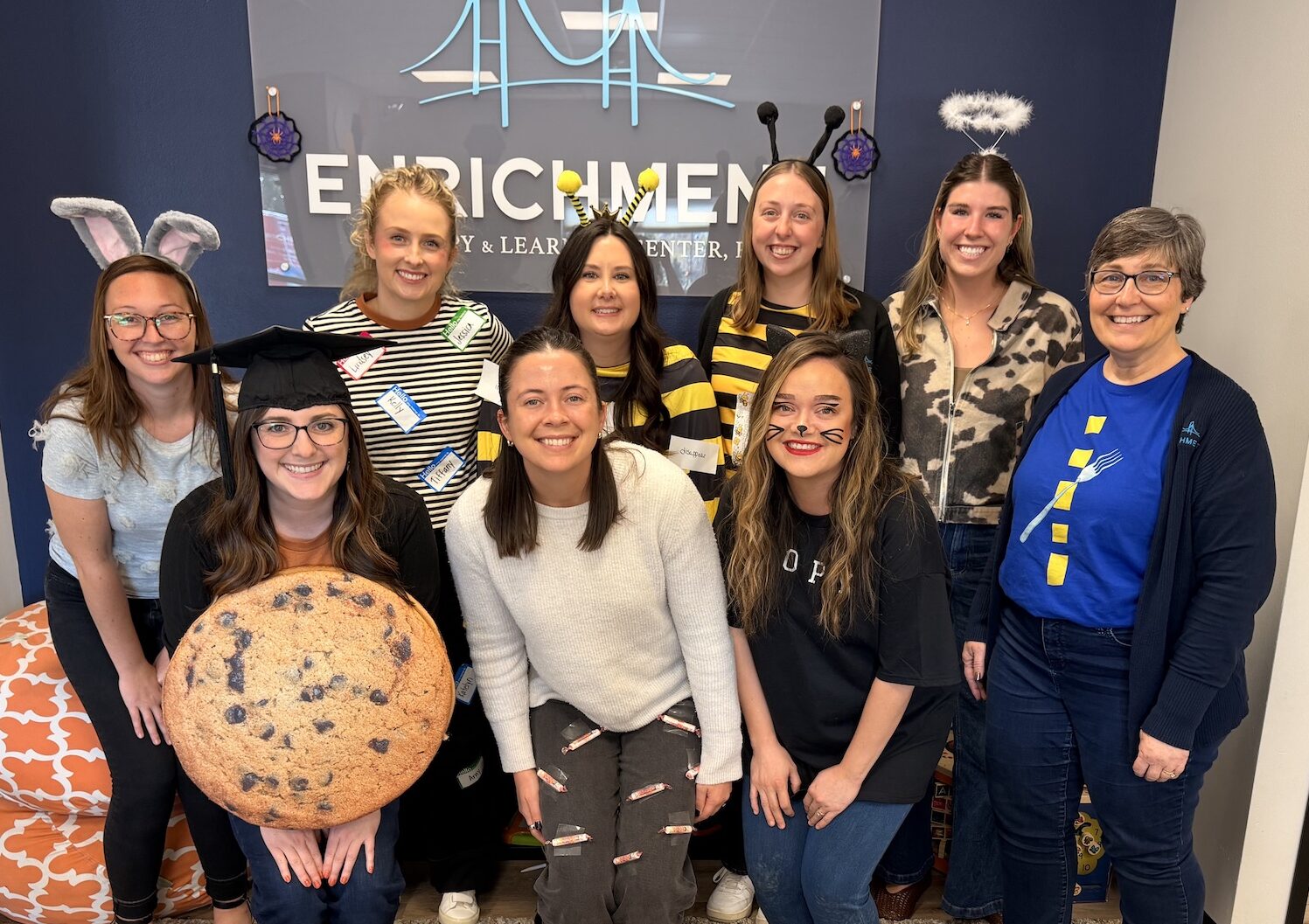
Halloween is a fun time of year for kids, and it can be tricky to keep children engaged in learning when a holiday is near. These Halloween learning activities use the excitement of the season to practice reading, following directions, math, writing, speech, and language.
Halloween Learning Activities for Reading and Language Comprehension
Sight Words
Is your child practicing sight words? If so, write their words on this spooky downloadable PDF, or print this list to help teach your elementary student these ten words. When practicing sight words, we want children to read them accurately and quickly, within 3 seconds. Also, write the words in black ink, because that is how children most often see words in books.
Comprehension
For upper elementary students, try this comprehension activity. To help your child picture the story, break it down two or three sentences at a time, or try the whole paragraph at once. Also, remind your child to make a movie in their head of what is happening, and use the structured words to guide how they retell the story.
Halloween Learning Activities for Following Directions
First, cooking and baking are some of the best ways to practice following directions. Search for a fun fall recipe, then put on your aprons, and ask your child to help. For younger children, try one-step directions like, “Get out the big bowl from the cupboard.” For students who are ready for more, try, “Can you get out the flour, measure 2 cups, and pour it into the bowl? Then put the flour away.” In addition, seeing hard work turn into something delicious can boost a child’s confidence.
Another idea is to print a fall coloring page and give directions for how to color it. For example, with a picture of a witch, ask your child to color the hat black and the socks green. For older students, choose a more complex picture and say, “Color the smallest apple red and the largest one green. Then find the person standing furthest from the door and color their hair brown.”
Halloween Learning Activities for Math
Word Problems
Does your child struggle with comprehension or math word problems? If so, try these word problems. After you read each problem aloud, ask your child to describe what they picture happening. To choose the right strategy, a student first has to understand what the problem is about. If your child has trouble describing the picture, then break the problem down one sentence at a time. Then, once they understand the words, help them select a strategy.
Math Facts
To help your child master math facts, use our visualizing strategy. For some Halloween fun, write their facts on this downloadable PDF. Next, print it on card stock, write one fact in each box, and cut on the dotted lines to make individual cards. Be sure to write the entire fact, including the answer, in black ink. Sometimes all it takes is a fun Halloween background to get kids excited about math.
Halloween Learning Activities for Writing
To improve written expression, give your child a list of nouns, verbs, and adjectives, like this one, and ask them to write a story using as many of the words as they can. As a result, this helps avoid the popular response, “I don’t know what to write about!” For an added challenge, have them write their own list of ten nouns, verbs, and adjectives that relate to Halloween, and then use them in a story.
Another way to spark creativity is to give your child a picture as inspiration. Also, let your child choose the picture they will write about. This picture is a great one that can lead to several different storylines.
Halloween Speech and Language Practice
There are many things to look at and talk about on Halloween, so here are a few ideas to sneak speech and language practice into trick-or-treating or your other Halloween traditions.
Speech Practice
- Counting words: pick a motivating, possibly spooky, word with your child’s target sound in it. For example, after they get candy at a house, they say their word once for each piece of candy, so two pieces means saying the word two times.
- Spooky jokes: prepare a joke with your child’s target sound for them to tell people. Depending on your child’s skill with the sound, you can focus on one word or all the target sounds in the joke.
Language Practice
- Costumes: describe the costumes you see. Talk about the group they belong to, like scary, animal, occupation, or game character, as well as the colors and fun details.
- Decorations: describe outdoor decorations with location words, like “See the witch on top of the roof?” or “See the skeleton behind the tree?”
- Candy: describe the size, shape, and flavor of the candy. For a game, have your child pick the candy they want to eat, but they must describe it without saying its name.
Frequently Asked Questions
How can I keep my child focused on learning near Halloween?
Use the holiday theme to your advantage. Since kids are excited about Halloween, a themed worksheet, recipe, or game can feel more like fun than work.
How long should these activities take?
Keep each activity short, about 10 to 15 minutes, and then stop while your child is still enjoying it.
How do I know if my child needs a speech or language screening?
If your child is hard to understand, is slow to learn new words, or struggles to follow directions or share ideas, a consultation can help you decide whether an evaluation makes sense.
How ETLC Can Help
Want to make sure your child is on track for their speech, language, or academic development? Our team is here to help. Enrichment Therapy & Learning Center has locations in Johnston and North Liberty, IA, with virtual services also available.
Learn more about speech-language therapy at ETLC or schedule a free consultation to talk with a member of our team.
You may also find these pages helpful:
- Practice Math Facts at Home
- Holiday Language Activities: Build Speech and Language Skills This Season
- Tutoring and Academic Support
About the Author
Sonia Strueby, M.A., CCC-SLP, is the founder of Enrichment Therapy & Learning Center. With over 25 years of experience as a speech-language pathologist, Sonia has dedicated her career to helping children overcome complex communication and academic challenges. She has advanced training and a special focus on treating dyslexia and childhood apraxia of speech, and she is passionate about providing families with a clear path to success.

0 Comments