

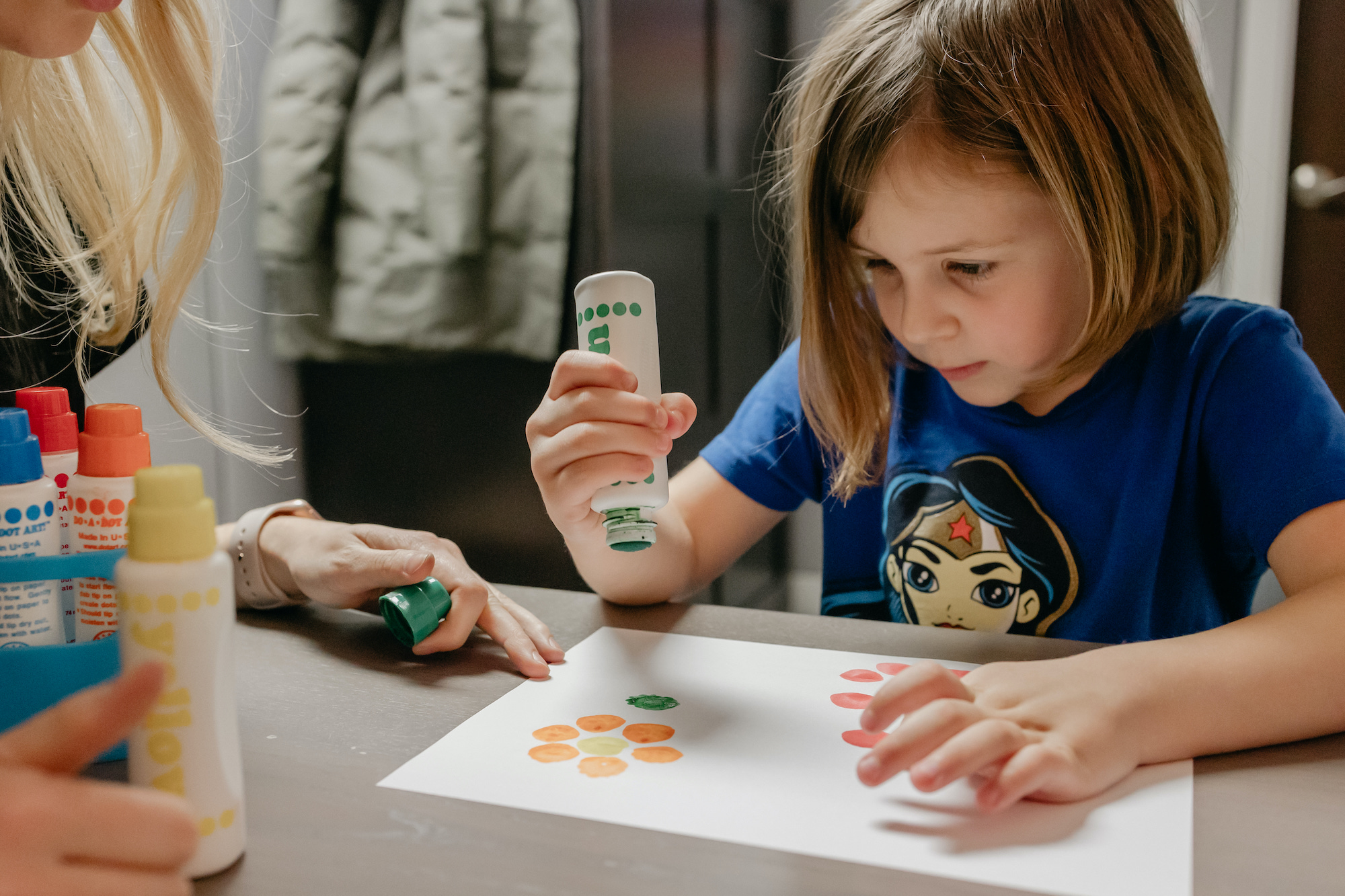
Busy evenings make it hard to fit in one more speech homework assignment. Dinner is cooking, and the kids are headed to their evening activities. Meaningful speech practice does not need extra time. Instead, it fits into things you already do together, like talking at dinner or playing. This post shows how to turn everyday moments into meaningful speech practice at home.
Why Meaningful Speech Practice Works
At the end of the day, better communication is the goal of speech-language therapy. Therefore, any time parents can use speech and language goals while connecting with their children, we make great strides toward helping children use these skills in real communication. Children also learn new skills much better when practice is meaningful and motivating. For example, a child will likely learn the names of new fruits and vegetables best by playing with a kitchen set and plastic food, or by cooking with a parent. This works better than drilling flashcards, because play is more fun. When children are having fun, what they learn becomes more important to them. Just as adults pay more attention to ideas that apply to their lives, children learn best from ideas that apply to their play and to the topics they talk about with family and friends.
An Example: Learning About Marine Animals
Some of our students who are building vocabulary and word recall by sorting words into groups are learning about marine animals. Instead of a worksheet that asks them to define “marine” or use it in a sentence, you could use the word in conversation at dinner.
- Talk about your favorite marine animal, and ask your child about theirs.
- Discuss which marine animal scares you the most.
- Decide which marine animal would make the best pet.
- Dig through the stuffed or plastic animal bin and find all the marine animals.
How to Use This Idea With Any Goal
This is a specific example. However, the idea of using therapy goals in natural, everyday communication works for many speech and language goals. Your speech-language pathologist can help you find ways to work on your child’s goals during conversation or play.
Above all, be kind to yourself. Do speech homework when you can, but focus on positive connection and communication with your child. When we find ways for parents to work on speech and language goals while connecting with their children, it is a win-win.
Frequently Asked Questions
How can I practice speech and language at home without extra homework?
Use daily routines like dinner, play, and cooking. Talk about the topics and words your child is learning.
Is play as effective as flashcards?
For many children, yes. Because play is motivating, new words and skills stand out more and carry over into real conversation.
What if I do not have time for speech homework?
Do what you can, and ask your speech-language pathologist for ideas that fit your routine. Positive connection matters most.
How ETLC Can Help
If you would like ideas that fit your family’s routine, our speech-language pathologists can help you build them into your day. Enrichment Therapy & Learning Center has locations in Johnston and North Liberty, IA, with virtual services also available.
Learn more about speech and language therapy at ETLC or schedule a free consultation to talk with a member of our team.
You may also find these pages helpful:
- Generalization Games for Kids
- Speech and Language Through Play
- 5 Toys to Target Language Skills at Home
About the Author
Sonia Strueby, M.A., CCC-SLP, is the founder of Enrichment Therapy & Learning Center. With over 25 years of experience as a speech-language pathologist, Sonia has dedicated her career to helping children overcome complex communication and academic challenges. She has advanced training and a special focus on treating dyslexia and childhood apraxia of speech, and she is passionate about providing families with a clear path to success.

0 Comments