


Originally Published May 2018, Reviewed and Updated April 2026
If you're concerned that your child might not be meeting their communication milestones, you're not alone. Communication disorders are among the most common childhood disabilities, affecting an estimated 11% of children between the ages of 3 and 6.
Understanding what a Speech-Language Pathologist (SLP) does and when to seek help is the first step toward supporting your child's success. This guide answers the key questions parents have about speech and language development.
What is a Speech-Language Pathologist?
A Speech-Language Pathologist, or SLP, is a highly trained expert in human communication. They are licensed professionals who hold a master's degree and a Certificate of Clinical Competence (CCC) from the American Speech-Language-Hearing Association (ASHA).
SLPs work with people of all ages, but at our center, we specialize in helping children and young adults (from 18 months to 21 years) overcome a wide range of communication challenges.
Why is Early Intervention So Important?
When it comes to speech and language development, the "wait and see" approach can cost a child valuable time. Many communication disorders do not resolve on their own. The earlier a child receives support, the better their outcomes for long-term academic, social, and emotional success. If you have a concern about your child's communication, trust your instincts.
To help families get clear answers, we offer complimentary 30-minute screenings. This allows our expert clinicians to assess your child's skills and recommend whether a full, comprehensive evaluation is the right next step.
What Types of Communication Issues Do SLPs Address?
An SLP's scope is broad. We evaluate and treat several distinct areas of communication. Below are the most common areas we address, along with key warning signs for parents.
- Language Delays (Understanding and Using Words) This involves how a child understands what they hear (receptive language) and how they use words to express their thoughts (expressive language).
- Warning Signs:
- Does not smile or interact with others (birth+)
- Makes very few sounds or gestures like pointing (7–12 months)
- Doesn't seem to understand what others say (7 months–2 years)
- Says only a few words (12–18 months)
- Is not yet combining words into simple sentences (1.5–3 years)
- Speech Sound Disorders (Clarity and Intelligibility) This is how a child physically produces sounds and combines them into words. It includes articulation, apraxia of speech, and phonological disorders.
- Warning Signs:
- Speech is very difficult for even familiar family members to understand.
- Cannot correctly say sounds like p, b, m, h, or w in words (1–2 years).
- Cannot correctly say sounds like k, g, f, t, d, or n in words (2–3 years).
- Social Communication (Pragmatics) This refers to the unwritten social rules of language, such as taking turns in conversation and understanding nonverbal cues.
- Warning Signs:
- Makes limited eye contact or has unusual facial expressions.
- Struggles with conversational turn-taking.
- Has difficulty staying on topic.
- Does not use language for different purposes (e.g., greeting, asking, commenting).
- Fluency Disorders (Stuttering) This is the flow, rhythm, and smoothness of speech.
- Warning Signs:
- Repeats the first sound of a word (e.g., "b-b-b-ball").
- Stretches a sound out for a long time (e.g., "ffffff-farm").
- Experiences "blocks" where no sound comes out.
- Shows visible tension or frustration when trying to speak.
- Cognitive-Communication Disorders This involves how skills like memory, attention, and problem-solving affect a child's ability to communicate.
- Warning Signs:
- Has trouble remembering information or following multi-step directions.
- Seems to process information slowly.
- Struggles with organizing thoughts or sequencing events in a story.
- Voice Disorders This relates to the quality, pitch, and volume of a child's voice.
- Warning Signs:
- Has a voice that is consistently hoarse, breathy, or nasal.
- Loses their voice frequently.
Frequently Asked Questions
What is the difference between speech and language? Language is the system of words and symbols we use to share ideas (e.g., vocabulary, grammar, and understanding questions). Speech is the physical act of producing the sounds that make up those words. A child can have a delay in one, the other, or both.
My pediatrician said to "wait and see." Should I? While pediatricians are vital partners, SLPs are the specialists in communication development. If your parental instinct tells you something is wrong, seeking a screening or evaluation from an SLP is a proactive step that can provide definitive answers and prevent a child from falling further behind.
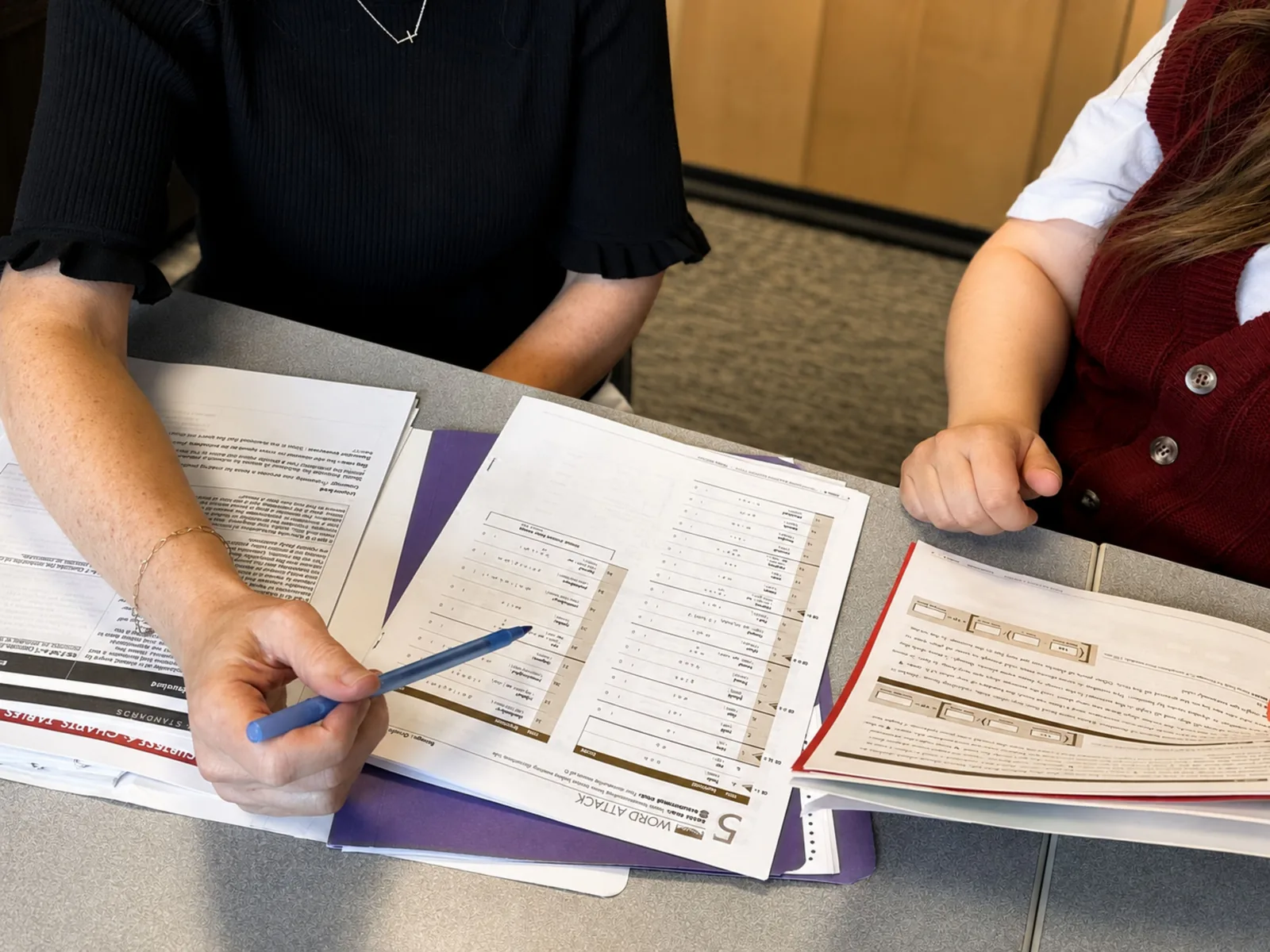
What happens during a speech and language evaluation? An evaluation is a comprehensive process where an SLP uses a combination of standardized tests, observation, and parent interviews to create a complete picture of your child's communication strengths and challenges. This allows us to create a highly personalized therapy plan.
Is a 30-minute screening enough to diagnose my child? No. A screening is a brief check to determine if a full evaluation is recommended. It helps identify children who are at risk for a disorder, but it is not a diagnostic tool.
If you have questions about your child's development, the best thing you can do is take action. Early identification and intervention are the keys to building a strong foundation for a confident and successful future. Please contact us to schedule an evaluation or to learn more about how we can help your family.
About the Author
Sonia Strueby, M.A., CCC-SLP, is the founder of Enrichment Therapy & Learning Center. With over 25 years of experience as a speech-language pathologist, Sonia has dedicated her career to helping children overcome complex communication and academic challenges. She has advanced training and a special focus on treating dyslexia and childhood apraxia of speech, and she is passionate about providing families with a clear path to success.

0 Comments