

Originally Published: December 15, 2016 | Updated: August 19, 2026
Games like Guess Who and Hedbanz are simple, screen-free ways to build your child’s visualizing skills, the ability to form a mental picture from spoken or written language. Visualizing is a foundational skill for reading comprehension and expressive language, and practicing it through play makes it stick without feeling like homework. Here’s how these games work and how to bring visualizing practice into your home tonight.
What Is Visualizing, and Why Does It Matter?
Visualizing means creating a mental picture of what you’re hearing or reading. When a child hears “the dog ran across the yard,” a strong visualizer automatically pictures a specific dog, yard, and movement in their mind.
Children who struggle with language or reading comprehension often don’t create that mental picture automatically. Without a “picture in their head” to anchor the words, understanding and remembering what they hear or read becomes much harder.
The good news: visualizing is a skill, and skills can be practiced. Games are one of the easiest ways to build it, because kids engage more, and learn more, when they’re having fun.
How Can Games Help My Child Practice Visualizing?
Playing a game together naturally works two skills at once:
- Visualizing — noticing and picturing specific details
- Expressive language — putting those details into clear, descriptive words
Games that reward specific, detailed descriptions are especially effective, because they give your child real-time feedback: vague descriptions don’t work, but detailed ones do.
2 Fun Games to Build Visualizing Skills
Guess Who
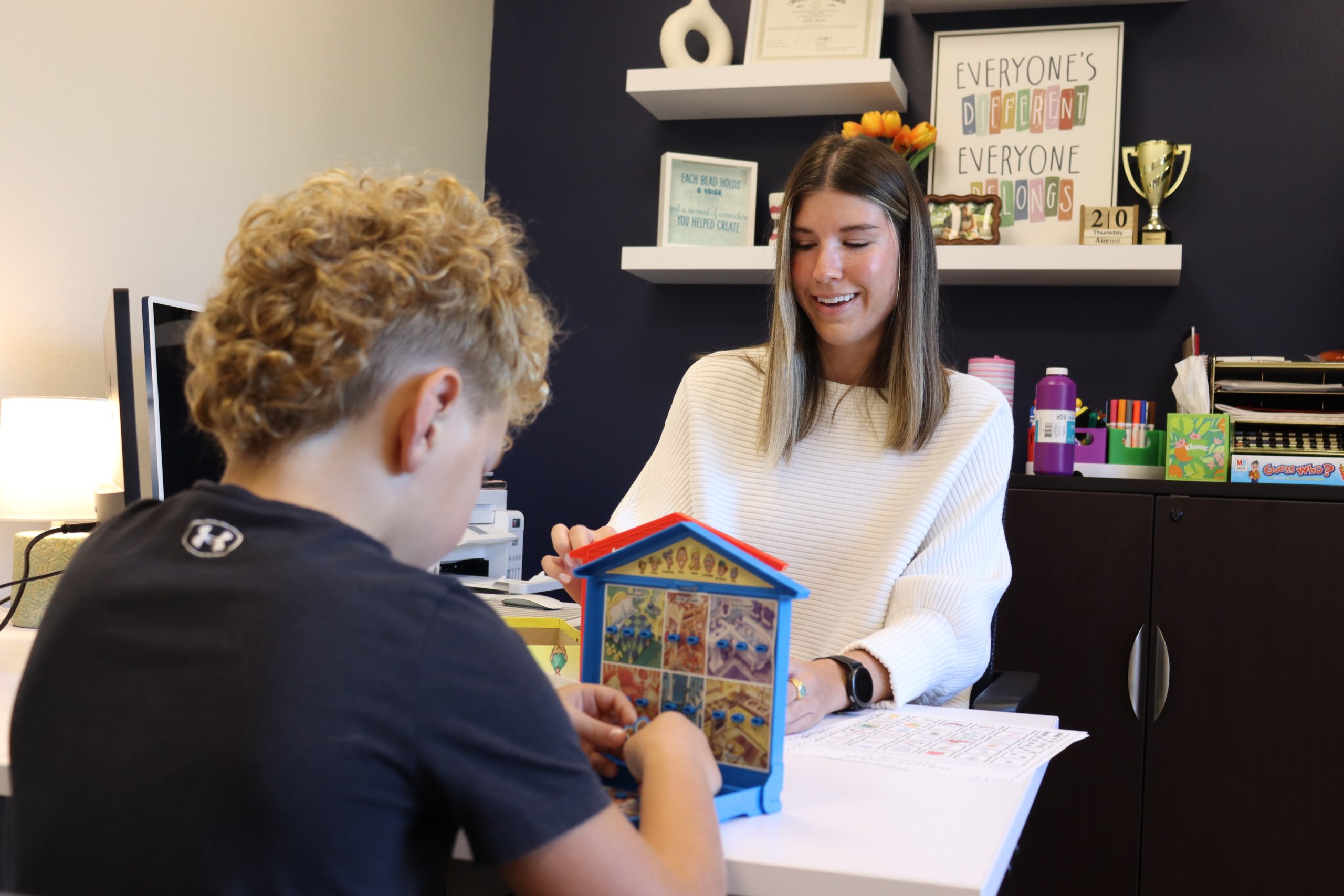
In Guess Who, your child tries to guess which character their opponent has chosen by asking yes-or-no questions. To win, they need to notice and describe specific visual details.
Compare these two descriptions:
- “The girl with long hair” — not specific enough
- “The girl with long red hair, glasses, and earrings” — much clearer
The second description reflects stronger visualizing and stronger expressive language. Guess Who naturally pushes kids toward that level of detail every time they play.
Hedbanz
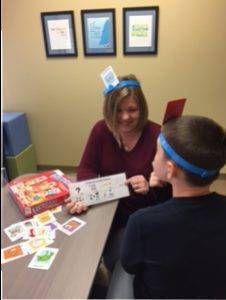
In Hedbanz, each player wears a picture card on their head that only the other players can see. To figure out their own card, a child has to ask questions, gather clues, and mentally combine the answers into a clear picture.
This game builds:
- ✔️ Question-asking skills
- ✔️ The ability to synthesize information into a mental image
- ✔️ Expressive language, through the back-and-forth of asking and answering
It’s also genuinely fun for the whole family, which makes it easy to play often.
How Can I Set Up Visualizing Practice at Home?
A few simple additions can make any game session more effective:
- ✔️ Keep visualizing structure words nearby as a reference during play
- ✔️ Use the Structure Words picture guide to prompt more descriptive language
- ✔️ Encourage your child to describe color, size, shape, and location, not just one detail
- ✔️ Model detailed descriptions yourself during your turn, so your child hears the target skill in action
- ✔️ Keep it light. The goal is fun first, skill-building second
Research on comprehension instruction supports this approach: visualizing is one of the well-established strategies that support reading comprehension, helping readers actively engage with and understand text rather than passively decoding words. That’s exactly the muscle these games are building.
When Should I Seek Help?
Every child develops visualization and comprehension skills at their own pace, and games like these are a great way to support that growth at home. However, if your child consistently struggles to describe what they see, has ongoing difficulty following or retelling stories, or seems to understand less than you’d expect for their age, it’s worth having their language and comprehension skills evaluated.
Frequently Asked Questions
What age is this good for?
Guess Who and Hedbanz work well for a range of ages, though younger children may need extra support asking questions or narrowing down clues at first.
My child gives vague answers during these games. What should I do?
Gently prompt for more detail with a follow-up question, like “What color is it?” or “What else do you notice?” rather than giving them the answer.
Do these games only help with visualizing?
No. They also build expressive language, question-asking, and turn-taking, all valuable communication skills beyond just visualizing.
How often should we play to see a difference?
There’s no set amount, but playing regularly, even once or twice a week, gives your child repeated, low-pressure practice that adds up over time.
Are there other games that build these same skills?
Yes! Watch our Therapy Talk on visualizing games for more ideas, or check out our posts on family games for language skills and educational game gift ideas.
Build Language Skills Through Play
Visualizing is a skill your child can build through everyday fun, no flashcards required. If you’d like more ideas for building your child’s language and comprehension skills at home, or have concerns about their progress, our speech-language services are here to help. Contact our team today to learn more or schedule a free screening.
About the Author
Sonia Strueby, M.A., CCC-SLP, is the founder of Enrichment Therapy & Learning Center, which serves families in Johnston and North Liberty, Iowa, with virtual services also available. With over 25 years of experience as a speech-language pathologist, Sonia is passionate about helping families build strong comprehension and communication skills through everyday, playful moments at home.
0 Comments