

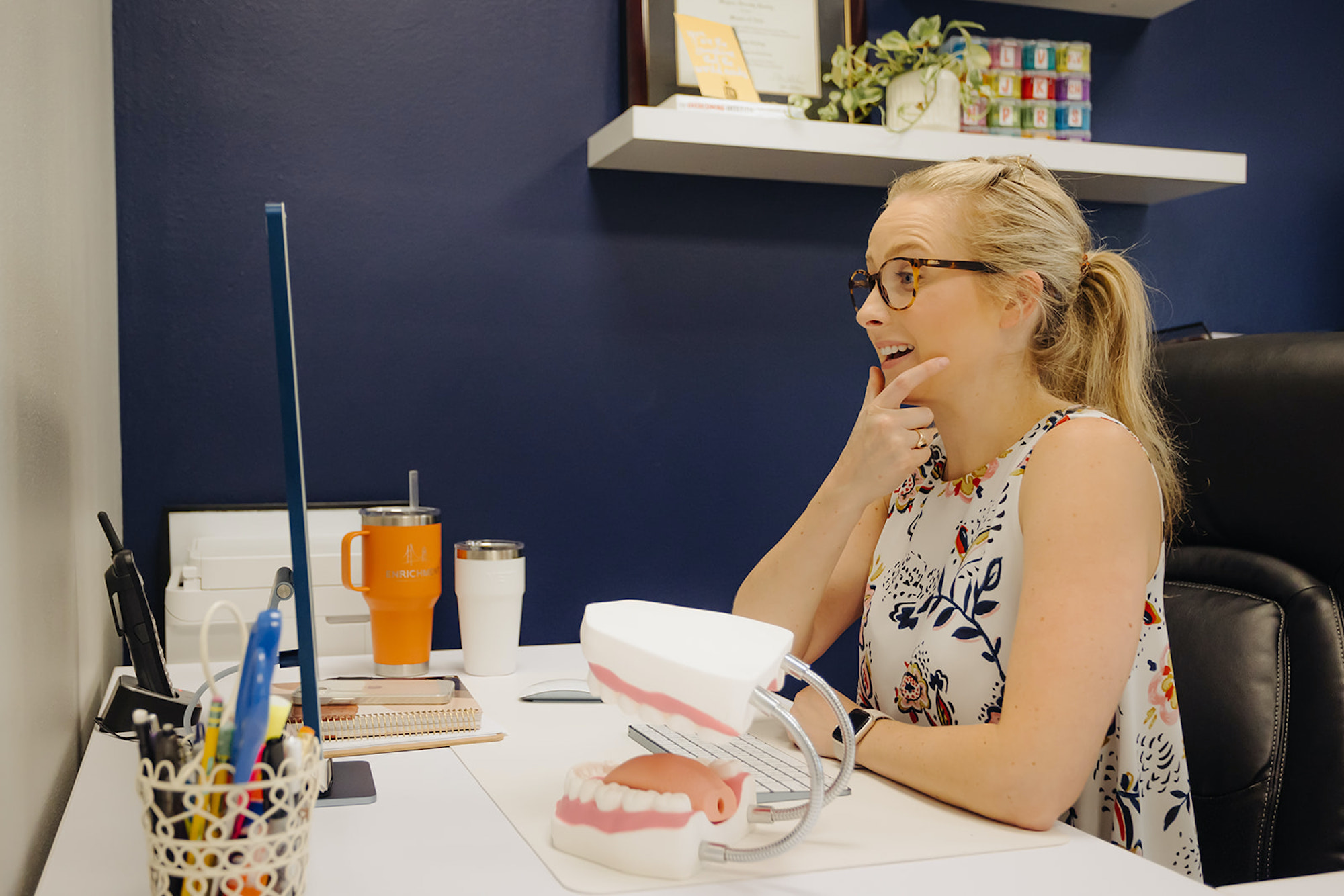
Have you ever wondered whether your child is saying their new sounds as often as expected? Talking is a complex skill that takes a lot of coordination from muscles and structures in the mouth. As a child speaks, they hear what they say and how others understand them, which gives clues about whether they are saying things correctly. Here are some reasons your child may not be saying new sounds all of the time.
Why Is My Child Not Saying New Sounds All the Time?
Sounds Are Harder Inside Words
Saying a sound alone is easier than saying it in a word. When a sound stands alone, the focus is only on that one sound. Once it sits next to other sounds, children have more to think about. As a result, saying a target sound in words, sentences, and conversation takes more and more coordination.
A New Sound Pattern Takes Time
If your child has said a sound incorrectly for a while, they need to build a new pattern for how to say it in words. That can take time.
Different Word Positions
If your child says the new sound sometimes but not always, it may be harder in certain word positions than others. They may also have created a new pattern for some words but not all words with that sound.
Hearing the Difference Between Sounds
Some children cannot hear the difference between sounds. For example, /f/ and /th/ sound very similar, so your child may not hear the difference between what others say and what they say. Our guide to discrimination and production practice explains one way SLPs work on this.
What Can I Do?
Knowing what is developmentally appropriate and when to seek further support can be confusing, especially when you know your child can say a sound but is not using it on their own. Working with a speech-language pathologist helps you know what to expect and how best to support your child as they grow. You can also read our tips for building speech and language through play.
Frequently Asked Questions
Why does my child say a sound correctly sometimes but not others?
It is very common. New sounds are usually easiest alone, then harder in words, sentences, and conversation. Progress is gradual, and the sound may be stronger in some words or word positions than others.
Should I correct my child every time they make an error?
No. Constant correction can be discouraging. Pick a short time to practice, and otherwise simply model the correct sound yourself.
When should I talk to a speech-language pathologist?
If your child is hard to understand, has not mastered sounds expected for their age, or is not carrying a new sound into everyday speech, an evaluation can show what support would help. Our Development of Speech Sounds chart shows when sounds typically develop.
How ETLC Can Help
If you have questions about your child’s speech, our speech-language pathologists are here to help. Enrichment Therapy & Learning Center has locations in Johnston and North Liberty, IA, with virtual services also available.
Learn more about speech sound disorder support at ETLC or schedule a free consultation to talk with a member of our team.
You may also find these pages helpful:
About the Author
Sonia Strueby, M.A., CCC-SLP, is the founder of Enrichment Therapy & Learning Center. With over 25 years of experience as a speech-language pathologist, Sonia has dedicated her career to helping children overcome complex communication and academic challenges. She has advanced training and a special focus on treating dyslexia and childhood apraxia of speech, and she is passionate about providing families with a clear path to success.
0 Comments