

Speech Sound Disorder Support for Children
ETLC provides speech sound disorder therapy for children in Johnston and North Liberty, IA, in person or virtually, helping children communicate more clearly and confidently.
What Is A Speech Sound Disorder?
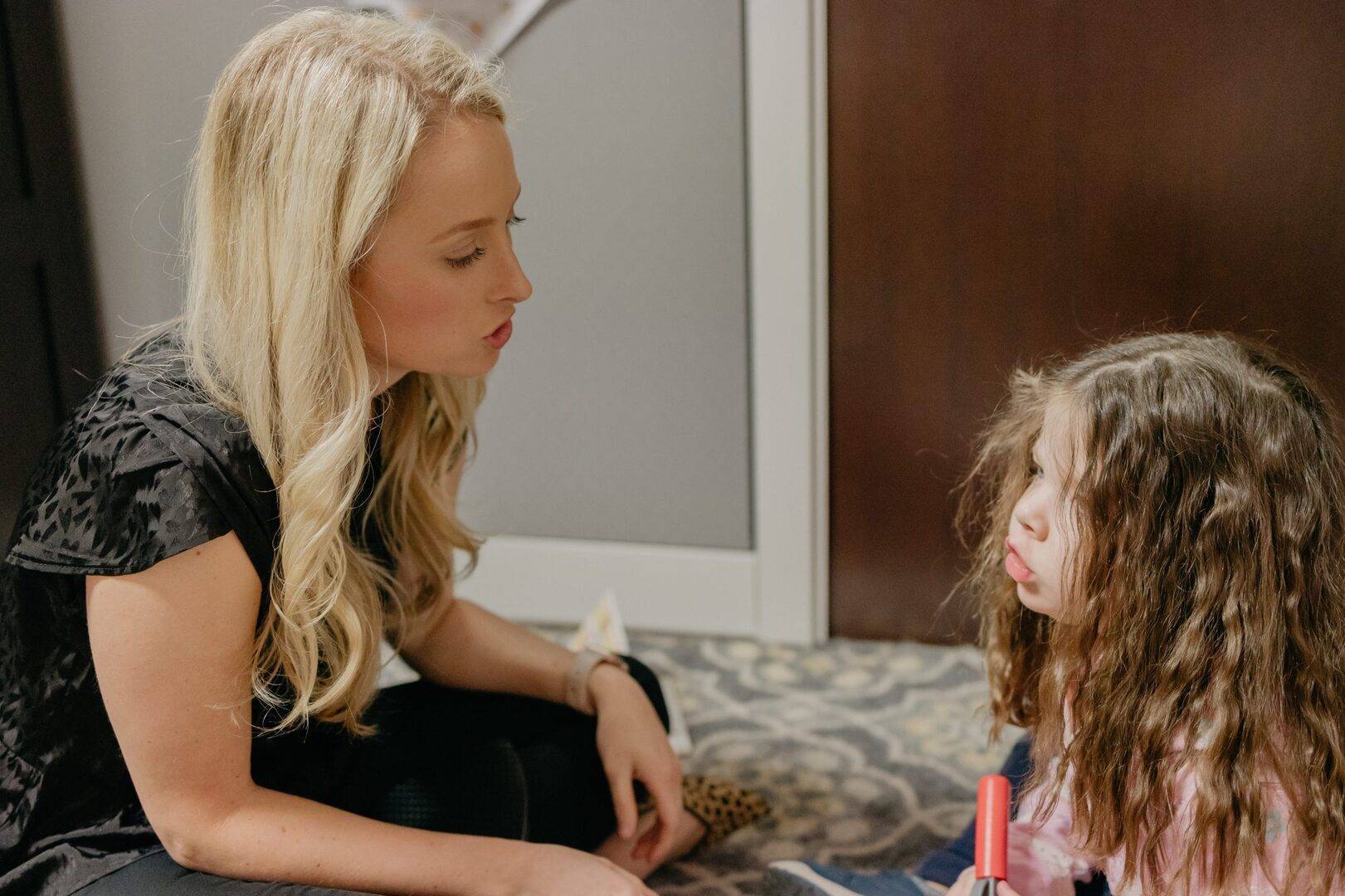
A speech sound disorder is difficulty producing the sounds of speech correctly, which can make a child hard to understand. It includes errors in individual sounds, patterns of errors across groups of sounds, and difficulty planning the movements needed for speech.
Children learn sounds in a general order, so some errors are expected at young ages. When errors continue past the age when most children have mastered a sound, a speech and language evaluation can help determine whether therapy would help.
What Are Examples of Speech Sound Disorders?
Articulation Disorder
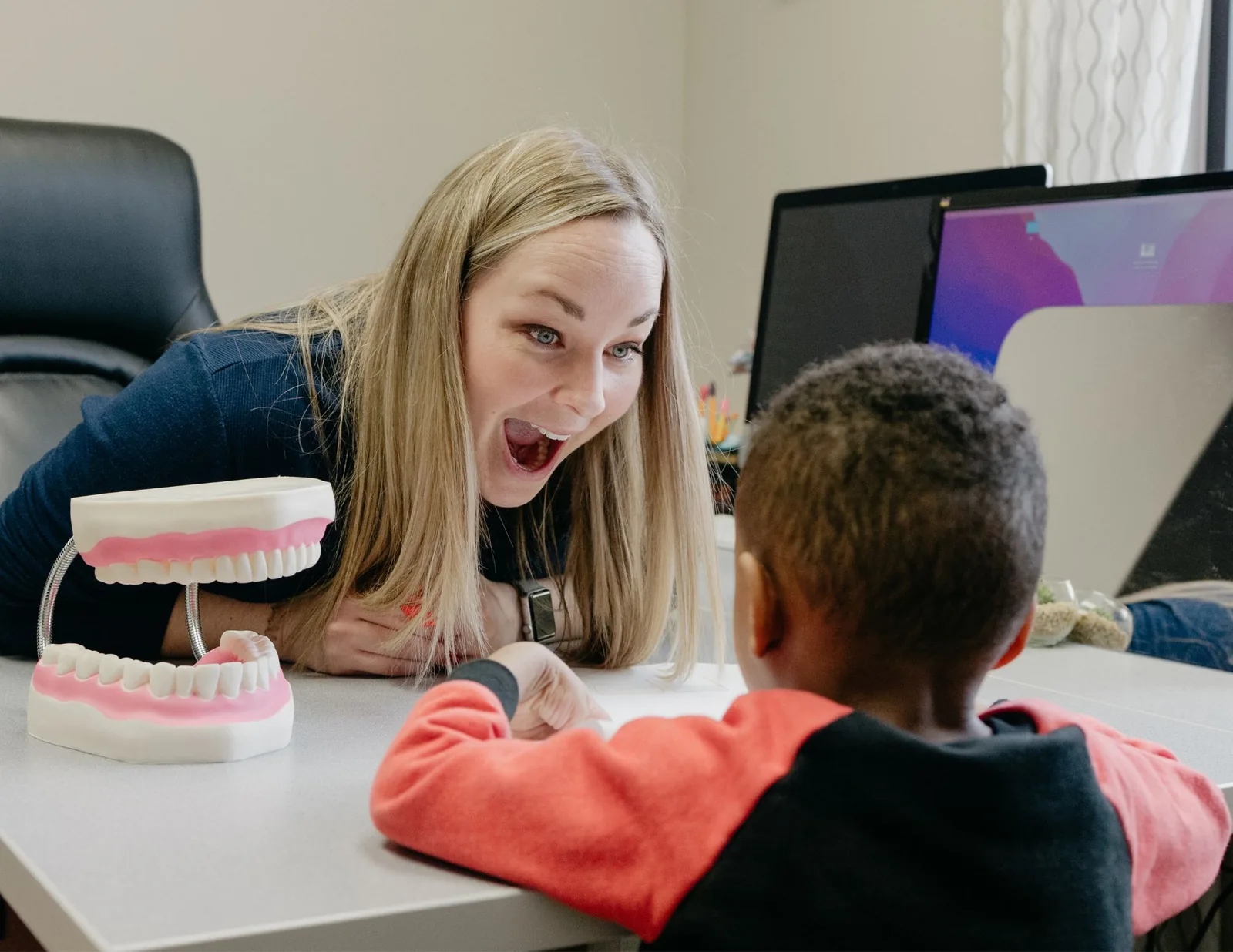
An articulation disorder focuses on errors in the production of individual speech sounds.
Examples:
A "lisp" due to a child having their tongue between their teeth when making a /s/ sound ('thoup' for "soup")
Inability to produce sounds (saying "weef" for "leaf) because the child has difficulties lifting their tongue
Phonological Disorder
A phonological disorder occurs when a child uses patterns of sound errors. These error patterns are usually predictable, rule-based errors that affect more than one sound. Children simplify complex words with phonological processes.
Example:
If a child makes errors with a group of sounds, such as fricatives, or sounds where lots of air comes out of the mouth (e.g., /s, z, f, v/). The child’s error pattern will be similar. The child may stop the airflow (e.g., "toup" for "soup" or "pox" for "box")
Childhood Apraxia Of Speech
Childhood Apraxia of Speech (CAS) is a neurological speech disorder characterized by motor planning errors with precise and consistent movements used in speech. Apraxia of speech causes delayed and irregular speech development.
Children with CAS might:
Say the same word a different way each time
Say short words more clearly than longer words
Avoid talking due to difficulties with production
How Can Enrichment Therapy & Learning Center Help?
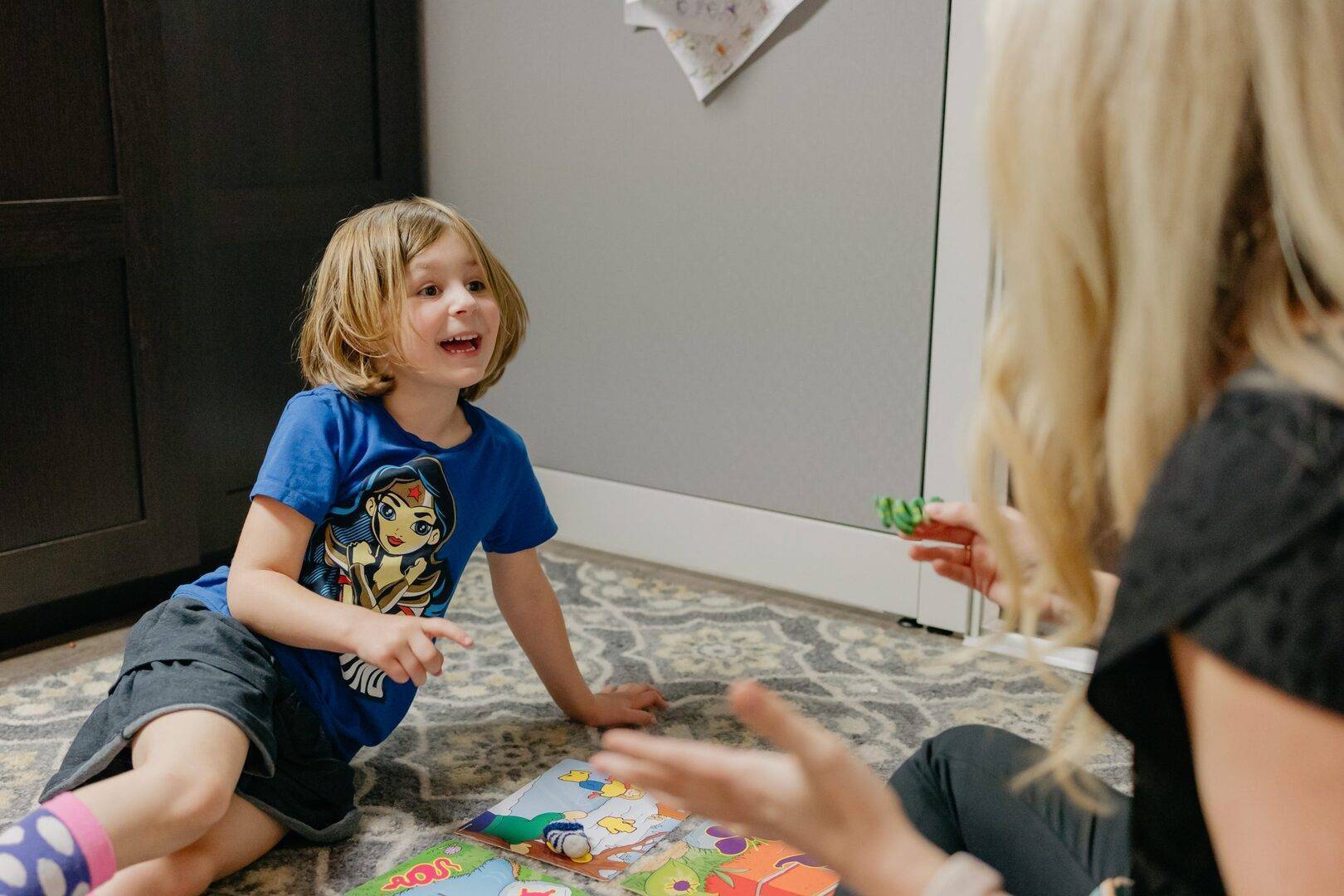
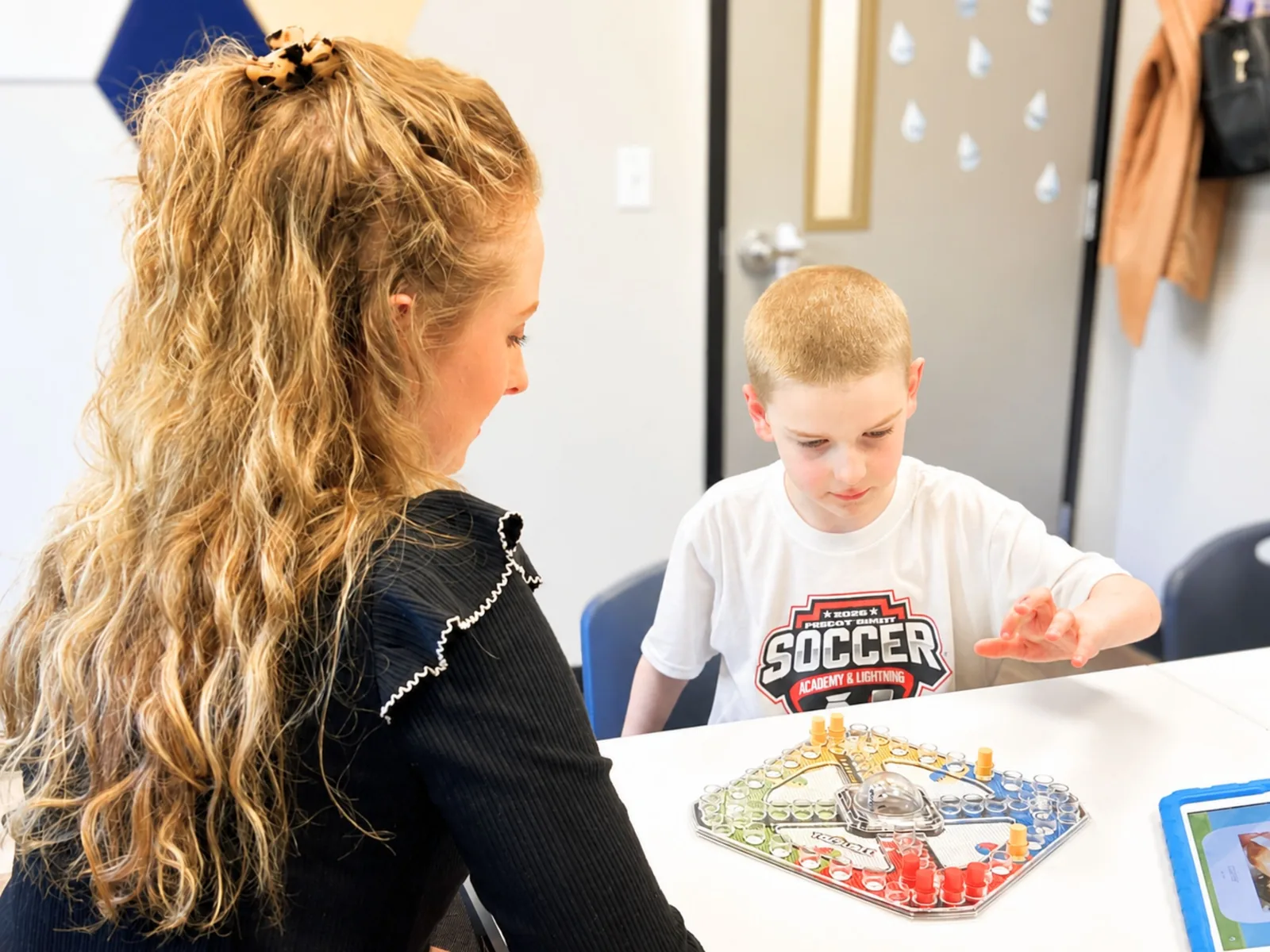
We utilize evidence-based therapy approaches for speech sound disorders based on each child's specific needs. We provide direct skill-building instruction to help improve sound errors with immediate feedback and opportunities for repetition and practice. Therapists at ETLC have extensive speech production knowledge, phonologically based strategies, and specific training on motor-based approaches.
Why Choose ETLC?
What Families Are Saying

"Our son has had an amazing experience at speech therapy! At first, he struggled to even want to go back to the office and work through the activities. He is now the loudest kid in the building and will solo walk to his session without anyone's assistance. He's even gotten praise outside of speech for how well he can use his words and how clearly he communicates what he wants to say. We're so thrilled at his progress and so proud of how hard he works both at his sessions and at home. We're thankful for Erin and all the staff for working with our son to help him grow into the little chatterbox he's worked so hard to become!"
"We are SO very proud of our son's growth in his speech. A year ago he was very difficult to understand and was very frustrated when communicating with peers at school and non-family members. He is now a chatter box, participating in class, making friends and telling stories to anyone and everyone who will listen. We know he could not have made the leaps and bounds of progress that he has without the amazing support from Ms. Kaylie! We are grateful for the relationship she has built with him and he absolutely loves coming to visit her at Enrichment Therapy. He talks about their games they play together and all the fun crafts and activities he gets to do. Thank you times a million for loving and welcoming our sweet boy!"
"My daughter's pronunciation and enunciation have improved dramatically since starting with Enrichment Therapy. She loves her time with Miss Mallory and looks forward to going to speech each week. To be understood with greater accuracy by not only strangers, but her family and peers as well, has made such a difference in her overall well being. She is able to express herself to others more easily, without getting frustrated as often."
"We've seen so much growth in our daughter since starting at Enrichment Therapy. Her speech continues to improve, and she absolutely loves working with Kaylie. Kaylie has a wonderful way of making speech therapy both fun and incredibly effective!"
How Do I Get Started?


1. Start The Conversation
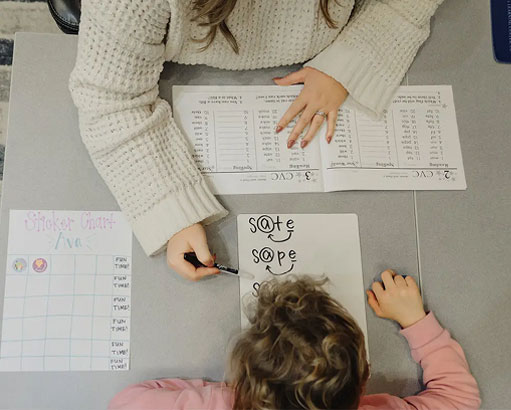
The first step is to reach out if you have a concern. We start with a conversation to learn about your child, answer your questions, and help guide your family toward the best next step, whether that is a screening, consultation, or evaluation.

2. Schedule A Consultation
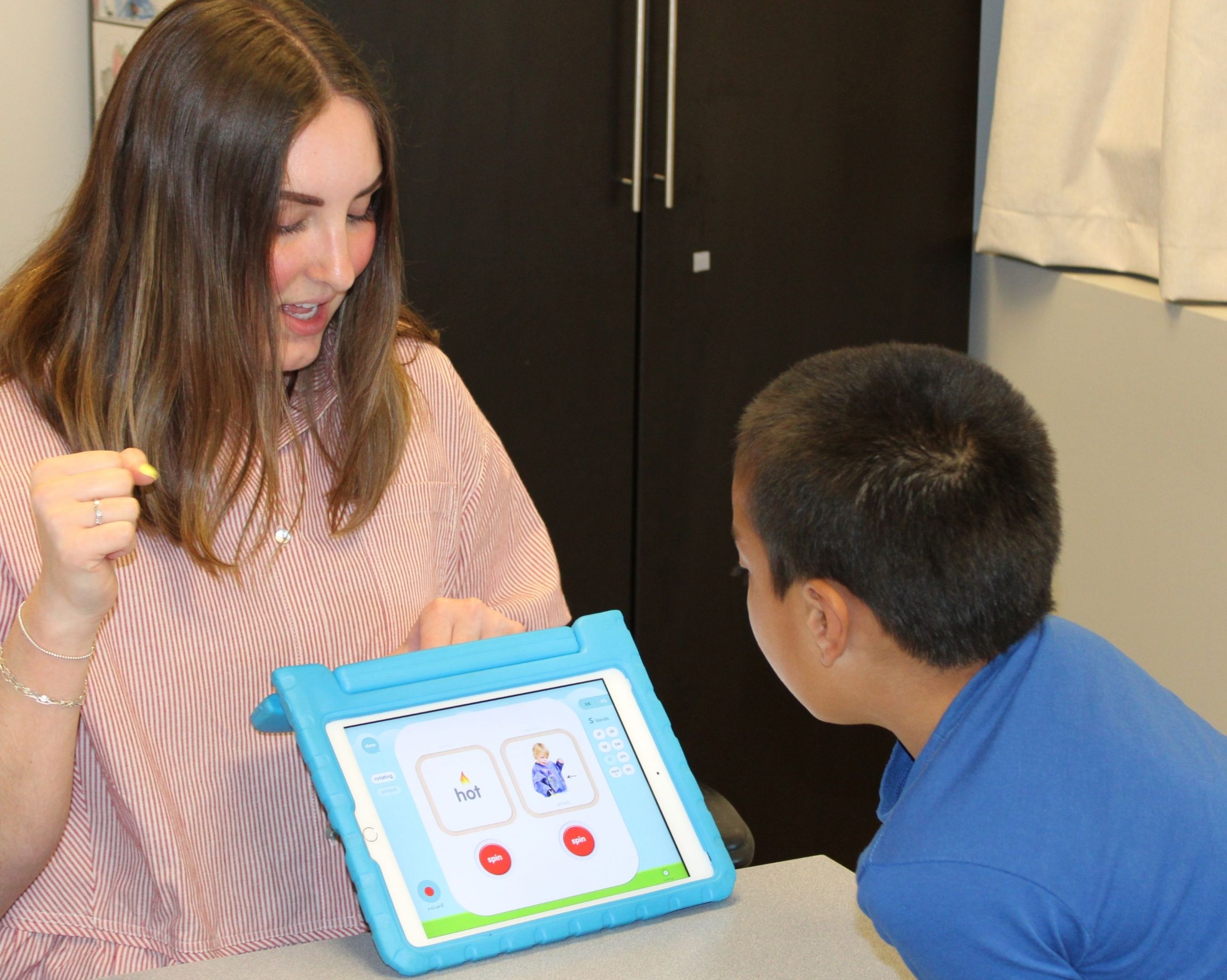
Once scheduled, families complete an online intake so our team can tailor the evaluation to your concerns. After the evaluation, we meet with you to review the results and recommendations and answer your questions.

3. Receive An Individualized Plan
Your child receives a custom treatment plan with specific, measurable goals based on their unique needs. Depending on the provider, your insurance may cover our services. If it does not, we are transparent about cost.

4. Build Skills & Confidence
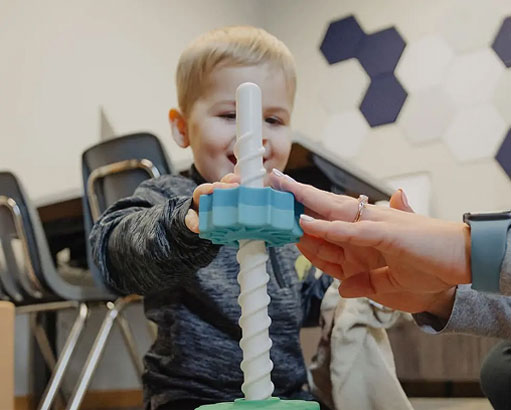
Through personalized one-on-one sessions, we help your child build skills and confidence. The length of treatment depends on your child's age, challenges, and progress, and we adjust the plan as your child grows.
Frequently Asked Questions
What age should a child start talking clearly?
Children typically begin saying simple words around 12–24 months, though their speech may be hard to understand at first, which is normal. By about 18 months, most children say 20–50 words in approximations, meaning the word is close enough to understand (like “ba” for “ball”). By age 3, about 75% of their speech should be understood, and by age 4, their speech should be mostly clear and include multi-word phrases.
Is it normal for a two-year-old to not talk much?
It can be normal for some 2-year-olds to talk less than others, but we do expect them to be using words and starting to combine them. By age 2, most children have around 50 words and are beginning to use two-word phrases like “more milk” or “mommy go.” If a child isn’t meeting these milestones, it’s a good idea to have their speech and language checked.
What happens during a speech therapy evaluation?
A speech therapy evaluation is a play-based assessment where we look at how your child communicates. We observe their speech sounds, understanding of language, and how they use words to interact. It’s designed to be engaging and helps us determine if support is needed.
What is the difference between a speech delay and a language delay?
Speech refers to how we produce sounds to form words—this includes articulation, voice, and fluency. Language is the system we use to understand and express ideas, including vocabulary, grammar, and sentence structure. In simple terms, speech is how we say words, while language is what the words mean and how we use them to communicate.
Is speech therapy covered by insurance?
Speech therapy is often covered by insurance, but coverage depends on your specific plan. Many plans will cover therapy if it is considered medically necessary, though there may be limits or requirements. At Enrichment, we accept Blue Cross Blue Shield, and we can help you understand your benefits — though we always recommend checking with your insurance provider directly to confirm your specific coverage as well.
Ready to Help Your Child Thrive?
Reach out today to schedule a consultation with ETLC's speech-language pathologists and learning specialists in Johnston and North Liberty, IA, with virtual services also available.