

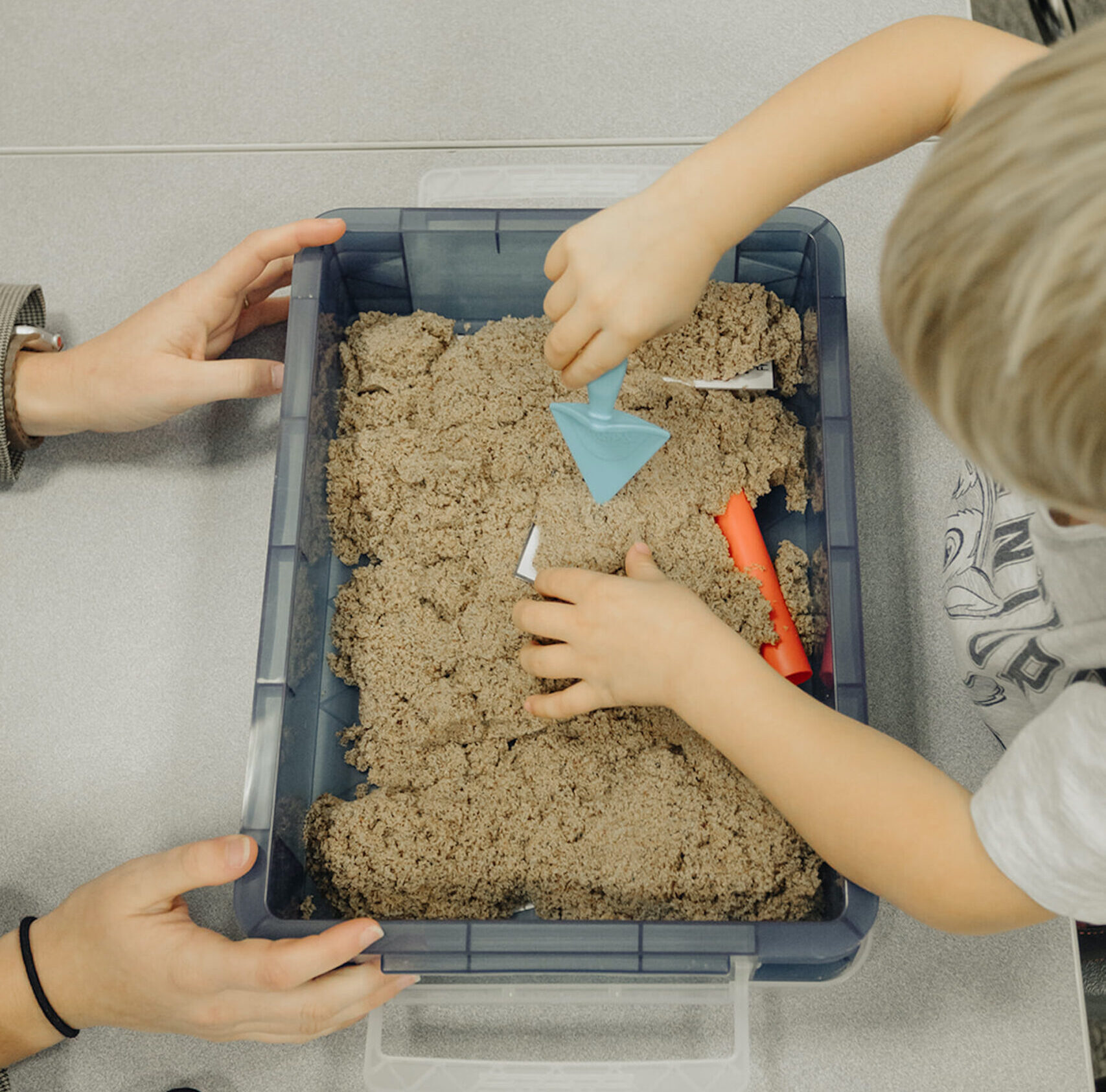
Play is a powerful way for young children to learn. In addition, it helps expand thinking, language, movement, and play skills. Sensory play for language development uses play activities to target a certain concept, sound, or skill. These activities often engage several senses, such as touch, sight, and sound, so children learn through doing.
What Is Sensory Play for Language Development?
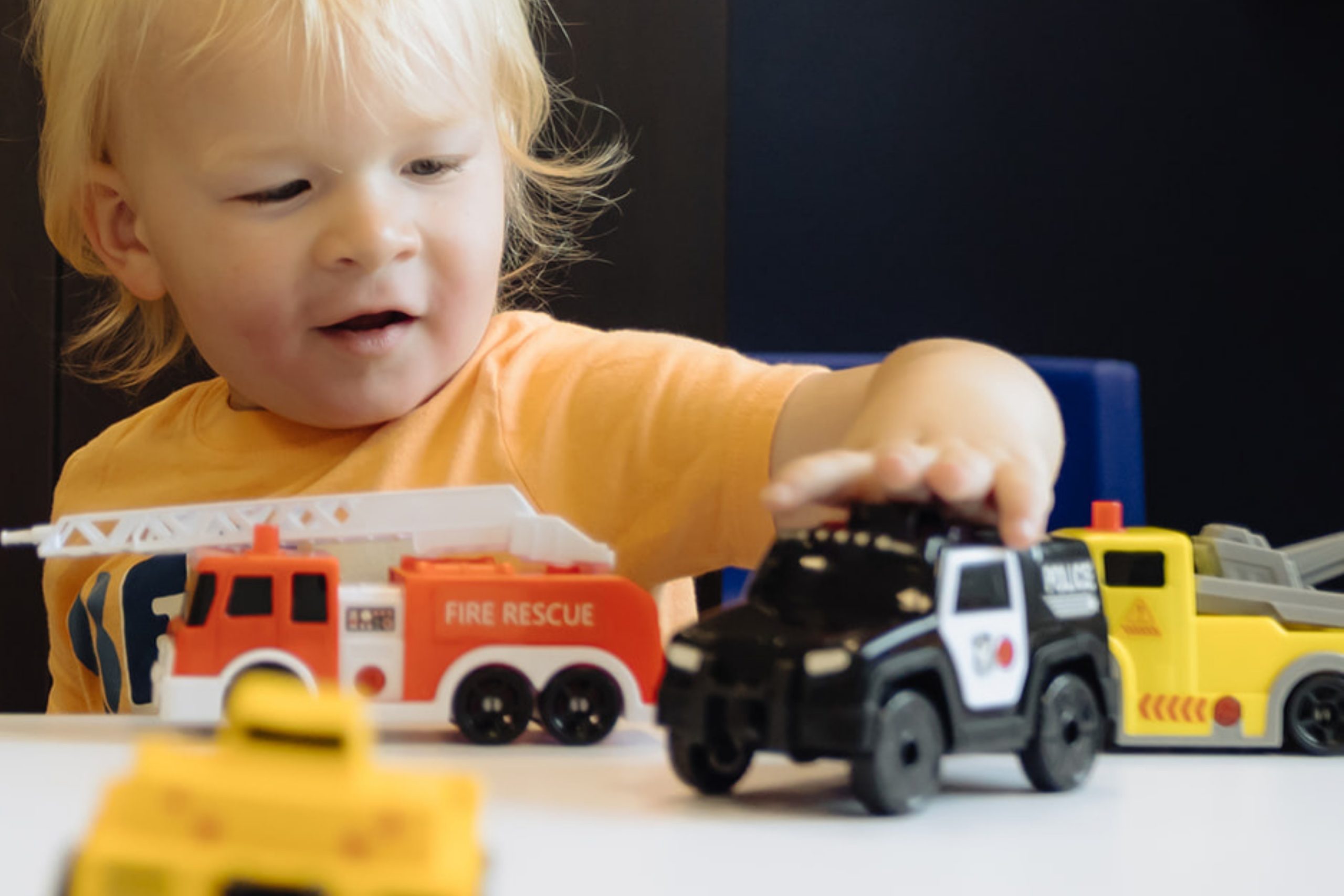
Sensory-language play therapy is a model of intervention that builds skills through play. Activities like playing house, singing songs with actions, pushing toy trucks, blowing bubbles, digging in a sandbox, and tossing a ball back and forth can all target many different language skills.
Benefits of Play-Based Therapy
- Skills carry over more easily to a child’s natural environment
- Attention to tasks improves
- Trust and rapport grow between the child and therapist
- Play is a natural way for children to learn
- Multi-sensory activities support fine motor, gross motor, and social-emotional growth
Springtime Sensory Play Ideas for Early Language
Egg Hunt
Do you have leftover plastic Easter eggs? If so, hold another hunt. Talk about where you found each egg, such as under the bush, in the tree, or beside the plant. Prepositions are essential for following directions and for building vocabulary and expressive language. In addition, you can use the eggs for speech sound practice. Put a picture of your target sound inside each egg. For example, if you are working on /r/, add pictures of a ring, a rhino, and a rose. Then have your child find the eggs, or hide them for you. As each egg is found, your child says the word three times.
Blowing Bubbles or Dandelion Blooms
Also, blowing is a great oral-motor exercise for children who have trouble rounding their lips to make sounds like “oo” and “w.”
Treasure Hunt
For language development, make a treasure hunt with riddles. An older sibling can write a riddle that describes the location of the next hint. For instance, to describe the garage door, you could write, “You push a button to take the car past. It goes up and down but not so fast.” Riddles are optional. However, some children find them more entertaining. For younger children, keep the descriptions very simple.
Get Dirty Outside
Dig in the dirt, plant flowers, pick wildflowers, and climb trees. Talk about how the flowers differ in size, color, shape, and number of blooms. While planting, compare the seeds and talk about what they need to grow. Also talk about why you can climb one tree but not another, such as size or limb location. You can even take pictures of the signs of spring you see, then make a simple book for your child to share.
Frequently Asked Questions
What is sensory play for language development?
It is play that uses touch, sight, sound, and movement to teach a language concept, sound, or skill. Children learn words and sounds while they are busy doing something fun.
How does play help speech and language?
Play gives children a natural reason to talk, listen, and take turns. In addition, skills practiced in play tend to carry over into everyday life.
What are easy sensory play ideas at home?
Try an egg hunt, blowing bubbles, a treasure hunt with riddles, or digging and planting outside. Talk about what you see, touch, and do as you play.
Source: Bell, Nanci and Bonetti, Christy. Talking; Visualizing and Verbalizing for Oral Language Comprehension and Expression. 2006.
How ETLC Can Help
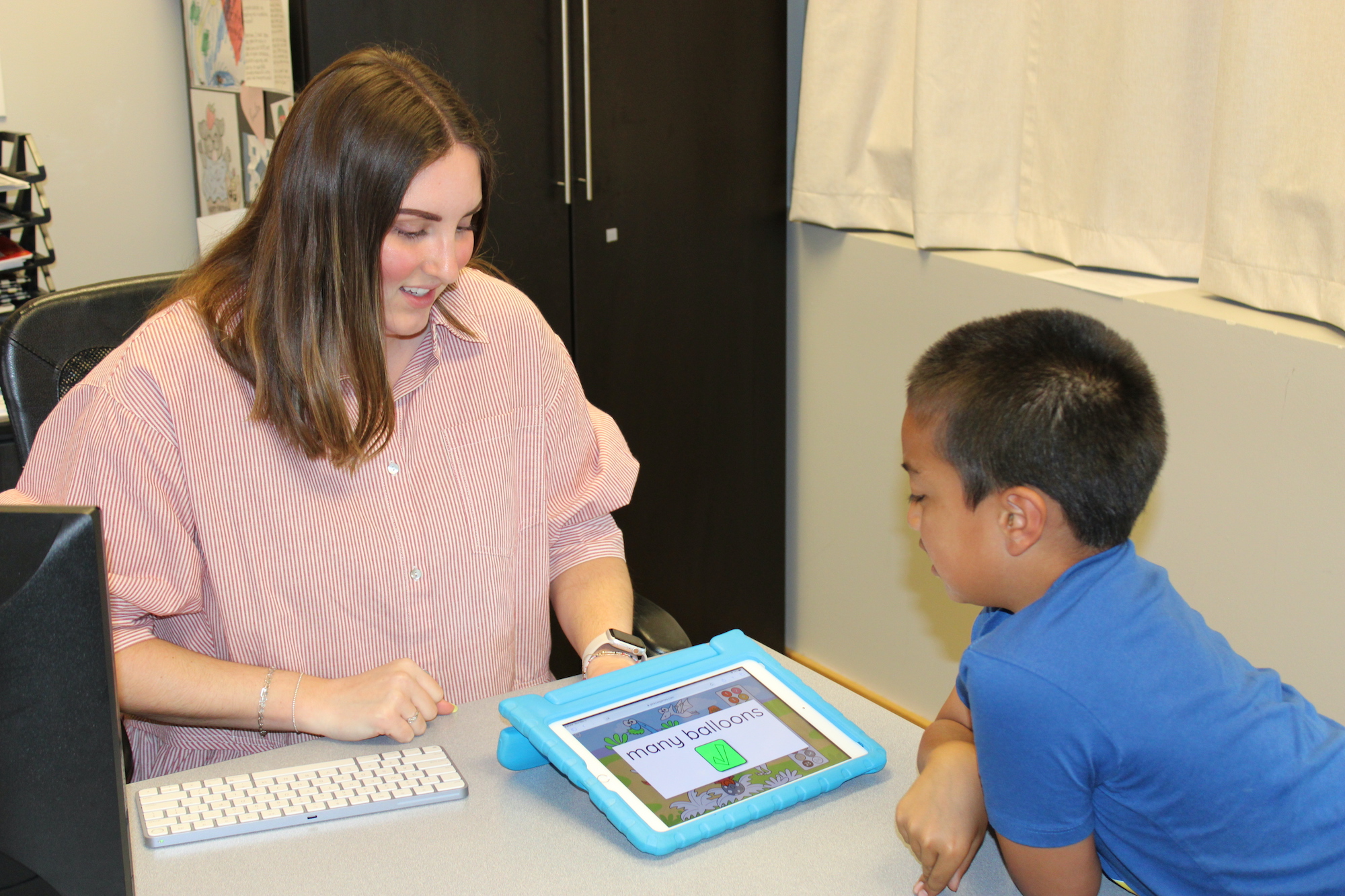
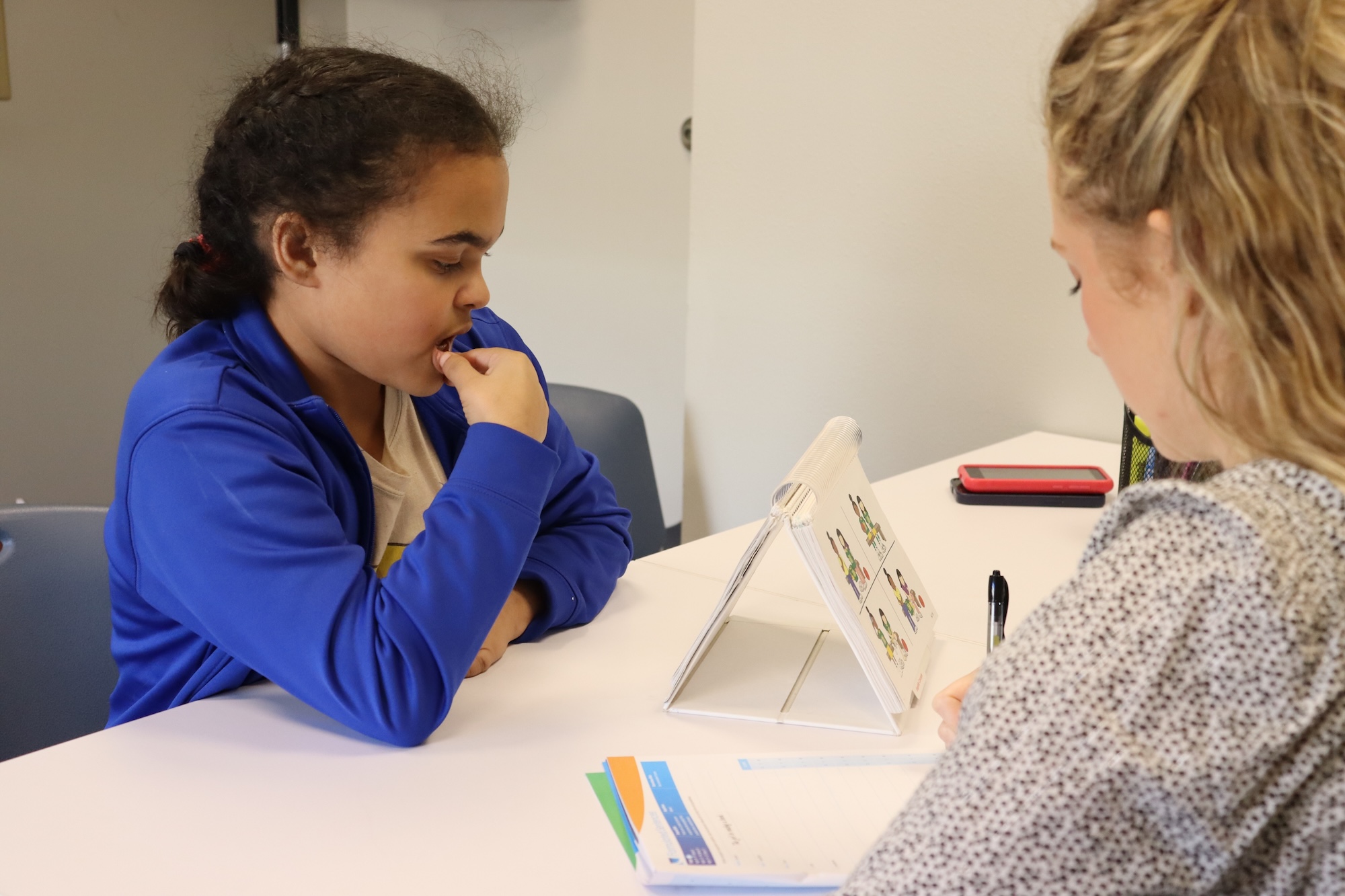
If you are concerned about your child’s speech or language, our speech-language pathologists use play to help children grow. Enrichment Therapy & Learning Center has locations in Johnston and North Liberty, IA, with virtual services also available.
Learn more about speech and language therapy at ETLC or schedule a free consultation to talk with a member of our team.
You may also find these pages helpful:
About the Author
Sonia Strueby, M.A., CCC-SLP, is the founder of Enrichment Therapy & Learning Center. With over 25 years of experience as a speech-language pathologist, Sonia has dedicated her career to helping children overcome complex communication and academic challenges. She has advanced training and a special focus on treating dyslexia and childhood apraxia of speech, and she is passionate about providing families with a clear path to success.
0 Comments