

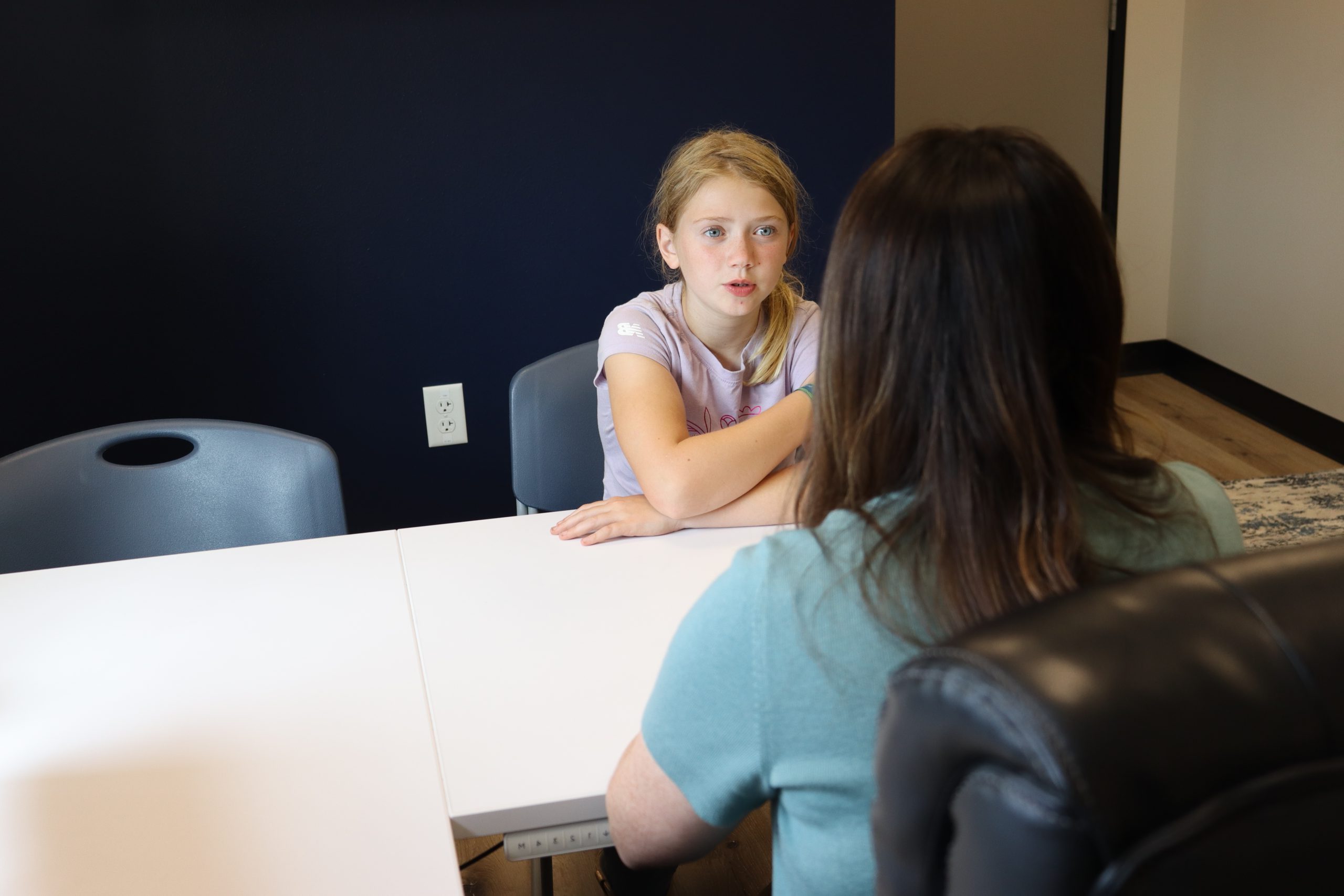
Does your child stutter or often have disfluent speech? Many parents wonder whether to seek therapy and what they can do at home. The good news is that there are a few changes you can make as a parent to help decrease disfluencies and build your child’s communication confidence. This guide covers tips for increasing fluency, along with signs that it’s time to seek help.
Tips for Increasing Fluency at Home
Try to make these changes in how you communicate with your child. They are simple, and they can help your child feel more at ease when talking.
1. Speak Slowly
If you speak in a slow, relaxed way, your child will often try to match your style and slow down their own speech. This tends to work better than telling your child to “slow down.”
2. Pause Frequently
Wait a few seconds after your child finishes speaking before you begin to speak. This slows the conversation down, which can also slow your child’s rate of speech.
3. Ask Fewer Questions
Instead of asking many questions, comment on what your child has said. It’s okay to ask a question, but try to ask one at a time and give your child plenty of time to answer.
4. Use Body Language
Make it clear that you are listening to what your child says, not how they say it. Look engaged and interested, and do not grimace or look uncomfortable when your child is disfluent.
5. Give Your Undivided Attention
Spend 5 to 10 minutes each day with your child without outside distractions. This one-on-one time can help build their confidence with communication.
6. Take Turns Talking and Listening
Ask the whole family to make an extra effort to take turns. Children who stutter often find it easier to talk when there are fewer interruptions.
7. Educate Others
Teach family, friends, and others about what stuttering is. When people understand stuttering and how it affects your child, they tend to be more accepting.
Above all, let your child know that you accept the way they talk, and try not to critique or correct them when they get stuck on a disfluency.
When Should I Seek Help for Stuttering?
Parents often ask whether they should seek therapy for their child’s stuttering, and the answer is usually “it depends.” Many young children go through a stage when their speech is a little “clumsy.” For example, a child under age 5 may repeat whole syllables like “mo-mo-mom” or “ca-ca-ca-ca-cat” for a short time. This can be part of typical development, particularly when it has lasted less than 6 months.
It’s a good idea to consult a speech-language pathologist if:
- Length of time: The disfluency has lasted more than 6 months.
- Age: Your child is older than 6 years.
- Frequency: The stuttering is happening more often.
- Physical signs: Your child shows facial tension or movements, like blinking, a strained expression, nodding, or unusual mouth movements.
- Getting stuck: Your child gets “stuck” on one sound, like “b-b-b-b-ball” or “c-c-c-c-c-cat.”
If you are worried about your child’s speech at any age, you do not have to wait. A speech-language pathologist can help you decide whether therapy would be helpful.
Frequently Asked Questions
Should I tell my child to slow down or take a breath?
It’s usually more helpful to model slow, relaxed speech yourself. Telling a child to slow down can make them feel more self-conscious.
Can I finish my child’s sentences?
Try not to. Instead, wait patiently and let your child finish what they want to say.
Is stuttering the same as a speech sound disorder?
No. Stuttering is a fluency difference, which is about the rhythm of speech. A speech sound disorder is about how sounds are made. To learn more, see our post on the difference between speech and language.
How ETLC Can Help
If you have more questions about stuttering, our team is here to help. Enrichment Therapy & Learning Center has locations in Johnston and North Liberty, IA, with virtual services also available.
Learn more about speech-language therapy at ETLC or schedule a free consultation to talk with a member of our team.
You may also find these pages helpful:
About the Author
Sonia Strueby, M.A., CCC-SLP, is the founder of Enrichment Therapy & Learning Center. With over 25 years of experience as a speech-language pathologist, Sonia has dedicated her career to helping children overcome complex communication and academic challenges. She has advanced training and a special focus on treating dyslexia and childhood apraxia of speech, and she is passionate about providing families with a clear path to success.


0 Comments