

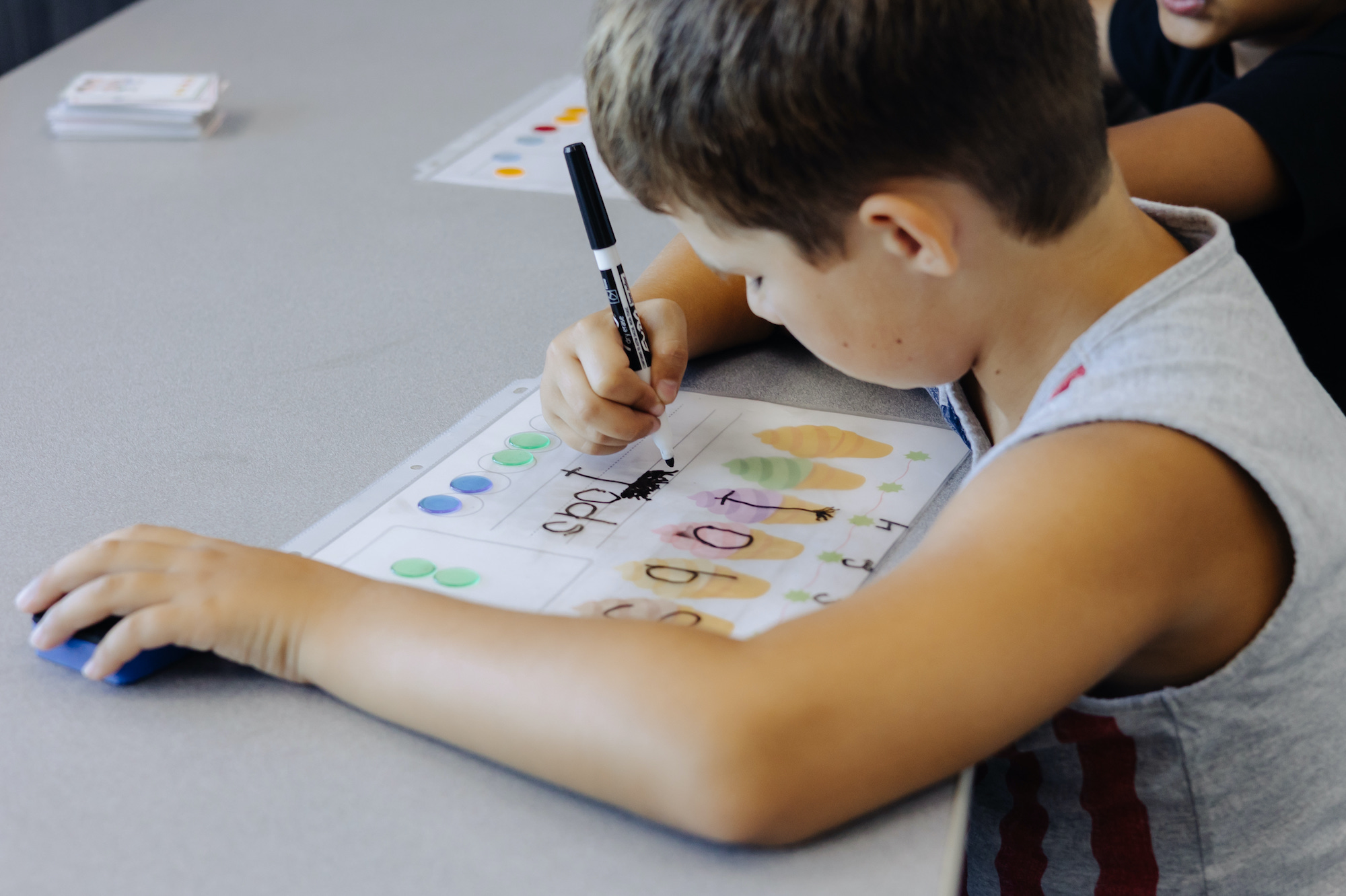
Does your child have trouble sounding out words while reading? One of the most effective ways to help is to teach vowels, vowel combinations, and digraphs with simple flashcards and games. These sounds trip up many early readers because the same letters can say different things, so learning them in a clear order makes decoding much easier.
This guide shows you how to build a flashcard set step by step, and then gives you five games that make practice fun.
How to Teach Vowels With Flashcards
Start by making a set of index cards, with one vowel, vowel combination, or digraph on each card. Parents may need a quick refresher on what each sound says, and that makes the sounds easier to teach.
Write a helper word in the bottom right corner of each card, such as “say” for “ay,” so your child can use it as a hint when needed. Once your child recognizes a group of cards without a hint at least 80% of the time, add the next group.
Step 1: Short Vowels and Vowel Combinations
- Short vowels: a, i, o, u, e.
- Vowel combinations that follow the walking rule: oa, ee, ea, ai, ay, ie, ue. These follow the rule “two vowels go walking, the first one does the talking,” which means you say the name of the first letter.
Step 2: Tricky Vowels and Digraphs
- Vowel combinations that break the rule: oo, ou, ow, oy, oi, au, aw. These sounds do not play by the walking rule, so they simply have to be memorized.
- Digraphs: sh, ch, ck, th, wh, tch, dge. Help your child understand that although there are two or three letters, they make only one sound.
- R-controlled vowels: ar, or, er, ir, ur. Note that er, ir, and ur all make the same sound.
When you have added every card, keep challenging your child. Once your child feels confident, work on increasing the speed at which they can get through the whole set. Megan, one of our speech-language pathologists, walks through the cards in this short video:
Five Fun Games to Teach Vowels
Once your child knows the cards, use these games to teach vowels in a playful way. Keep your flashcards handy, because every game uses them.
Around the World
Place vowel flashcards around a bucket, and have your child stand behind one card at a time. Your child says the vowel’s sound and then throws a ball into the bucket. Next, your child moves to the following card. See how fast they can travel around the world,, and try changing the game by adding a timer or a new way to move.
Ball Toss
Toss a ball back and forth with your child. Say a vowel combination, such as “a-i,” and toss the ball. Your child catches it and says the sound, such as “ay” as in “say,” and then tosses it back. Keep going until practice is done.
Dice Game
Buy blank dice at a local store. On one die, write a target vowel on each side, and on the other, write a consonant on each side. Roll both dice and read the nonsense word they make. Then roll again and keep practicing.
Ladder Exercise
Place flashcards in a row, as if each card were a rung of a ladder, and put a basketball hoop or bucket at the top. Your child starts at the bottom and climbs by saying the sound on each card. If your child makes a mistake, they throw the ball from the missed card and start over. The goal is to reach the top without a mistake.
Football Game
This is the ladder idea in a football version. First, make a paper football, and draw a football field on a sheet of paper. Write a vowel on each side of every yard line. Your child starts at the 10-yard line and works up the field by saying each vowel. When a mistake happens, they punt the football from that yard line and go back to the 10. The goal is to reach the end zone.
Try Vowel Towers
Vowel Towers is another great way to teach vowels and vowel combinations. In this video, Sarah, another one of our therapists, shows how to practice with your child at home.
Build Reading Speed Once Vowels Are Solid
When your child knows the vowels but still reads slowly or makes mistakes, the next step is speed and accuracy. Our post on increasing your child’s reading rate includes vowel tracking pages that help.
Frequently Asked Questions
Which vowels should I teach first?
When you teach vowels, start with the short vowels (a, i, o, u, e). Then move to vowel combinations, digraphs, and R-controlled vowels once your child is at least 80% accurate on each set.
Why do some vowel combinations not follow the “two vowels go walking” rule?
English has many vowel patterns, and sounds like oo, ou, ow, oy, and oi do not follow that rule. Because of this, children need to memorize them through repeated practice, and games make that practice easier.
When should I be concerned about my child’s decoding?
If your child continues to struggle to sound out words despite regular practice, an evaluation can pinpoint what is getting in the way. Our post on teaching decoding skills explains the bigger picture, and our signs of dyslexia guide covers the warning signs.
How ETLC Can Help
If your child needs more support with sounding out words, our team is here to help. Enrichment Therapy & Learning Center has locations in Johnston and North Liberty, IA, with virtual services also available.
Learn more about dyslexia and reading therapy at ETLC or schedule a free consultation to talk with a member of our team.
You may also find these pages helpful:
About the Author
Sonia Strueby, M.A., CCC-SLP, is the founder of Enrichment Therapy & Learning Center. With over 25 years of experience as a speech-language pathologist, Sonia has dedicated her career to helping children overcome complex communication and academic challenges. She has advanced training and a special focus on treating dyslexia and childhood apraxia of speech, and she is passionate about providing families with a clear path to success.

0 Comments