

Written by: Sonia Strueby, M.A., CCC-SLP, Founder of Enrichment Therapy & Learning Center
Originally Published: October 17, 2022 | Updated: August 31, 2026
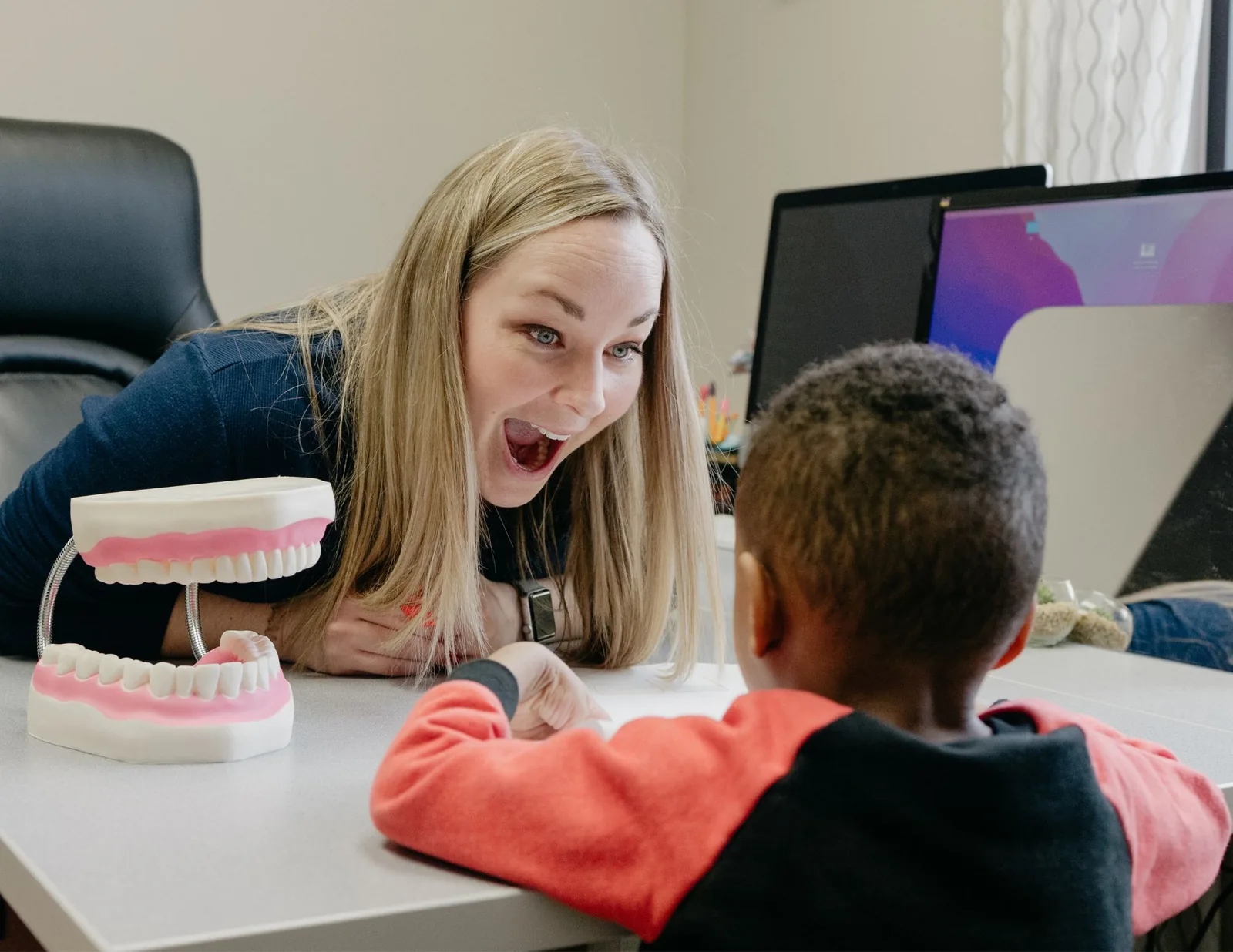
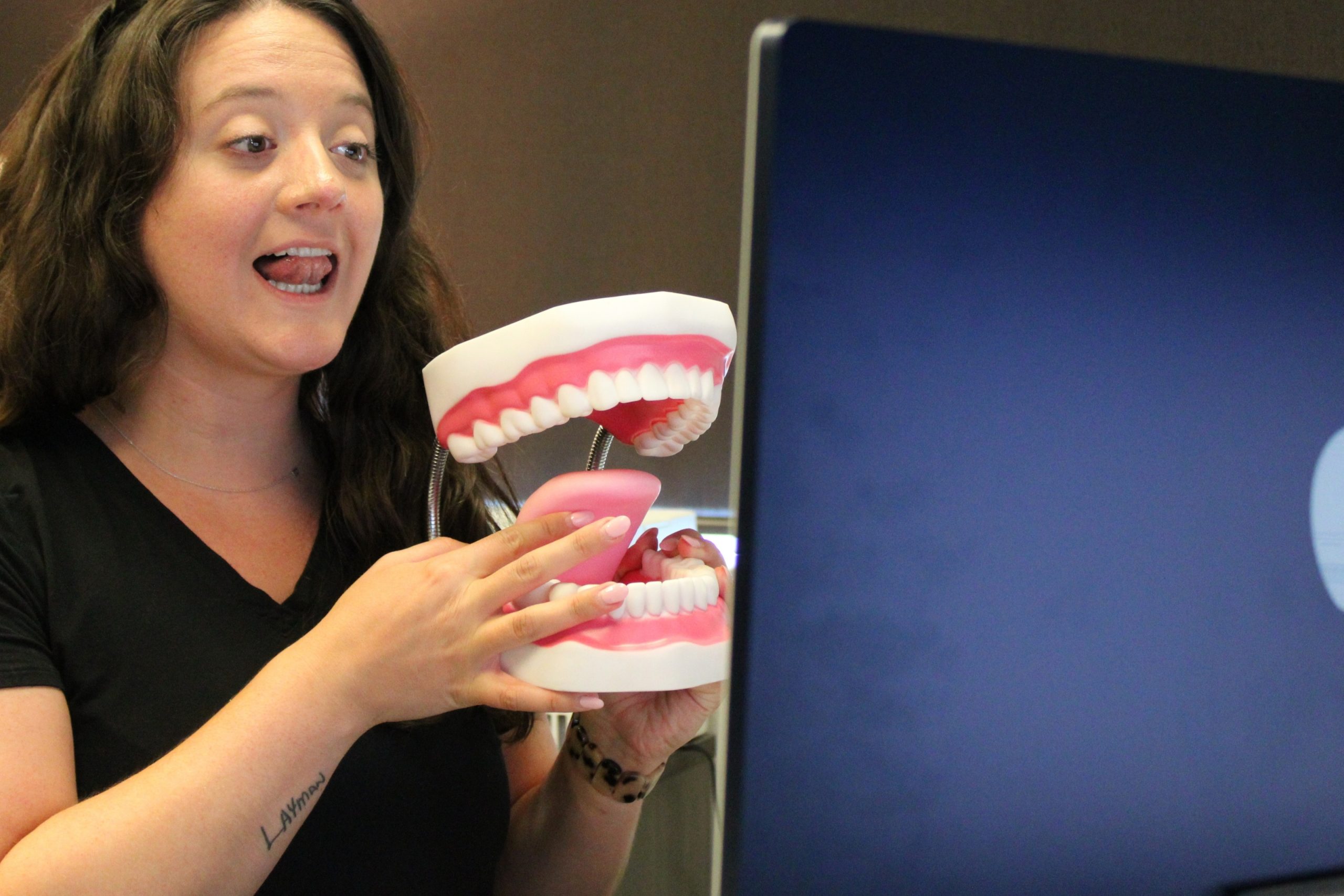
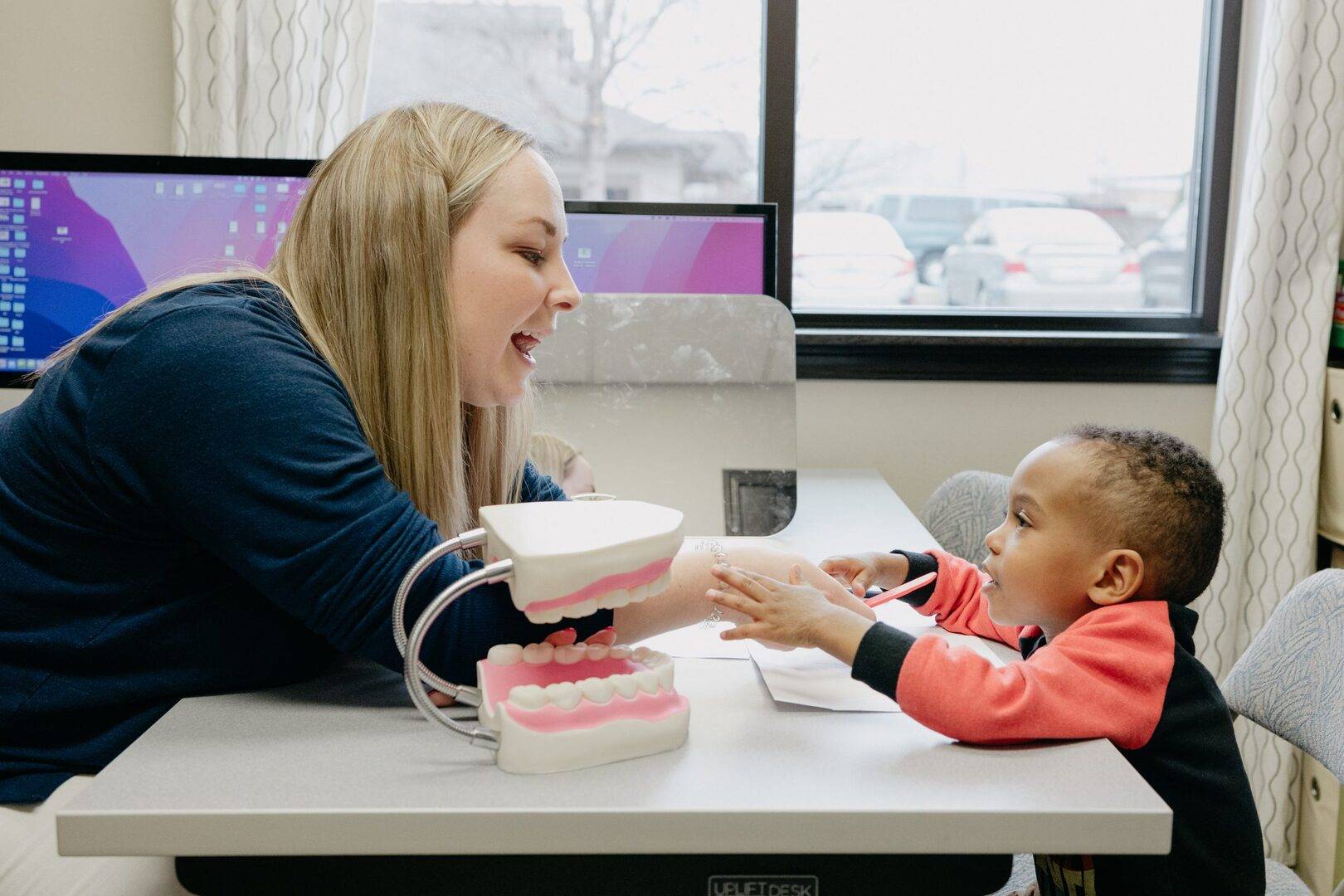
Orofacial myofunctional therapy is a specialized program that corrects improper tongue and facial muscle patterns, such as resting the tongue too low, breathing through the mouth instead of the nose, or pushing the tongue forward when swallowing. Therapy strengthens and retrains these muscles through targeted exercises, so the tongue, lips, and jaw work together the way they’re meant to. Because every child’s muscle patterns and habits are different, treatment is built around their specific needs rather than a one-size-fits-all plan.
What Is an Orofacial Myofunctional Disorder?
An orofacial myofunctional disorder (OMD) happens when the muscles of the face, mouth, and tongue don’t work together properly during rest, breathing, chewing, swallowing, or speaking. Instead of the tongue resting gently on the roof of the mouth, for example, a child with an OMD might rest it low and forward, or push it against the teeth when they swallow.
These patterns aren’t just a bad habit that a child will “grow out of.” Left untreated, they can affect speech clarity, breathing, sleep, and even the growth of the jaw and teeth.
What Causes Orofacial Myofunctional Disorders?
OMDs usually develop from one or a combination of the following:
- Prolonged thumb, finger, or pacifier sucking beyond the toddler years
- Tongue-tie (ankyloglossia), which limits how far or how high the tongue can move
- Chronic allergies, enlarged tonsils/adenoids, or a stuffy nose that forces mouth breathing
- Low muscle tone in the face or mouth
- Structural factors, such as a narrow palate
Because these causes overlap with medical and dental issues, a speech-language pathologist often identifies an OMD while working alongside an ENT, dentist, or orthodontist.
What Are the Signs of an Orofacial Myofunctional Disorder?
Every child looks a little different, but common signs include:
- Breathing through the mouth instead of the nose, even at rest
- Tongue resting low or forward, or visibly pushing against or between the teeth (tongue thrust)
- Snoring or restless sleep
- Drooling past the toddler years
- Lisps or unclear speech sounds, particularly with “s,” “z,” “sh,” and “th”
- An open bite, crowded teeth, or other dental alignment concerns your dentist or orthodontist has flagged
- Picky eating or difficulty with certain food textures
If your child has a few of these signs, it doesn’t automatically mean therapy is needed. But it’s worth having them evaluated so you know for sure.
How Can Orofacial Myofunctional Therapy Help My Child?
Therapy looks different for every child based on their specific needs, but common areas of improvement include:
- Correcting resting tongue posture (teaching the tongue to rest gently on the roof of the mouth)
- Shifting from mouth breathing to nasal breathing
- Reducing snoring and supporting more restful, restorative sleep
- Improving speech sound clarity
- Correcting tongue thrust during swallowing
- Supporting healthy growth of the facial and jaw structures
- Supporting straighter dentition, which can complement orthodontic treatment
How Does Orofacial Myofunctional Therapy Work?
A myofunctional therapist starts with an evaluation to see how your child’s tongue, lips, and jaw function during rest, breathing, chewing, swallowing, and speech. From there, therapy typically includes:
- Muscle strengthening exercises to build the strength and control needed for proper tongue and lip posture
- Habit correction, such as helping a child stop a lingering thumb-sucking or pacifier habit
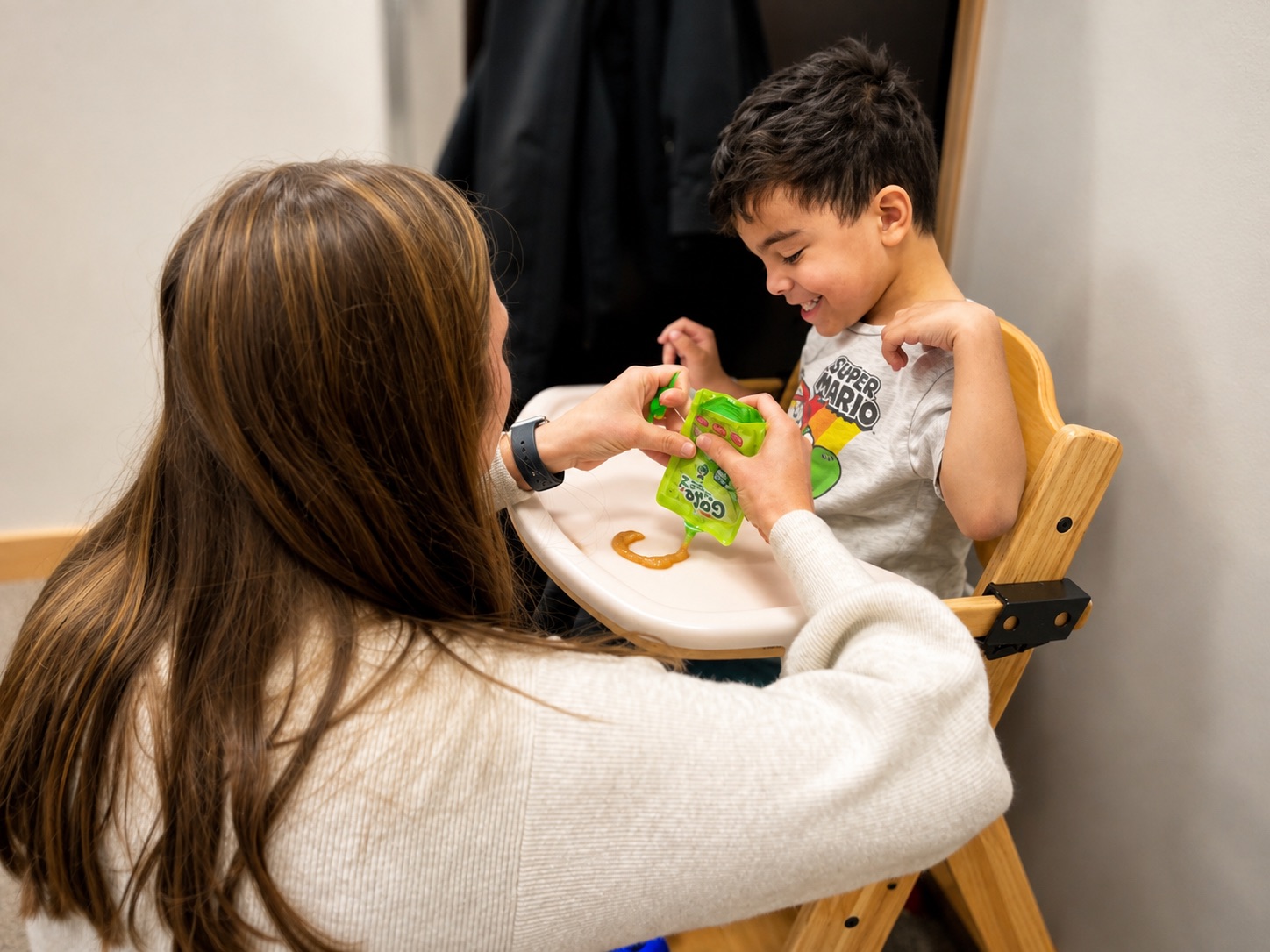
- Swallow retraining, teaching the tongue to move correctly during eating and drinking
- Carryover practice, so the new muscle patterns become automatic in daily life, not just during exercises
Because these habits took time to form, retraining them also takes time and consistent practice. Your child’s therapist monitors and adjusts progress along the way, and often coordinates therapy with your child’s dentist, orthodontist, or ENT for the best results.
When Should I Seek Help?
Consider scheduling a screening if your child snores regularly, breathes through their mouth throughout the day, still sucks their thumb or a pacifier past the toddler years, or has a lisp that hasn’t resolved with speech therapy alone. Catching these patterns early can make treatment more efficient. It can also help prevent them from affecting speech, sleep, or dental development down the road. A screening is a low-pressure way to find out whether therapy is the right next step, so there’s no need to wait until you’re certain something is wrong.
Ready to Get Started?
Orofacial myofunctional disorders are common in children, especially those with speech sound difficulties, and early support can make a meaningful difference in your child’s speech, breathing, and sleep. Our myofunctional therapy program is built around your child’s specific needs so they can make progress as efficiently as possible. Contact us today to schedule a screening or evaluation.
0 Comments