

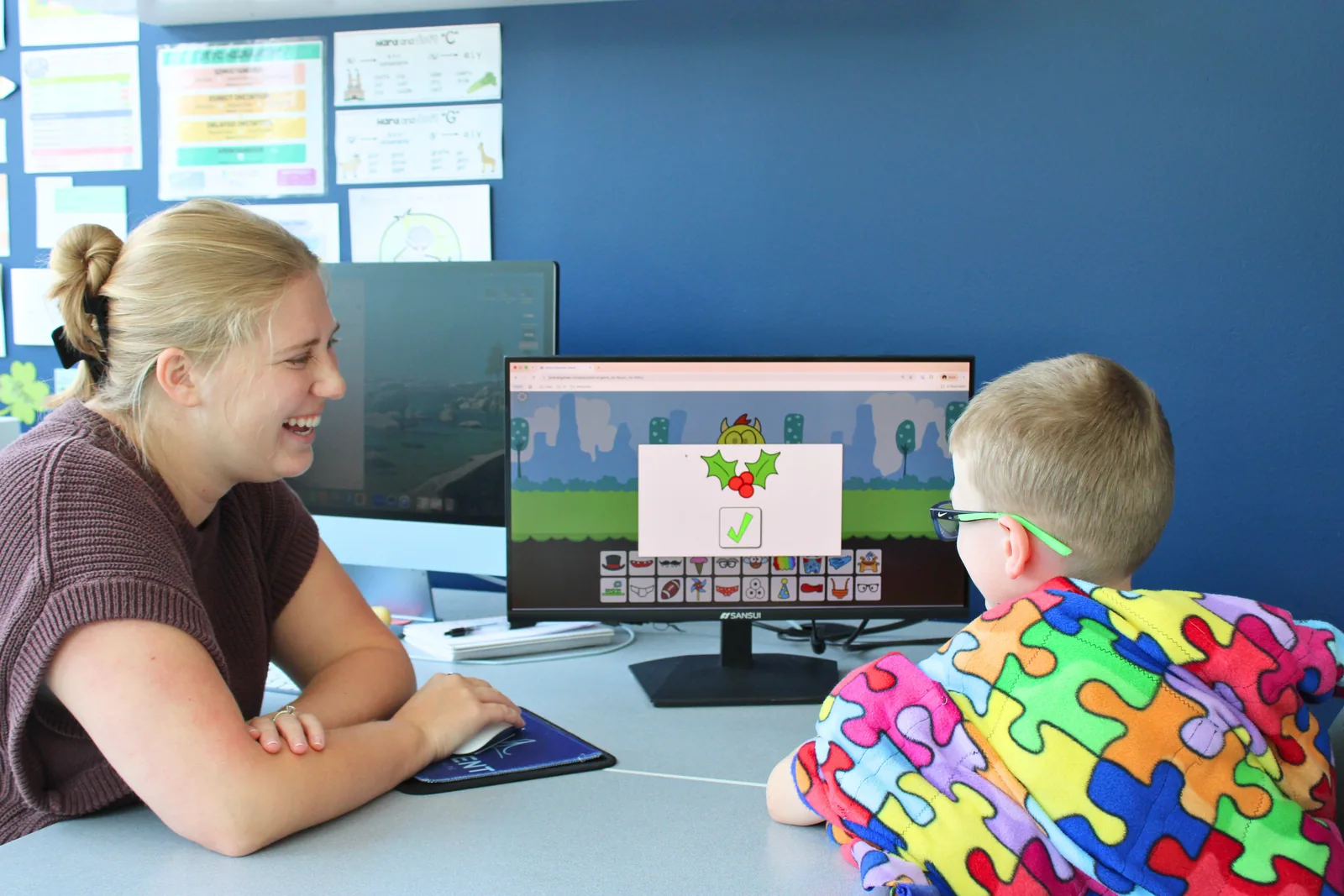
We live in a world saturated with screens — tablets, smartphones, smart TVs, gaming consoles, laptops. For today's children, digital media is simply part of life. And for parents trying to figure out how much is too much, the landscape can feel overwhelming.
The truth is that screen time isn't all good or all bad. What matters is how much, what kind, and at what age. This guide draws on current guidance from the American Academy of Pediatrics and the World Health Organization to give you a clear, practical picture of healthy digital habits — and how to build them at home.
Why Screen Time Matters for Children's Development
The concern with excessive screen time isn't about screens being inherently harmful — it's about what screen time displaces. Every hour a young child spends in front of a screen is an hour not spent in the kinds of interaction that build language, attention, social skills, and executive functioning: face-to-face conversation, unstructured play, reading, physical activity, and sleep.
For infants and toddlers especially, language is learned through back-and-forth interaction with real people — not through watching videos or interacting with apps. Research consistently shows that children do not learn language and cognitive skills from traditional media the same way they do from live interaction with caregivers, even when the programming is educational.
Screen time is also closely linked to attention. Several studies have found that heavy screen use in the preschool years is associated with increased inattention in later childhood — an effect that persists even when controlling for other factors.
Screen Time Guidelines by Age
Under 18 Months
The American Academy of Pediatrics recommends avoiding digital media for children under 18 months, with one important exception: video chatting.
Live video calls with a responsive grandparent, family member, or friend are qualitatively different from passive screen viewing — because they involve real-time back-and-forth interaction. Research shows that video chatting with a responsive adult can support word learning and social connection even at this very young age.
For all other screen content under 18 months — avoid. The World Health Organization's guidance is clear: no screen time for this age group outside of video chatting.
18–24 Months
If parents choose to introduce digital media at this age, the AAP recommends co-viewing with a caregiver — watching together, narrating what's happening, and connecting the content to real life.
Children do not learn well from screens alone at this age. A parent or caregiver actively engaging with the content — "Look, they're cooking! We cook too. What do we use?" — dramatically increases the educational value of the experience. Without that interaction, most of what a very young child sees on a screen doesn't stick.
The World Health Organization recommends: less is better, and no more than one hour per day.
Ages 2–5
Limit to one hour per day of high-quality programming. Co-viewing is still strongly recommended.
When choosing content, look for programs that:
- Are slow-paced and dialogue-rich
- Model prosocial behavior and problem-solving
- Have been reviewed or recommended by child development experts
Research supports Sesame Street and PBS programming as genuinely beneficial for preschool-age literacy and vocabulary. In contrast, many apps marketed as "educational" have little to no evidence behind their claims — and fast-paced, flashy content may actually reduce attention rather than build it.
A note on e-books: interactive e-books with animations, sounds, and games often decrease comprehension by distracting children from the text and reducing the natural back-and-forth conversation that happens during shared print reading. A simple board book read aloud with a caring adult remains one of the most powerful learning tools available.
School-Age Children and Adolescents
There is no single recommended daily limit for this age group, but the AAP recommends placing consistent limits on both the amount and the type of digital media — and regularly evaluating whether screen use is enhancing or undermining your child's overall wellbeing.
Key guidelines for this age group:
✓ No screens in the bedroom — especially overnight. Children with screens in their bedrooms consistently sleep less and sleep worse than those without, and sleep quality has a direct impact on attention, learning, and emotional regulation.
✓ No screens during homework — multitasking with screens is a myth. Notifications, social media, and background video all reduce cognitive focus and increase the time it takes to complete work.
✓ No screens in the hour before bed — the blue light emitted by screens suppresses melatonin production, making it harder to fall asleep. The stimulating content of most media also increases alertness at exactly the wrong time.
✓ Be intentional about content — not all screen time is equal. A child engaged in creative content, video chatting with friends, or actively learning has a qualitatively different experience than one passively scrolling or watching selected videos algorithmically.
Four Strategies for Building Healthy Digital Habits
1. Create a Family Technology Plan
A consistent, reasonable technology plan — agreed upon by the whole family — removes the daily negotiation that exhausts everyone. The AAP's family media use planning tool helps families think through both time limits and place-based boundaries.
Consider designating:
- Tech-free zones — dining room, bedrooms, and ideally at least one common space
- Tech-free times — mealtimes, the first hour after school, and at least one hour before bed
Whatever rules you set should apply to everyone, including adults. Children notice when parents are glued to their own phones at dinner — and they respond to what they see modeled, not just to what they're told.
2. Model the Balance You Want
You are your child's most powerful teacher when it comes to technology habits. If screens are out during family meals, conversations, and bedtime, that communicates something important about where screens rank relative to other things in your home.
Try narrating your own choices occasionally: "I'm going to put my phone away so I can really listen to your day." This makes the intention explicit and gives your child language for their own choices over time.
3. Use Technology for Connection and Creativity
Two of the greatest strengths of technology are communication and creativity. When your family uses screens for these purposes — video calling a relative, making a short film together, creating digital art, listening to music — the experience is qualitatively different from passive consumption.
Help your child think about what they're doing with screens, not just how long. A child who spends two hours passively watching videos and a child who spends two hours video chatting with a grandparent, making a stop-motion animation, and listening to an audiobook are having very different experiences — even if the time is the same.
4. Always Prioritize the Fundamentals
No screen time should come at the expense of sleep, physical activity, face-to-face play, or reading aloud together. These are the experiences that build the brain — and they can't be replaced by any amount of high-quality digital content.
When a child's screen use starts crowding out sleep, outdoor time, friendships, or family conversation, that's the most reliable signal that it's time to recalibrate.
Screen Time and Speech-Language Development
As speech-language pathologists, we pay particular attention to the relationship between screen time and communication development — because this is where we see the most significant effects in our clinical practice.
Children who spend large amounts of time with screens often have:
- Reduced vocabulary compared to peers with more limited screen exposure
- Less practice with back-and-forth conversational exchange
- Reduced attention for listening tasks
- Less experience with the kind of sustained, focused engagement that reading and learning require
This doesn't mean screens caused these difficulties — but it does mean that when a child is already struggling with speech or language, screen time becomes even more important to monitor and limit. Every minute of passive screen viewing is a minute that could be spent in the kind of interactive, language-rich play and conversation that supports development.
Frequently Asked Questions
My child has a speech delay. Does screen time make it worse? Research suggests that excessive screen time in early childhood is associated with language delays in some studies — though the relationship is complex and other factors are involved. What we know clearly is that language is built through interaction with people, not screens. If your child is receiving speech therapy, reducing screen time and replacing it with interactive play and conversation is one of the most impactful things you can do to support their progress.
What about educational apps? Are they really helpful? Some apps have genuine educational merit — but many that are marketed as "educational" have little to no research behind them. Look for apps that are interactive in a truly back-and-forth way, reward thinking rather than clicking, and are used with a caregiver present rather than as solo entertainment. Common Sense Media (commonsensemedia.org) provides research-based reviews of apps and media for children.
My teenager is on screens constantly. Is that harmful? Adolescents face unique risks from excessive screen use — particularly social media, which has been linked to increased anxiety, depression, and poor self-image, especially in girls. The American Psychological Association has raised significant concerns about social media use in teenagers. The key questions are: Is your teen sleeping enough? Are they maintaining real friendships? Are they physically active? Do they have time offline each day that they genuinely enjoy? If the answers are no, it may be time to revisit the balance.
Is there good screen content for young children? Yes. Look for content that is slow-paced, dialogue-rich, and models prosocial behavior — Sesame Street, Daniel Tiger's Neighborhood, Bluey, and similar programs have genuine developmental value. Avoid fast-paced, highly stimulating content with lots of rapid scene changes, which research suggests can reduce attention. And whenever possible, watch together and talk about what you see.
How ETLC Can Help
If you're concerned about how screen time may be affecting your child's speech, language, attention, or learning — or if you'd like guidance on building healthier digital habits — our team is here to help.
Learn more about our Speech-Language & Social Skills services orschedule a free consultation to talk with a member of our team.
You may also find these pages helpful:
About the Author
Sonia Strueby, M.A., CCC-SLP, is the founder of Enrichment Therapy & Learning Center. With over 25 years of experience as a speech-language pathologist, Sonia has dedicated her career to helping children overcome complex communication and academic challenges. She has advanced training and a special focus on treating dyslexia and childhood apraxia of speech, and she is passionate about providing families with a clear path to success.



0 Comments