

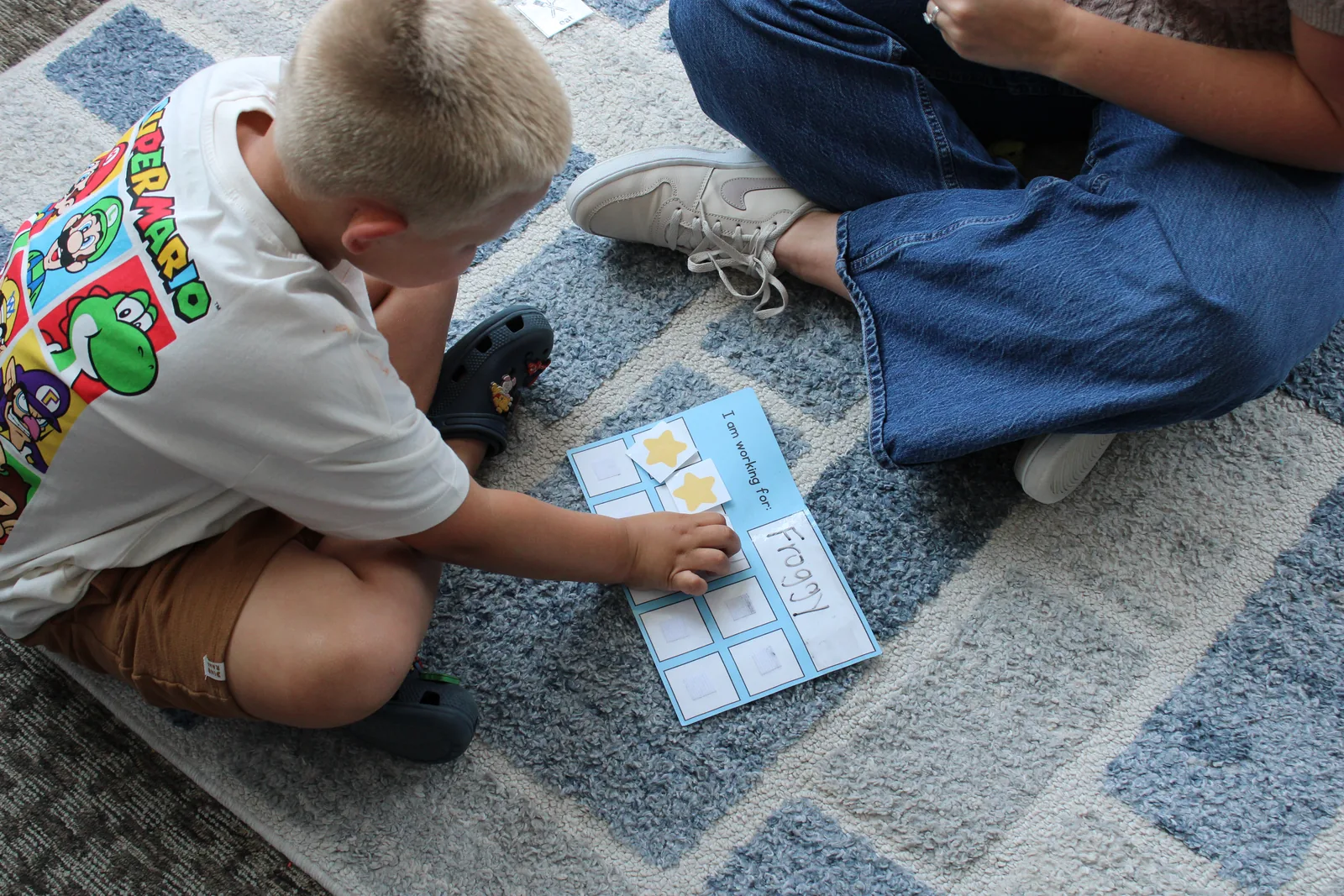
Homework battles. Forgotten assignments. Cramming the night before a test. For many families, the after-school hours can feel just as exhausting as the school day itself.
The good news is that most homework struggles aren't about effort or intelligence — they're about systems. When children have the right workspace, the right routine, and the right strategies for learning and remembering information, school feels more manageable, and confidence grows.
This guide covers everything from setting up a homework space to memorization techniques to test-taking strategies — practical tools that work across grade levels and learning styles.
Create a Workspace That Sets Your Child Up to Focus
Where a child does their homework matters almost as much as when. A well-designed workspace reduces distraction, signals to the brain that it's time to work, and removes the daily decision fatigue of figuring out where to settle in.
Choose the right location. Look for a spot that is quiet, away from high foot traffic, and separate from play areas. A desk in a bedroom or spare room works well. Avoid setting up homework at the dining room table if possible — the association with meals and family activity makes sustained focus harder.
Natural light is ideal. Position the desk near a window when you can.
Find the right desk and chair. The desk surface should be flat and uncluttered. Your child's feet should rest firmly on the floor when seated — proper posture reduces fatigue during longer work sessions. For younger children (ages 3–5), a chair with an attached work surface gives adults the ability to keep kids secure and focused.
Keep it simple and organized. Stock the space with only what your child actually needs: sharpened pencils, erasers, paper, a calculator, good lighting, and any tools their teacher has recommended. Everything else should be stored away. Fewer distractions mean more time on task.
Make it theirs. A workspace your child feels ownership over is a workspace they'll actually use. Let them add one or two personal touches — a small photo, a favorite color of pencil cup, a motivational quote on the wall. The goal is a space that feels inviting without being distracting.
Build a Homework Routine That Actually Works
Consistency is the single most powerful homework tool available to families. When homework happens at the same time, in the same place, every day, children stop fighting the routine and start following it automatically.
Set a consistent homework time. Choose a time that allows for a transition after school — most children need at least 30 minutes to decompress before they can productively engage with academic work again. A snack and some outdoor or physical activity first make a significant difference in focus and mood.
Use a planner every day. Many schools provide planners — but simply having one isn't enough. Teach your child to write down every assignment before leaving school, including long-term projects broken into steps. When they sit down to work, they should know exactly what needs to be done. Crossing off completed items provides a genuine sense of momentum.
Schedule breaks between tasks. Back-to-back assignments without breaks lead to diminishing returns. Build in short brain breaks — 3 to 5 minutes of movement, a quick snack, or just stepping away from the desk — between tasks. This resets focus and prevents the burnout that turns homework into a two-hour battle.
Know when enough is enough. If your child is spending significantly more time on homework than seems reasonable for their grade level, it's worth flagging with their teacher. As a general guideline, the National PTA recommends 10 minutes of homework per grade level per night — so 20 minutes for second grade, 50 minutes for fifth grade, and so on. Significantly exceeding those guidelines regularly is a signal worth addressing.
Memorization Strategies That Go Beyond Re-Reading
Re-reading notes the night before a test is one of the least effective study strategies there is — but it's what most children default to because it's what they've always done. Here are strategies that actually work.
Write it down. The act of writing by hand — not typing — strengthens memory more than passive reading. Have your child write vocabulary words and definitions on flashcards, with the term on the front and the definition on the back. Use them for self-quizzing rather than just reading.
Draw a picture. Adding a small sketch to a flashcard creates a visual anchor for the word. A child who can picture a concept is far more likely to recall it under pressure than one who only reads it.
Say it out loud. Have your child explain the concept to you in their own words — without looking at their notes. If they can teach it, they know it. If they can't explain it clearly, that's the part to review.
Make an association. Connect new information to something your child already knows or cares about. The stronger and more personal the connection, the easier the recall. "The word 'benevolent' means kind — like how Grandma always brings cookies when she visits."
Use chunking. Group information into smaller clusters rather than trying to memorize one long list. Instead of remembering a four-step bedtime routine as four separate items, chunk it into two pairs: "teeth and face" and "pajamas and hamper." Two chunks are easier to hold than four separate items.
Try linking. For lists, create a chain of silly mental images that connect each item to the next. If your child needs to remember apples, milk, and bread, picture apples swimming in a glass of milk, which then pours over a loaf of bread like a waterfall. Absurd images stick better than neutral ones.
Draw a semantic map. On paper or in their head, have your child draw a web with the main topic in the center and connecting ideas branching out. Connecting information spatially helps the brain organize and retrieve it more efficiently.
Make an acronym. For ordered lists or sequences, a memorable acronym can be a useful shortcut — just make sure the acronym itself is simpler than what it stands for.
Sing it. Music and rhythm are powerful memory tools, especially for younger children. If your child can put a concept to a familiar tune, it tends to stick in a way that silent memorization doesn't.
Test-Taking Strategies for Calmer, Stronger Performance
Test anxiety is more common than people realize — and it's rarely about not knowing the material. It's about not knowing how to navigate a testing situation with confidence. These strategies help.
Visualize before and during the test. Before the test begins, have your child close their eyes and picture themselves sitting calmly, reading each question carefully, and knowing the answers. During the test, encourage them to create a mental picture or movie of what each question is asking — especially for reading comprehension. Visualization dramatically improves retention of details and the ability to answer complex questions accurately.
Breathe and settle in. Before writing a single word, take three slow, deep breaths. Have a few sips of water. Remind yourself: "I prepared for this. I'm going to do my best." This brief ritual interrupts anxiety and activates the calm, focused state needed for test performance.
Read directions carefully — every time. Many avoidable errors come from misreading or skipping directions. Build the habit of reading all directions before beginning any section, even on familiar test formats. If something is unclear and asking for help is permitted, ask.
Skip and come back. If a question stumps your child, teach them to mark it and move on rather than getting stuck. Spending five minutes on one difficult question while leaving easier ones unanswered is a common and costly testing mistake. Answer every question they know first, then return to the harder ones.
Practice with real test formats. Test anxiety often comes from unfamiliarity with the format itself — filling in bubbles, transferring answers to a separate sheet, navigating a timed section. Practice tests in the same format as the actual exam reduce that anxiety significantly. Familiarity breeds confidence.
Eliminate wrong answers first. For multiple-choice questions, cross out obviously incorrect answers before trying to identify the right one. Narrowing from four options to two makes the decision much more manageable — especially under time pressure.
Frequently Asked Questions
How much homework is too much? A widely cited guideline is 10 minutes per grade level per night. If your child is consistently spending significantly more than that — or if homework is causing significant stress and conflict every night — it's worth a conversation with their teacher.
My child studies hard but still does poorly on tests. What's going on? Test performance involves more than content knowledge — it also requires working memory, processing speed, and the ability to manage anxiety in the moment. If your child consistently knows material during study sessions but struggles to retrieve it during tests, it may be worth exploring whether an underlying learning difference is affecting test performance.
Should I sit with my child during homework? For younger children, proximity helps — being available to answer questions and redirect when focus drifts. For older children, the goal is independence. Sit nearby but let them work through problems before stepping in. The gradual release of support builds the self-regulation skills they'll need for middle and high school.
My child says they don't have homework, but I suspect they do. What do I do? Check the planner together at the end of each school day. Contact the teacher for a weekly assignment sheet if your child consistently loses track of assignments. For students who regularly underreport homework, it's worth investigating whether organizational challenges or anxiety are at play.
How ETLC Can Help
If your child is struggling with homework, studying, or academic confidence despite consistent effort, our team can help identify what's getting in the way and build strategies that work.
Learn more about our tutoring and academic support services orschedule a free consultation to talk with a member of our team.
You may also find these pages helpful:
About the Author
Sonia Strueby, M.A., CCC-SLP, is the founder of Enrichment Therapy & Learning Center. With over 25 years of experience as a speech-language pathologist, Sonia has dedicated her career to helping children overcome complex communication and academic challenges. She has advanced training and a special focus on treating dyslexia and childhood apraxia of speech, and she is passionate about providing families with a clear path to success.


0 Comments