


Originally Published: March 10, 2020 | Updated: September 1, 2026
You can practice speech sounds at home using almost anything, games, crafts, even a scavenger hunt, as long as you know which sound your child is working on and how your speech-language pathologist (SLP) wants it practiced. Speech sound production happens fast and involves a lot of precise, coordinated movement, so it’s normal for kids to need extra reps outside of therapy to make a new sound feel automatic. Here’s how the process works and how to make home practice actually count.
How Do Speech-Language Pathologists Work on Speech Sounds?
According to ASHA’s practice guidance on speech sound disorders, articulation therapy typically follows a step-by-step hierarchy, though depending on your child’s current skill level, therapy doesn’t always have to start at step one:
- Isolation — Saying the target sound all by itself (e.g., “sssss”)
- Syllable — Adding a vowel to the sound (e.g., “so”)
- Word — Saying the sound inside a word (e.g., “soap”)
- Phrase — Using the word in a short phrase (e.g., “use the soap”)
- Modeled sentence — The SLP or parent says a sentence and the child repeats it (e.g., “I use soap when I wash my hands”)
- Generated sentence — The child comes up with their own sentence using the target word
- Conversation — The SLP or parent listens for the sound during natural conversation to see whether the child is using it correctly on their own
Sounds also show up in different positions within words, not just at the beginning. A child working on /s/, for example, might need to practice it at the start of a word (“soap”), in the middle (“dresser”), and at the end (“floss”). Your child’s SLP will let you know exactly which level and word position to target, along with materials like picture cards, word lists, or sentence prompts, plus specific cues you can use to help your child produce the sound correctly.
What Are Fun Ways to Practice Speech Sounds at Home?
The best part about articulation practice is that it can piggyback on almost any activity your child already enjoys. A few easy ways to work it in:
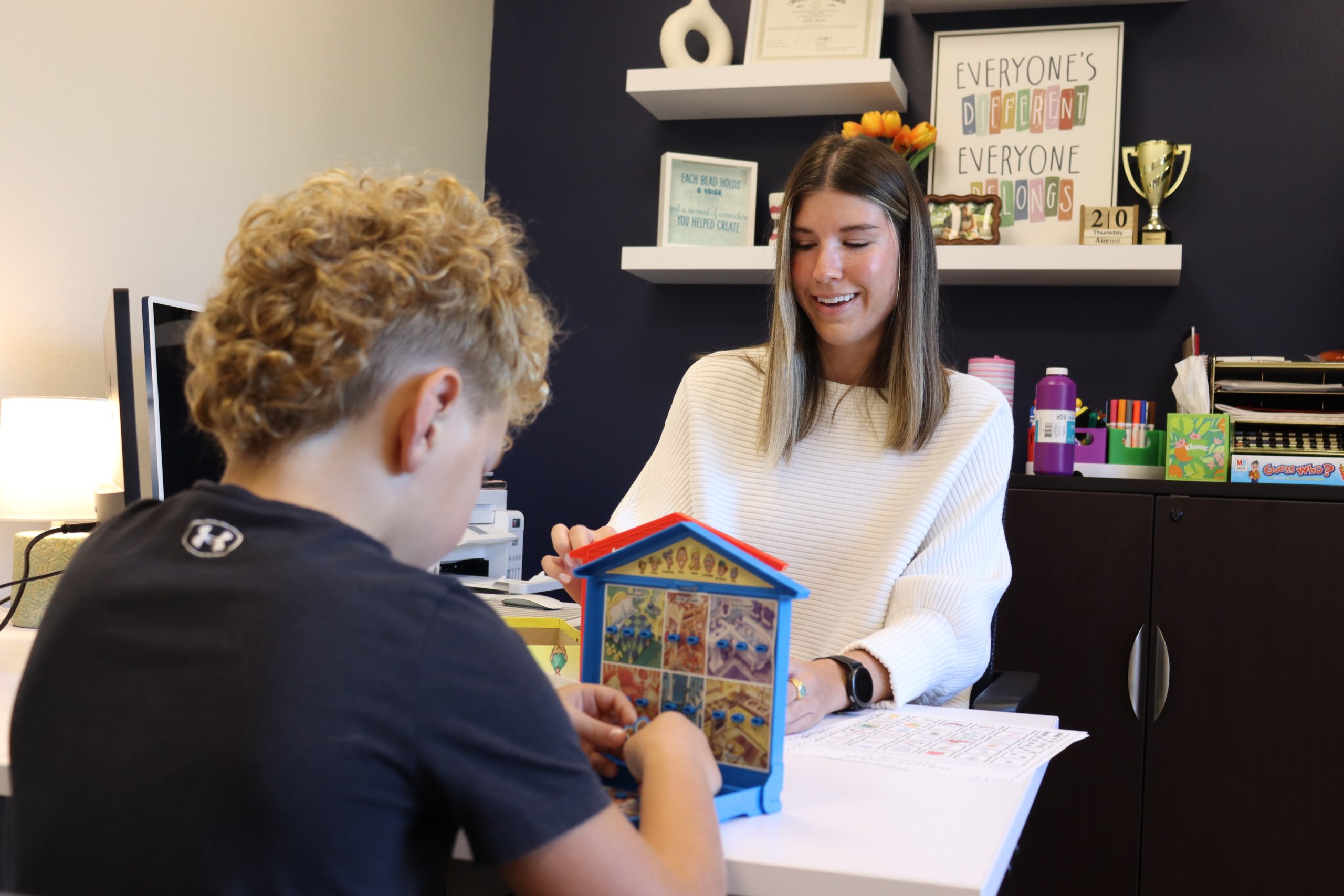
- Play a game. Have your child say their target sound three times before each turn.
- Matching. Ask your SLP for a duplicate set of picture cards, cut them apart, and lay them face down. Every time your child makes a match, have them say the word three times.
- Hide and seek. Cut up picture cards and hide them around a room. Each time your child finds one, say the word three times together. This works just as well in reverse, let your child hide the cards while you search.
- Draw from a hat. Cut up picture cards, drop them in a hat or bowl, and take turns drawing one out. Say each word three times.
- Make a craft. Before handing over a crayon, marker, or pair of scissors, have your child say their sound three times.
If you ever want more picture cards or fresh ideas to keep practice fun, just ask your child’s SLP, this is exactly the kind of thing they’re happy to help with.
Tips for Making Practice Time Go Smoothly
Stay positive, and reinforce the sound, not the letter. Say, “That was such a great ‘sss’ sound!” rather than “That was a great ‘S.'” Kids are working on producing a sound, not naming a letter, and this keeps the feedback focused on what actually matters.
If a word isn’t clicking, move on. That’s completely normal. Praise the effort instead: “Great trying! You’re working so hard!” Getting stuck on one word can turn practice into a frustrating experience fast.
Know when to stop. If your child hasn’t gotten the target sound after three to five tries, wrap up practice for now and let your SLP know. That’s useful information for adjusting the plan, not a sign anything went wrong.
When Should I Seek Help?
If your child is having a hard time being understood by others, seems frustrated when people don’t get what they’re saying, or hasn’t outgrown certain sound errors around the age you’d expect, a speech and language evaluation can help pinpoint exactly what’s going on and set a clear plan for support.
If you have questions about practicing speech sounds at home, contact our team at ETLC, we’re happy to help.


0 Comments