

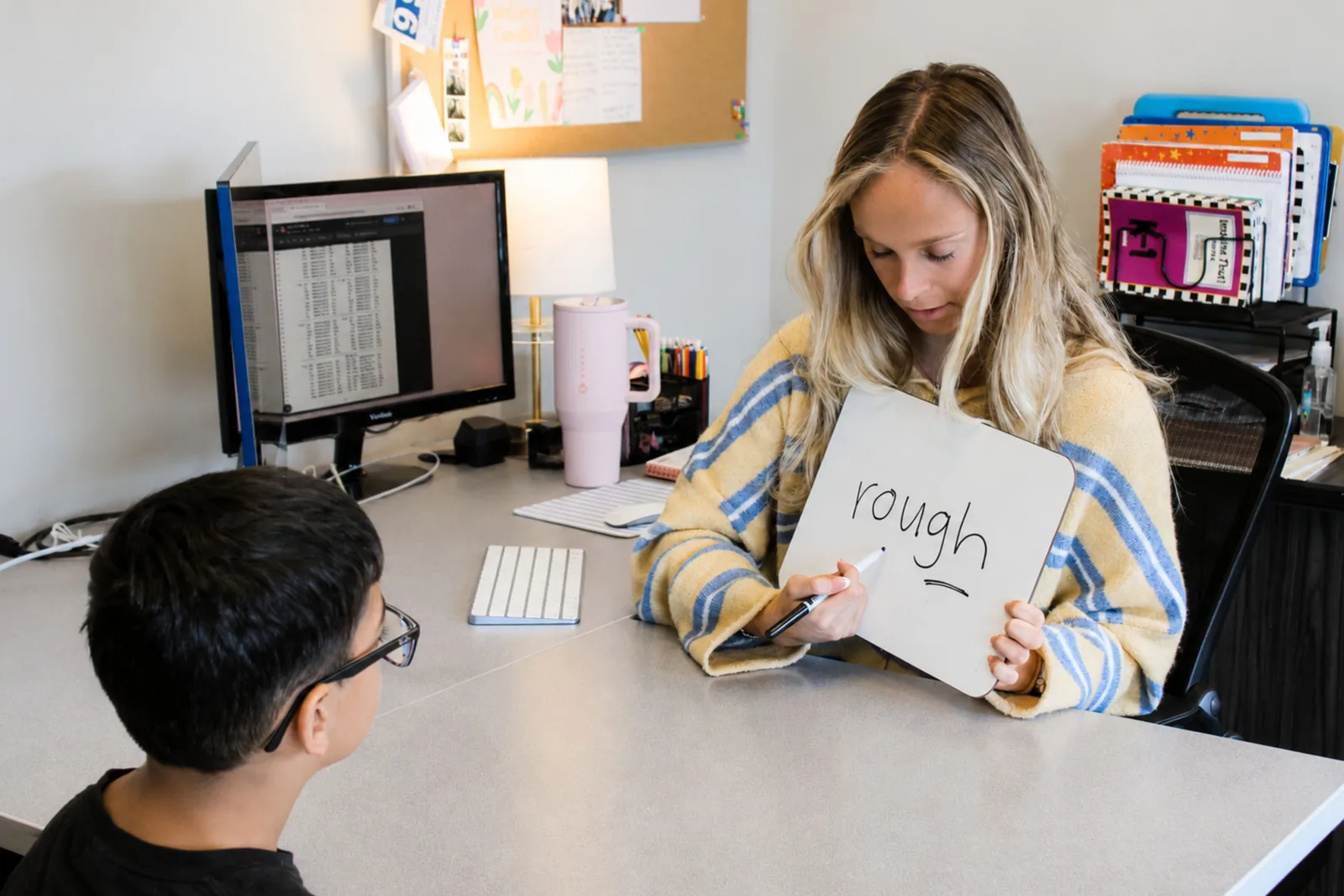
Spelling tests, word lists, sight word flashcards — for many children, these are the source of weekly dread. And for parents, watching a child struggle to remember words they've practiced over and over can be just as frustrating.
The good news is that there are many more effective ways to practice spelling and sight words than simply reading a list out loud before bed. The key is using strategies that engage multiple senses, make the learning feel like play, and help words move from short-term memory into long-term recall.
This guide covers what sight words are, why spelling matters, and a variety of strategies and games you can use at home — including a powerful visualization technique that works for both.
What Are Sight Words and Why Do They Matter?
Sight words are commonly used words that children are taught to recognize automatically — without having to sound them out. Many sight words don't follow standard phonics rules (think said, was, the, because), which means decoding strategies alone won't help a child read them fluently.
At ETLC, we use Fry's Sight Words — a list of the 1,000 most common words found in reading materials from grades 3 through 9. Here's why that matters:
- The first 100 Fry words make up more than 50% of all text a child will encounter
- Knowing all 1,000 words allows a child to recognize approximately 90% of words in a typical book, newspaper, or website
When children can recognize high-frequency words automatically, their reading rate improves, accuracy increases, and they have more mental energy available for comprehension — the actual goal of reading.
Why Does Spelling Still Matter?
Some children (and parents!) wonder whether spelling really matters anymore with spell-check available everywhere. It does — and here's why.
Spell-checkers are useful tools, but they don't catch everything. They won't flag their use in place of they're, or its used instead of it's. More importantly, strong spelling skills support reading fluency, writing confidence, and vocabulary development. The time spent learning to spell words correctly pays dividends across all areas of literacy.
The Visualization Strategy: A Step-by-Step Technique for Both Sight Words and Spelling
One of the most effective strategies we use at ETLC for both sight words and spelling words is visualization — creating a mental "snapshot" of a word so it can be retrieved from memory rather than sounded out or guessed.
Here's how to use it, step by step, using the example word play:
Step 1: Show the word on an index card. Write the word in lowercase letters using black ink. Lowercase matters — it's how children most commonly encounter words in print. Ask your child to study it carefully and take a mental picture of it.
Step 2: Write the word in the air. Take the card away. Ask your child to use their finger as a pencil and write the word in the air, saying each letter aloud as they go: p-l-a-y.
Step 3: Ask questions about the word. Check what they remember: "What's the first letter? What comes after the 'l'? What's the last letter? What's the whole word?" If they struggle, go back to Step 1 and try again — no frustration, just another pass.
Step 4: Spell the word backward. Ask your child to spell the word in reverse: y-a-l-p. This deepens the visual memory by requiring them to move through the word in both directions.
Step 5: Write the word on paper. Finally, have your child write the word forward on paper, saying the letters as they write. This moves the word from working memory toward longer-term retention.
Use this strategy for any word your child is struggling with — sight words, spelling words, or vocabulary words from school.
Six Fun Ways to Practice Spelling Words
If your child has been practicing spelling words the same way week after week, it's time to mix things up. Here are six approaches that make practice feel less like a chore:
1. Visualization + Finger Spelling. Use the step-by-step strategy above. Writing in the air while saying the letters engages both the visual and motor memory systems simultaneously.
2. Memory Match. Write each spelling word on two index cards to create a matching set. Lay them face down and take turns flipping cards to find the pairs. When a match is found, the player must read the word correctly to keep it.
3. Spelling Word Sentences. Have your child use each spelling word in a sentence — their own sentence, not one from a worksheet. Making a personal connection to a word dramatically increases retention.
4. Rainbow Writing. Write the spelling word in one color, then trace over it in two or three more colors. The repetition of writing the word while focusing on its shape reinforces visual memory.
5. Sing It. Put the spelling of a tricky word to a familiar tune. The rhythm and melody create an additional memory hook that pure repetition doesn't.
6. Partner Quiz — But Make It a Game. Take turns drawing a word from a hat and asking the other person to spell it. Award points, keep score, and celebrate effort. When practice feels like a game, children stay engaged longer and retain more.
Sight Word Games That Get Kids Moving
For younger children especially, combining physical movement with sight word practice makes a big difference in engagement and retention.
Sight Word Hopscotch. Use sidewalk chalk to draw a hopscotch grid and write a sight word in each square instead of a number. As your child hops through the grid, they read each word aloud. Play by traditional hopscotch rules — toss a marker, read the word in the square it lands in, and hop through the course.
Sight Word Ladder Game. Lay index cards with sight words in a row on the floor like rungs of a ladder. Place a target (a basket, a trash can, or a hoop) at the top. Your child starts at the bottom, reads each word as they step forward, and works their way up. If they miss a word, they toss a soft ball at the target from that spot and start again. Once accuracy is solid, add a timer and go for speed.
Both games can be played inside or outside and require nothing more than cards, chalk, or a few household items.
Don't Forget: Audiobooks Are a Powerful Reading Tool
For children who are still developing their decoding skills, audiobooks are an underused and highly effective resource. Listening to books:
- Builds vocabulary and comprehension at a level above current reading ability
- Models natural reading rate, inflection, and pacing
- Gives struggling readers access to topics and stories that match their intellectual curiosity — without the barrier of decoding
- Reduces the anxiety and fatigue that come with effortful reading
Audiobooks are available through public libraries (many for free through apps like Libby), as well as through Audible, Apple Books, Scribd, and Spotify. For children with dyslexia especially, pairing audiobooks with print — following along while listening — builds both fluency and comprehension simultaneously.
Frequently Asked Questions
How many sight words should my child know and by when? Most kindergarten programs target the first 25–50 Fry words, with first grade covering the first 100. By the end of second grade, many children know 200 or more. Every child progresses at their own pace — the goal is steady growth, not perfection on a deadline.
My child keeps forgetting the same sight words no matter how much we practice. What's going on? Some words are genuinely harder to retain than others — especially words with unusual spelling patterns. Try the visualization strategy for those specific words, and make sure practice is multisensory (seeing, saying, writing, moving). If the same words keep slipping week after week despite consistent practice, it may be worth discussing with a learning specialist.
Is it better to focus on phonics or sight words? Both matter — and they work together. Phonics gives children the tools to decode unfamiliar words. Sight words give them automatic recognition of high-frequency words that often don't follow phonics rules. Strong readers develop both skill sets.
How long should spelling practice be each night? Short and consistent beats long and infrequent. Aim for 10 to 15 minutes per night, using a different strategy each session to keep things fresh. By the end of the week, your child should have practiced each word multiple times across multiple modalities.
How ETLC Can Help
If your child is struggling with sight word recognition, spelling, or reading fluency, our team can help identify what's getting in the way and build a plan that works.
Learn more about our tutoring and academic support services orschedule a free consultation to talk with a member of our team.
You may also find these pages helpful:
About the Author
Sonia Strueby, M.A., CCC-SLP, is the founder of Enrichment Therapy & Learning Center. With over 25 years of experience as a speech-language pathologist, Sonia has dedicated her career to helping children overcome complex communication and academic challenges. She has advanced training and a special focus on treating dyslexia and childhood apraxia of speech, and she is passionate about providing families with a clear path to success.

0 Comments