

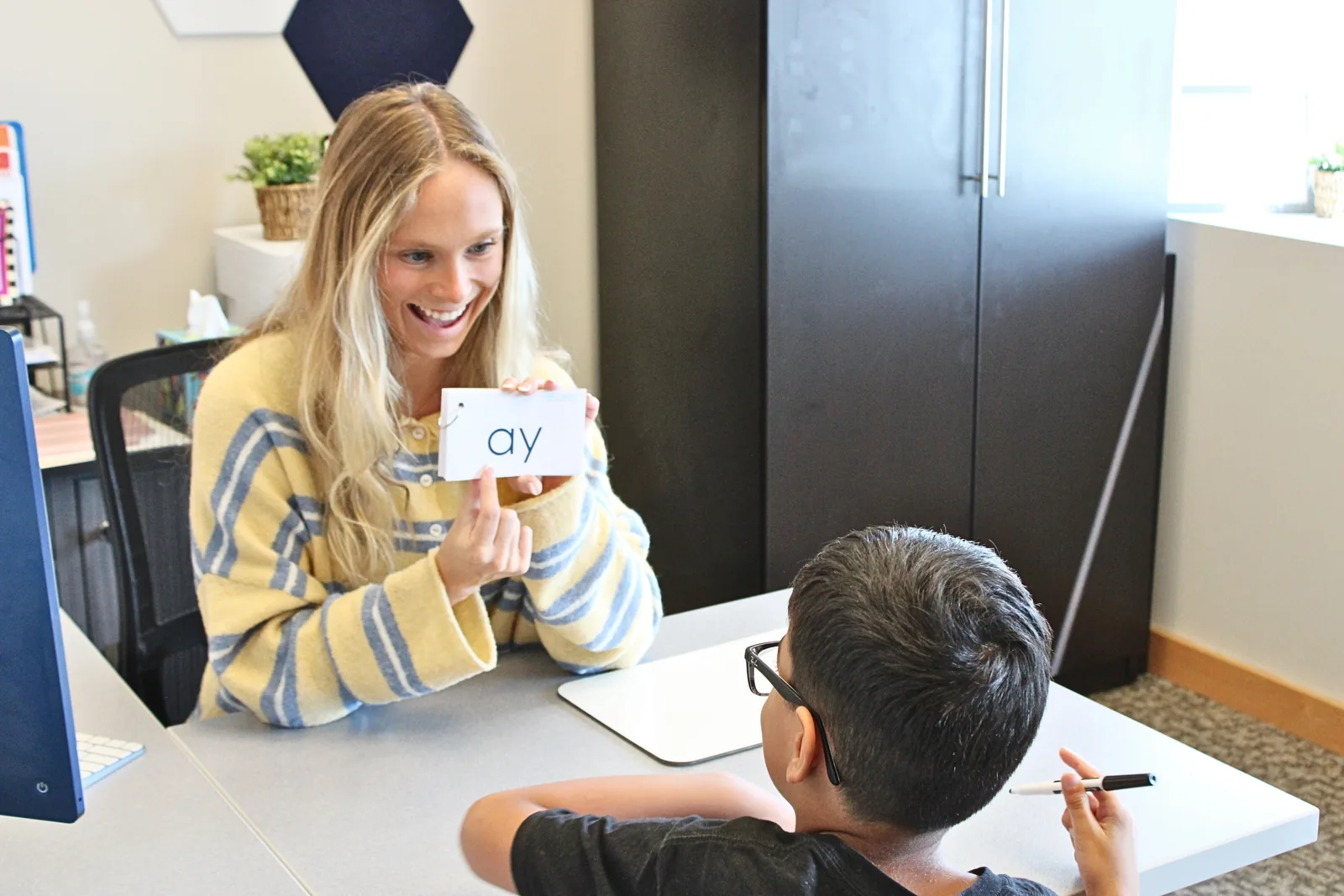
Reading fluency doesn't happen by magic. Behind every confident reader is a child who learned to decode — to recognize the patterns and rules that govern how letters and sounds work together in English.
The good news is that many of these patterns are consistent and teachable. Once a child understands them, they stop guessing at unfamiliar words and start using reliable strategies to sound them out. And books — which many families already use for bedtime reading — turn out to be one of the richest language and literacy tools available, far beyond just practicing reading aloud.
This guide covers the core decoding rules every child should know, how to use books for speech and language practice, and how to choose the right book for your child.
Four Decoding Rules That Unlock Hundreds of Words
English spelling can seem chaotic — but many words follow predictable patterns. Teaching these four rules gives children a reliable toolkit for tackling unfamiliar words.
Rule 1: The Final E (Magic E)
When a word ends in a silent e, the vowel before the consonant says its name (long vowel sound) instead of its short sound. The e "jumps back" over the consonant to change the vowel.
A memorable way to teach this: "The e at the end is magic — it jumps back over the consonant and makes the vowel say its name!"
Rule 2: Walking Vowels (Vowel Teams)
When two vowels appear side by side, the first vowel says its name (long sound) and the second vowel is silent. This is often taught as: "When two vowels go walking, the first one does the talking."
Common vowel teams and examples:
- ai → rain, trail, straight
- ay → pay, stay, play
- ee → feet, tree, sleep
- ea → seat, read, beach
- oa → boat, coat, road
- ie → tie, pie, lie
Once a child recognizes these pairs, they stop trying to give each vowel its own sound and begin reading words like rain and boat automatically.
Rule 3: The C Rule
The letter c makes two different sounds depending on what vowel follows it:
- c makes a hard /k/ sound when followed by a, o, or u: cat, cost, cup
- c makes a soft /s/ sound when followed by e, i, or y: cent, city, cycle
Teaching this rule eliminates a huge source of confusion for early readers — and once they know it, words like circle, cereal, and cyclone become decodable.
Rule 4: The G Rule
The letter g follows the same pattern as c:
- g makes a hard /g/ sound when followed by a, o, or u: game, got, gum
- g makes a soft /j/ sound when followed by e, i, or y: gentle, giant, gym
How to Practice Decoding Rules at Home
Sort words into groups. Write a mix of words from each rule category on index cards and sort them together: hard c vs. soft c, final e vs. short vowel, and so on. Sorting requires active engagement with the rule, which deepens understanding faster than simply reading a list.
Play spot-the-rule. While reading a book together, challenge your child to spot examples of each rule. When they find a walking vowel pair or a magic e word, they call it out. This turns passive reading into active pattern recognition.
Make word chains. Start with a short vowel word (hop) and add a final e to show the transformation (hope). Change one letter at a time to build a chain: hop → hope → home → hole → mole → mole. Chains make the rules feel dynamic and memorable.
Using Books as a Speech and Language Tool
Every book you already own is a potential speech and language therapy tool. You don't need to buy anything new or follow a script — just know what to look for as you read together.
Target Comprehension With WH Questions
As you read, pause and ask questions that target different levels of understanding:
- Who — "Who is in this picture? Who went to the store?"
- What — "What is she doing? What happened next?"
- Where — "Where is the bear? Where did they go?"
- When — "When did he find the map — before or after dinner?"
- Why — "Why is she crying? Why do you think he did that?"
Why questions are the most cognitively demanding — they require inferencing, not just recall — so save them for after your child is comfortable with the simpler question types.
Target Speech Sounds
If your child is working on a specific speech sound, scan the pictures in a book for words that contain it. A winter scene is rich in /s/ words: snow, sled, scarf, skate, snowman, slide. A farm book is great for /f/ and /b/ sounds. Let your child hunt for the target sound words and practice them in a meaningful context.
Target Grammar
Books offer natural models of sentence structure, pronoun use, and verb tense. As you look at pictures together, narrate what you see using grammatically complete sentences, then invite your child to do the same. "She is running. He fell. They are playing together."
For pronoun work, cover the text and describe the pictures using pronouns: "What is he doing? What are they carrying?" Books with multiple characters are especially useful for this.
Target Vocabulary
Choose books with rich, varied vocabulary — especially books that introduce content-area words (nature, science, history) alongside narrative. Before reading, preview two or three new words and talk about what they mean. After reading, revisit them and see if your child can use them in a new sentence.
Pre-Reading Books Worth Knowing
For younger children building phonological awareness and early literacy, certain books do double duty — they're genuinely delightful to read while systematically building foundational skills.
For rhyming awareness:
- Chicka Chicka Boom Boom by Bill Martin Jr. — alphabet exposure, fill-in-the-blank rhyming, colorful illustrations
- Goodnight, Goodnight, Construction Site by Sherri Duskey Rinker — rhyming text with predictable patterns
- One Fish, Two Fish, Red Fish, Blue Fish by Dr. Seuss — rhyming, descriptive language, and imagination
- Jamberry by Bruce Degan — playful language and inventive rhyming (hatberry, shoeberry, in my canoeberry!)
- Five Little Monkeys Jumping on the Bed — counting, cause/effect, active participation
For repetitive language and phonological awareness:
- Brown Bear, Brown Bear, What Do You See? by Bill Martin Jr. — pause before the repeated phrase and let your child fill it in
For letter knowledge:
- Chicka Chicka Boom Boom — naturally introduces every letter of the alphabet in an engaging, memorable context
How to Choose the Right Book for Your Child
Finding a book that's engaging, appropriately challenging, and builds skills is more art than science — but these four steps make it a lot easier.
1. Know your child's reading level. Before visiting the library or bookstore, check with your child's teacher or recent progress report for their current reading level. Many schools use the Developmental Reading Assessment (DRA) or the Fountas & Pinnell system. Knowing the level helps you head directly to the right section rather than guessing.
The Scholastic Book Wizard (bookwizard.scholastic.com) is a free, searchable tool that lets you find books by reading level, topic, and grade — worth bookmarking for frequent use.
2. Do the five-finger test. Have your child open a book to the middle and read one page aloud. Hold up a finger for each word they miss or struggle with. If they put up five fingers before finishing the page, the book is likely too hard for independent reading (but perfect for reading together). If they sail through with no fingers, try something more challenging.
3. Check comprehension. After your child reads the page, ask them to tell you what happened. If they can give you a general sense of the story or the main idea — the book is at a good comprehension level. Reading words without understanding is fluency without meaning — and comprehension is always the goal.
4. Follow their interests. A child who is passionate about a topic will read above their level to access information about it. If your child is obsessed with dinosaurs, space, or a specific book series — lean into it. Interest is one of the strongest predictors of reading engagement, and engagement is what builds fluency over time.
If a book is too difficult for independent reading but your child has their heart set on it, make it a read-aloud. Read it together, discuss it, enjoy it. You can always have a separate, easier book for independent practice.
Frequently Asked Questions
When should my child start learning decoding rules? Most children are ready to begin learning basic phonics patterns — including the final e rule and simple vowel teams — in first grade, once they have a solid foundation of letter-sound knowledge. Children with strong phonological awareness often pick up decoding rules quickly; children with reading difficulties may need more explicit, structured instruction.
My child knows the rules but doesn't apply them when reading. Why? Knowing a rule and applying it automatically while reading are different skills. Automaticity requires lots of practice in varied contexts — sorting, word chains, spotting examples in books — until the pattern recognition becomes fast enough to use in real time. If a child consistently fails to apply known rules, targeted practice with decodable texts (books written specifically to practice specific phonics patterns) can help bridge the gap.
What's the difference between decodable books and leveled readers? Decodable books are written specifically to practice particular phonics patterns — every word follows the rules being taught. Leveled readers are graded by complexity but may include words that require guessing from context. For children who are learning to decode, decodable books provide cleaner, more focused practice.
How do I know if my child needs more than phonics practice at home? If your child is working hard, practicing consistently, and still struggling significantly with decoding or reading fluency, it's worth pursuing an evaluation. Reading difficulties that persist despite good instruction often point to an underlying challenge — like dyslexia — that responds best to structured literacy intervention from a trained professional.
How ETLC Can Help
If your child is struggling with decoding, reading fluency, or comprehension, our team can help identify what's getting in the way and provide individualized support.
Learn more about our Dyslexia services orschedule a free consultation to talk with a member of our team.
You may also find these pages helpful:
About the Author
Sonia Strueby, M.A., CCC-SLP, is the founder of Enrichment Therapy & Learning Center. With over 25 years of experience as a speech-language pathologist, Sonia has dedicated her career to helping children overcome complex communication and academic challenges. She has advanced training and a special focus on treating dyslexia and childhood apraxia of speech, and she is passionate about providing families with a clear path to success.

0 Comments