

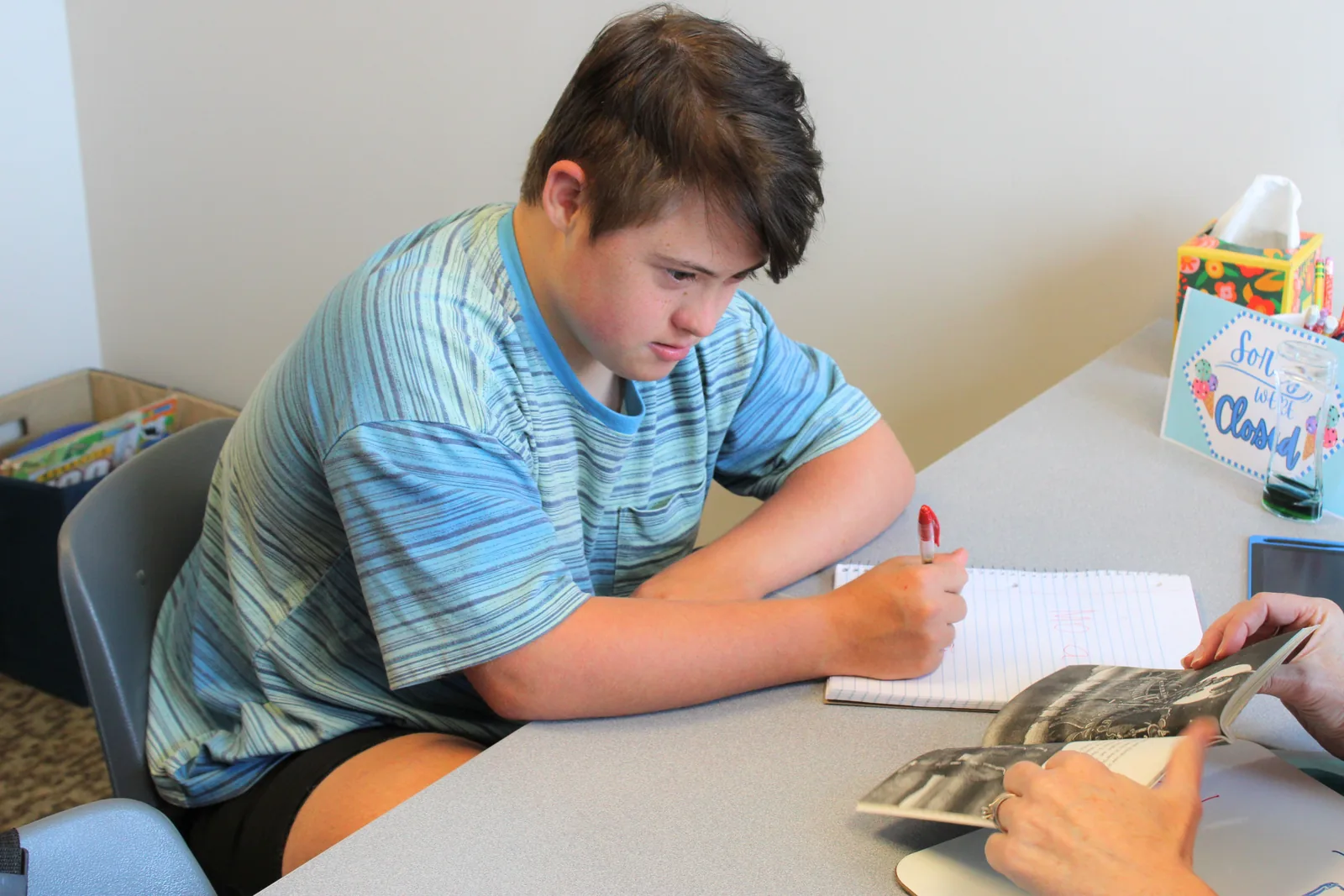
"What did you do at school today?"
"Um… stuff."
Every parent knows the frustration of trying to get information out of a child who struggles to organize and sequence their thoughts into a coherent story. But difficulty telling stories isn't just a social frustration — it's an important window into how well a child understands and processes language.
The ability to tell a well-organized story — what speech-language pathologists call narrative language — is one of the strongest predictors of reading comprehension and academic success. Children who can tell clear, organized stories tend to be stronger readers, better writers, and more effective communicators. And like all language skills, it develops in a predictable sequence that parents can support at home.
Why Narrative Language Matters
Narrative language is the ability to tell or retell events and stories in a way that is organized, specific, and easy for a listener to follow. It requires:
- Sequencing events in order
- Understanding cause-and-effect relationships
- Including relevant details — who, what, where, when, why
- Understanding a character's motivations and feelings
- Providing a beginning, a problem, and a resolution
Children with language disorders often tell stories that are hard to follow — jumping between events, leaving out key details, or providing so little information that the listener has to constantly ask clarifying questions. This isn't because they don't have ideas. It's because they haven't yet developed the internal framework for organizing and expressing them.
The good news is that narrative skills can be directly taught and practiced — and everyday conversation, books, and play all provide natural opportunities to do so.
How Narrative Language Develops by Age
Children develop storytelling abilities in a predictable sequence. Knowing what to expect at each age helps you understand where your child is and what to target next.
Ages 2–3: Heap Stories
At this stage, children label events or actions without any meaningful organization between them. There is no plot, no sequence, and no central theme — just a collection of observations.
"Dog. Running. Ball. Tree."
Age 3: Sequence Stories
Children begin connecting events around a central character or setting, but the actions aren't yet ordered chronologically or causally. There's a "main character" but no real plot.
"The dog ran. He got the ball. He barked."
Ages 4–4.5: Primitive Narratives
Stories now contain an initiating event, an attempt by the main character to do something, and some consequences — but there's no true ending, and character motivation isn't yet discussed.
"The dog ran away. The boy tried to find him. He looked everywhere."
Ages 4.5–5: Chain Narratives
Cause-and-effect and time relationships begin to appear. There's a story ending, though it may feel abrupt or disconnected. Character motivation starts to emerge.
"The dog ran away because the gate was open. The boy ran after him. He found him by the park. He brought him home."
Ages 5–7: True Narratives
A complete story structure is in place: central theme, character motivations, chronological events, cause-and-effect relationships, and a resolution that connects back to the main problem.
"The dog ran out of the open gate because he wanted to chase a squirrel. The boy was really worried. He called the dog's name and looked everywhere in the neighborhood. Finally, he heard barking near the park and found him. He fixed the gate so it wouldn't happen again."
If your child's storytelling is significantly behind what's expected for their age — especially beyond age 5 — it's worth discussing with a speech-language pathologist.
How to Build Narrative Skills at Home
Use Story Structure Language
Help your child internalize the framework of a story by using the same language consistently:
- "What happened first? What happened next? How did it end?"
- "Who is the story about? What was the problem? How did they solve it?"
- "Why did the character do that? How do you think they felt?"
These questions — asked during books, movies, or discussions about your child's day — build the internal scaffold that organized storytelling requires.
Try "Tell Me About Your Day" With Scaffolding
Instead of "What did you do at school?" — which often yields "nothing" — try prompts that scaffold the narrative:
- "Tell me one thing that happened this morning."
- "What happened right before lunch?"
- "Did anything surprising happen today?"
- "What was the best part? The worst part?"
These questions guide your child through the sequence of the day without requiring them to generate the structure from scratch. Over time, they begin to organize events independently.
Retell Books and Stories
After reading a book together, ask your child to retell it — first with the book open, then with it closed. Start with very simple books, then gradually increase the complexity.
Prompt as needed: "Who was the story about? What happened first? What was the problem? How did it end?" Over time, reduce your prompts and see how much of the structure your child can generate independently.
Tell Stories About Family Memories
Family narratives — stories about shared experiences your child remembers — are among the easiest and most motivating storytelling contexts. "Tell Grandma about the time we went to the zoo." Start by telling the story together (you add a detail, they add a detail) before expecting your child to tell it independently.
Visualization: The Strategy That Unlocks Comprehension and Memory
One of the most powerful tools we use at ETLC across reading, storytelling, spelling, and vocabulary is visualization — creating a detailed mental image of what is being read, heard, or learned.
Visualization works because the brain processes images faster and retains them longer than abstract language alone. When children learn to create vivid mental pictures as they read or listen, comprehension, memory, and the ability to retell improve dramatically.
How to Teach Visualization for Comprehension
Start with a single sentence, then build up gradually.
Step 1: Read a sentence aloud. "The tiny red boat bobbed up and down on the waves."
Step 2: Ask your child to picture it. "Close your eyes. What do you see in your mind? Tell me about the picture."
Step 3: Ask guided questions using structure words. Use these questions to help your child build a more vivid, detailed image:
- "What size is the boat — big or small? Show me with your hands."
- "What color is the water? Is it rough or calm?"
- "Is it daytime or nighttime? What's the weather like?"
Step 4: Increase the complexity gradually. Once your child can visualize a single sentence, move to two sentences, then a short paragraph, then a full page. As the images become richer and more detailed, comprehension and retention improve measurably.
Apply Visualization to Vocabulary
For vocabulary words, visualization anchors meaning to a memorable image. Ask your child to picture the word — not just its definition — and draw or describe what they see:
- "Vast" → Picture the biggest space you can imagine — an ocean from horizon to horizon
- "Anxious" → Picture someone's face right before something scary happens — wide eyes, tight shoulders
The more personal and vivid the image, the more reliably the word is recalled.
Apply Visualization to Spelling
Visualization is also one of our most effective strategies for spelling word practice. The full step-by-step technique — create a mental image of the word, write it in the air, spell it backward, write it on paper — is covered in our companion blog, How to Help Your Child Master Sight Words and Spelling.
Apply Visualization to Following Directions
When your child needs to follow a multi-step direction, teach them to picture each step before acting:
"Before you start, make a movie in your mind: first you're getting the backpack, then you're putting in the lunchbox, then you're zipping it up. Now go!"
This mental rehearsal dramatically reduces the errors that come from forgetting a step mid-task.
Frequently Asked Questions
How do I know if my child's storytelling is a concern? If your child's stories are consistently very hard to follow — if you find yourself frequently asking "wait, who did that?" or "when did that happen?" — and this is significantly different from same-age peers, it's worth a conversation with a speech-language pathologist. Narrative skills are directly assessed during language evaluations and can be targeted specifically in therapy.
Can narrative language difficulty affect reading comprehension at school? Absolutely — and this is one of the most important connections to understand. Children who struggle to organize a story in speech often struggle to follow a story in print, identify the main idea, or write a coherent summary. Narrative language and reading comprehension draw on the same underlying skills.
My child can retell a movie in great detail but struggles to tell me about their day. Why? Movies provide a very structured, clear narrative — there's a beginning, middle, and end built in. Personal experience narratives require the child to construct that structure themselves, which is much harder. Both skills matter, and working on personal narratives specifically is the best way to build that independent organizational ability.
At what age should I be concerned about visualization skills? Most children begin to develop mental imagery naturally as they engage in imaginative play and reading. If your child consistently cannot describe what a simple sentence "looks like" in their mind — or if reading comprehension is significantly below grade level — visualization instruction may be a valuable part of their support plan.
How ETLC Can Help
If your child struggles to tell organized stories, retell events clearly, or comprehend what they read — our team can help identify what's at the root and build targeted support.
Learn more about our Language Disorder services orschedule a free consultation to talk with a member of our team.
You may also find these pages helpful:
About the Author
Sonia Strueby, M.A., CCC-SLP, is the founder of Enrichment Therapy & Learning Center. With over 25 years of experience as a speech-language pathologist, Sonia has dedicated her career to helping children overcome complex communication and academic challenges. She has advanced training and a special focus on treating dyslexia and childhood apraxia of speech, and she is passionate about providing families with a clear path to success.
0 Comments