

When most parents picture speech therapy, they imagine a child sitting across from a therapist at a small table, working through exercises with flashcards and toys. The idea of doing that same work over a computer screen can feel like a compromise — like something that's "better than nothing" but not quite the real thing.
It turns out that's not quite right. Teletherapy — also called telepractice or online speech therapy — has been studied extensively, and the research consistently shows that it is effective for a wide range of speech and language goals, across a wide range of ages. For many families, it's not a compromise at all. It's simply a different delivery model that works very well.
This guide explains how teletherapy works, who it's a good fit for, what you'll need to get started, and the most common concerns parents have — with honest answers to each.
What Is Teletherapy?
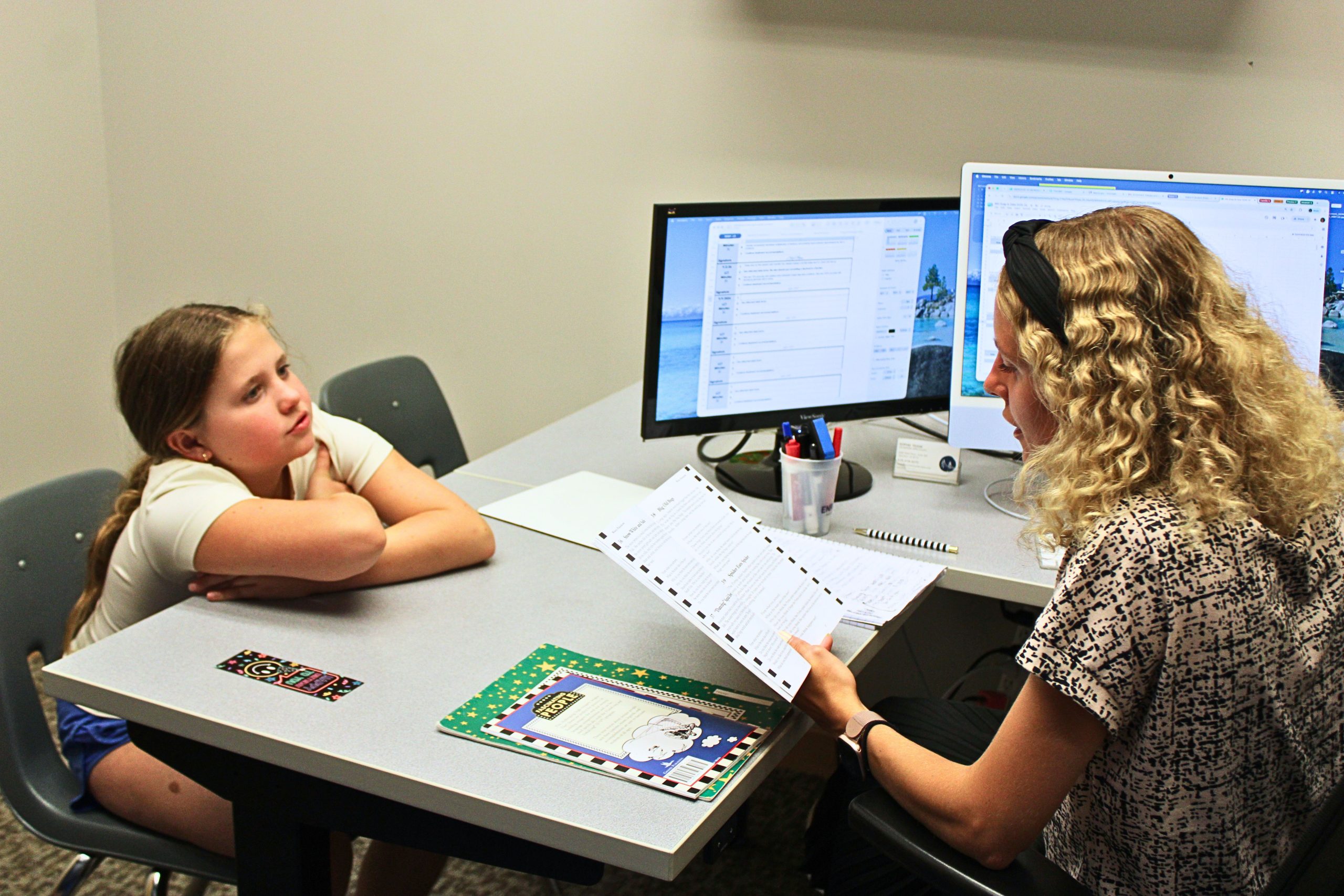
Teletherapy is speech-language therapy delivered through a secure video platform rather than in person. Sessions look very similar to in-person therapy — the therapist and child interact in real time, work through activities and exercises, and the therapist provides immediate feedback and positive reinforcement — just through a screen rather than across a table.
At ETLC, teletherapy sessions are conducted by the same qualified, licensed speech-language pathologists and learning specialists who provide in-person services. The therapist, the goals, and the approach are all the same — the location is different.
Is Teletherapy as Effective as In-Person Therapy?
Yes — for many children and many types of goals, research supports the effectiveness of telepractice. The American Speech-Language-Hearing Association (ASHA) recognizes telepractice as an appropriate service delivery model for speech-language pathology, and studies have found comparable outcomes between teletherapy and in-person therapy for articulation, language, fluency, and other common areas of focus.
That said, teletherapy isn't the best fit for every child or every goal. Children who need a great deal of hands-on tactile support — such as very young children or those receiving PROMPT therapy — typically benefit most from in-person sessions. Your child's SLP can help you determine which format is the right fit for your child's specific needs.
Five Common Myths About Teletherapy — and the Truth
Myth 1: "My child won't be able to pay attention to a screen for therapy."
The truth: Many children actually attend better in teletherapy than in person — because the screen itself is engaging. Children who love technology often find virtual sessions more exciting than in-person ones. Therapists are also skilled at using the digital environment to their advantage: interactive games, shared screens, virtual whiteboards, and digital manipulatives keep sessions dynamic and engaging.
That said, teletherapy is not one-size-fits-all. Some children — particularly very young children or those with significant attention difficulties — do better in person. If attention becomes a consistent challenge in teletherapy sessions, your therapist will work with you to problem-solve or recommend a format that's a better fit.
Myth 2: "I'll need expensive equipment to do this."
The truth: Most families already have everything they need. Teletherapy requires:
- A computer, tablet, or smartphone with a webcam and microphone
- A stable internet connection
- A quiet, distraction-free space for your child to sit during the session
Noise-canceling headphones can be helpful — especially in households with background noise — but they're not required. Your child's therapist will walk you through any setup questions before the first session.
Myth 3: "My child won't connect with a therapist they only see on a screen."
The truth: Children form genuine connections with their therapists through screens — perhaps more quickly than you'd expect. The same elements that build rapport in person — warmth, humor, consistency, genuine enthusiasm for the child's progress — translate very well to virtual interactions. Most children are surprisingly comfortable in video formats, having grown up with FaceTime, video calls, and virtual learning.
The relationship between a child and their therapist is one of the strongest predictors of therapeutic progress. That relationship can absolutely be built through a screen.
Myth 4: "Online therapy limits the materials and activities available."
The truth: Therapy materials adapt remarkably well to a virtual format. Digital games, interactive activities, virtual flashcards, shared documents, drawing tools, and screen-sharing allow therapists to use many of the same activities they would in person. Children often enjoy seeing their favorite activities appear on the computer screen, and the novelty of the digital format can make familiar exercises feel fresh.
Physical materials can also be incorporated — therapists frequently ask parents to have specific household items on hand (play dough, paper, crayons, a ball, a favorite toy) so that hands-on activities remain part of the session.
Myth 5: "Teletherapy just adds more screen time to an already screen-heavy day."
The truth: Not all screen time is the same. Passive screen time — watching videos, scrolling, playing solo games — has well-documented downsides when excessive. Teletherapy is the opposite of passive: it requires active engagement, real-time communication with another person, focused effort, and problem-solving.
The cognitive and communicative demands of a teletherapy session are comparable to those of an in-person session. Your child is working — just through a screen.
Who Is Teletherapy a Good Fit For?
Teletherapy works well for a broad range of children and goals, including:
- Children working on articulation and speech sound production
- Children targeting language skills — vocabulary, grammar, following directions, narrative language
- Children receiving literacy or tutoring support
- School-age children and teenagers who are comfortable with technology
- Families with transportation challenges, busy schedules, or limited access to local providers
- Children who travel frequently or have inconsistent availability
- Children who prefer the familiar environment of home for therapy
Teletherapy may be less ideal for:
- Very young children (under age 3) who need significant in-person interaction
- Children receiving PROMPT or other hands-on motor speech approaches
- Children with very significant attention difficulties who struggle to engage with a screen
- Goals that require close observation of oral structures or physical positioning
If you're not sure which format is right for your child, a consultation with your therapist is the best place to start.
Tips for Making Teletherapy Sessions Successful
If your child is beginning teletherapy — or if sessions haven't been going as smoothly as you'd hoped — these strategies can make a significant difference.
✓ Set up a dedicated session space. Find a quiet spot away from siblings, pets, and background noise. Position the device so your child's face and mouth are clearly visible to the therapist.
✓ Be present but not hovering. For young children, a parent nearby provides reassurance — but try to let the therapist lead without jumping in too quickly. Over time, most children become comfortable enough to participate independently.
✓ Gather materials in advance. If your therapist has asked you to have specific items on hand, set them up before the session begins so you're not searching mid-appointment.
✓ Minimize background distractions. Other screens, loud music, and competing conversations in the background make it harder for your child to focus and for the therapist to hear clearly.
✓ Talk to your therapist. If something isn't working — your child is resistant, the technology keeps glitching, or you're not sure how to support home practice — bring it up. Therapists can adjust their approach and troubleshoot alongside you.
Frequently Asked Questions
Is teletherapy covered by insurance? Coverage varies by insurance plan and state. Many insurers that cover in-person speech therapy also cover teletherapy, particularly following the significant expansion of telehealth coverage that occurred in recent years. Contact your insurance provider directly to confirm your specific benefits.
How do I know if the teletherapy platform is secure and private? Reputable teletherapy providers use HIPAA-compliant platforms designed for healthcare use. At ETLC, all telehealth sessions are conducted through secure, encrypted platforms that protect your child's privacy. Ask your provider about their platform if you have questions.
Can my child do a mix of in-person and teletherapy? Yes — many families use a hybrid model depending on scheduling, distance, weather, or therapeutic needs. Your therapist can help you find the right balance.
What if the technology isn't working on session day? Technical hiccups happen. Most providers have a protocol for troubleshooting — having a backup device or a phone as an alternative can be helpful. If a session can't proceed due to technical issues, your therapist will reschedule.
My child had a bad teletherapy experience before. Should I try again? The quality of the therapist and the fit between the therapist and child matter enormously — in person and online. A negative experience with one provider doesn't mean teletherapy as a format won't work for your child. If you had a bad experience, it's worth trying with a different provider before writing off virtual therapy entirely.
How ETLC Can Help
ETLC offers both in-person and teletherapy services at our Johnston and North Liberty locations. Our therapists and learning specialists can help you determine which format is the best fit for your child's goals and your family's needs.
Learn more about our Speech-Language & Social Skills services orschedule a free consultation to talk with a member of our team.
You may also find these pages helpful:
About the Author
Sonia Strueby, M.A., CCC-SLP, is the founder of Enrichment Therapy & Learning Center. With over 25 years of experience as a speech-language pathologist, Sonia has dedicated her career to helping children overcome complex communication and academic challenges. She has advanced training and a special focus on treating dyslexia and childhood apraxia of speech, and she is passionate about providing families with a clear path to success.

0 Comments