

Originally Published: December 28, 2022 | Updated: October 5, 2026
The following are games for executive functioning you can try at home. These are just some of the many available games and activities, great for all ages, with age suggestions included throughout. Have fun with this while also working to improve your child’s attention and organizational skills.
Games
Board Games
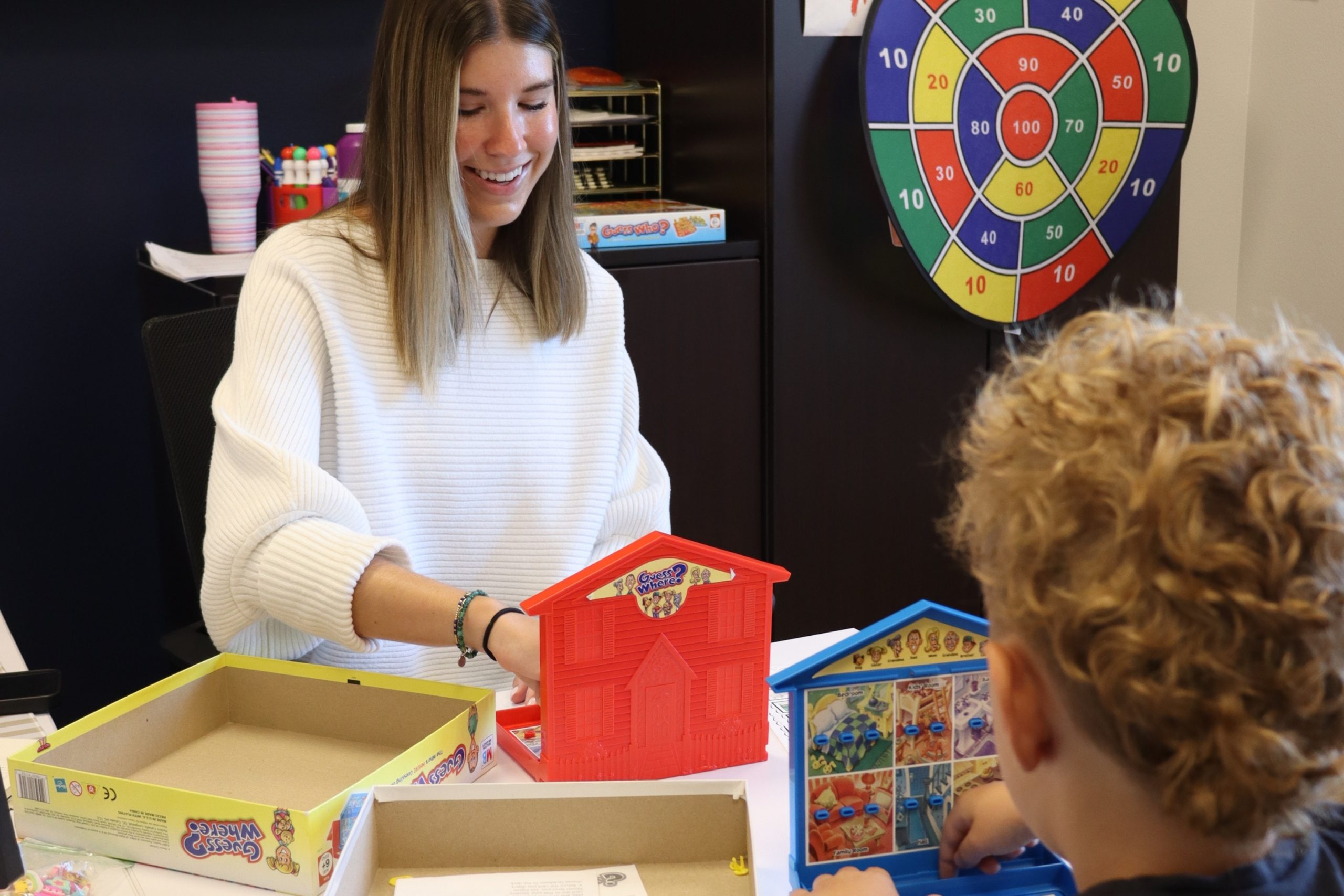
Playing board games is a fun way to get your child and other friends or family engaged and learning in a playful way. They typically involve three or more players, which also creates opportunities for socialization and communication.
- Toddlers: The Sneaky Snacks Squirrel Game and memory. At this age, your child may benefit more from play-based games, like a kitchen set or blocks.
- Elementary to middle school: Candy Land, Apples to Apples, Trouble, Mouse Trap, Sorry, and Pop the Pig.
- Middle school and up: Sequence, Clue, and Guess Who.
Card Games
Card games are a fantastic low-tech option for improving your child’s ability to follow rules and directions, and they also help with impulse control.
- Toddlers: Flash cards or UNO cards (great for matching colors and numbers).
- Elementary to middle school: Go Fish, UNO, and Slapjack.
- Middle school and up: Monopoly Deal, Solitaire, Exploding Kittens, and, of course, UNO.
Word Games and Puzzles
Word games can come with materials and set rules, or they can be made up on the spot with no materials at all. For games with items to read, you can read them to your child, with your child, or let them read independently based on their reading level.
- Toddlers: Hand or tickle games (like peek-a-boo), small (3-10 piece) board puzzles, or I Spy.
- Elementary to middle school: Scrabble Junior, Bingo, and the alphabet game (each player takes turns thinking of something that starts with each letter of the alphabet).
- Middle school and up: Sequence, Scrabble, and Bananagrams.
Activities
Get Outside
Going on a walk is great in many ways. You can talk about the things you see and the order you saw them in, make predictions about what might happen next (or before), and plan for future outdoor adventures.
Scavenger hunt: outdoor scavenger hunts are great for expanding vocabulary and attention as your child focuses on locating items found in nature, like acorns, flowers, or leaves.
Plan a picnic: planning an event is a great way to practice executive functioning skills, and it’s rewarding when your child gets to carry out their own plan. Depending on their age, it helps to offer suggestions for places or items to bring.
Cooking
Cooking is a great activity for many reasons, but it’s especially good for executive functioning. Following any recipe, no matter how simple or complex, requires kids to plan, execute, and complete multiple steps in order.
Start with something simple, like trail mix or banana sushi, and build up to more complex recipes over time. Written directions help a lot along the way. For some of our favorite kid-friendly recipes, check out our post on recipes for executive functioning.
Crafts
Crafts can be big or small and will vary based on your child’s age. Any craft involving two or more steps is great for helping your child practice following directions.
Ideas: painting, or seasonal decorations like snowflakes in winter or flowers in spring. You can also hand your child a variety of supplies and let them get creative on their own.
We’re Here to Help
There are many ways to target your child’s ability to organize information, follow directions, and sustain attention, and this list isn’t exhaustive. There are plenty of other fun, engaging games and activities you can try. Have fun with these activities, and know that your child is practicing valuable skills for the future. For more information or if you have concerns about your child’s executive functioning, please contact us today.


0 Comments