

Originally Published January 2017, Reviewed and Updated April 2026
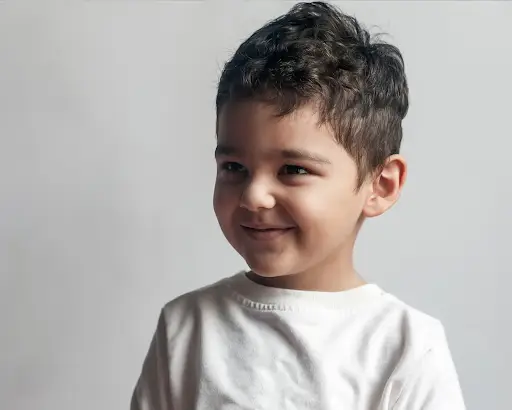
As a parent, it’s natural to wonder if your child’s development is on track. When your three-year-old is playing with other children, you might ask yourself: “Should they be talking more clearly? Are they understanding what I say?”
As speech-language pathologists, we evaluate a child’s communication by looking at several key areas. This guide provides a checklist of typical milestones for a three-year-old, covering what they say, what they understand, and how they play.
Important Note: This is a list of general milestones. Every child develops at their own unique pace. If your child has not mastered every skill on this list, it doesn’t automatically mean there is a problem. However, if you have persistent concerns after reviewing these guidelines, an evaluation is a valuable next step.
What Should My 3-Year-Old’s Speech Sound Like? (Expressive Language)
Expressive language refers to how your child uses words to communicate. By age three, a child can typically:
- Speak in 3-4 word sentences, such as “My ball is big” or “I want more juice.”
- Be understood by unfamiliar listeners (like a cashier at a store) about 75% of the time.
- Use a variety of sounds in their speech, including /p/, /b/, /m/, /t/, /d/, /k/, /g/, /f/, /w/, /h/, and all vowels.
- Use pronouns correctly, like “I,” “me,” “my,” and “you.”
- Use simple plural and past-tense forms, such as “dogs” and “jumped.”
- State their first and last name.
- Answer simple “what,” “where,” and “who” questions.
- Name at least three items from a common category (e.g., when asked “Tell me something you can eat,” they can name three foods).
What Should My 3-Year-Old Understand? (Receptive Language)
Receptive language is your child’s ability to understand what is said to them. By age three, a child can typically:
- Follow a 3-step unrelated command, such as “Get your shoes, put them in the box, and sit on the chair.”
- Understand basic spatial concepts, such as “in,” “on,” and “under.”
- Identify an object by its function (e.g., can point to the one you “eat with” when shown a spoon, cup, and ball).
- Identify parts of an object, such as the wheels on a car or the leg of a table.
- Choose the smallest object from a group of three.
How Should My 3-Year-Old Be Playing?
Play is a crucial part of development and is directly linked to language skills. By age three, a child typically:
- Engages in pretend play, taking on the role of someone or something else (like a doctor or a cat).
- Takes turns during simple games.
- Can count a few items using one-to-one correspondence.
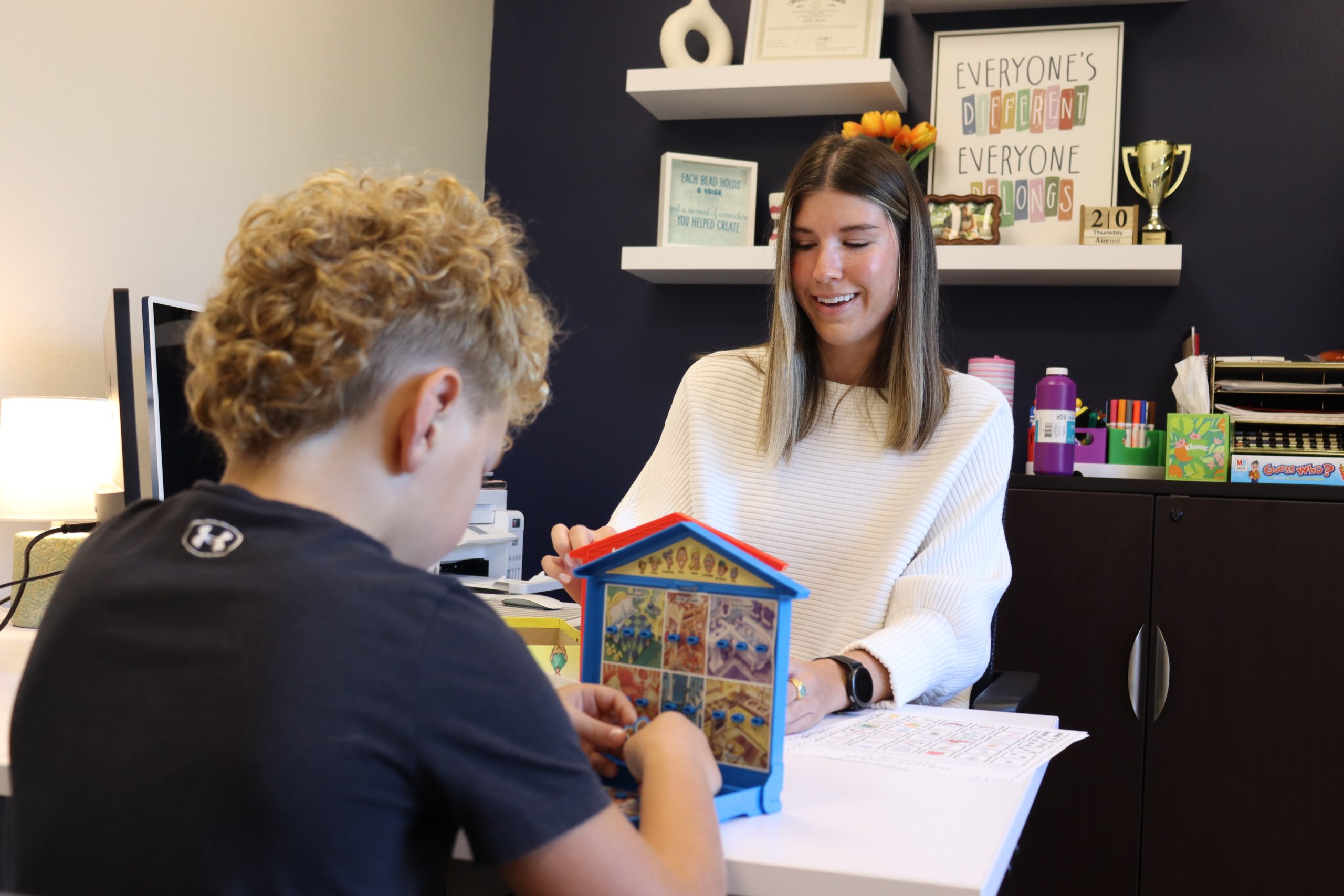
- Participates in a play routine with a familiar adult for at least one minute.
When to Seek Help for a Language Delay
If you’ve reviewed this checklist and feel your child is consistently behind on these milestones, trust your instincts. Early intervention is the most effective way to support a child who is struggling and help them build the skills they need to succeed. A comprehensive evaluation with a speech-language pathologist can determine if therapy is needed.
For a broader overview of development, you can review our Ages and Stages handout and our guide to milestones for a three-year-old.
Please contact us to schedule an evaluation or to learn more about how we can help your family.
About the Author
Sonia Strueby, M.A., CCC-SLP, is the founder of Enrichment Therapy & Learning Center. With over 25 years of experience as a speech-language pathologist, Sonia has dedicated her career to helping children overcome complex communication challenges. She has advanced training and a special focus on treating dyslexia and childhood apraxia of speech, and she is passionate about providing families with a clear path to success.


0 Comments