Originally Published: September 2017 | Updated: October 7, 2026
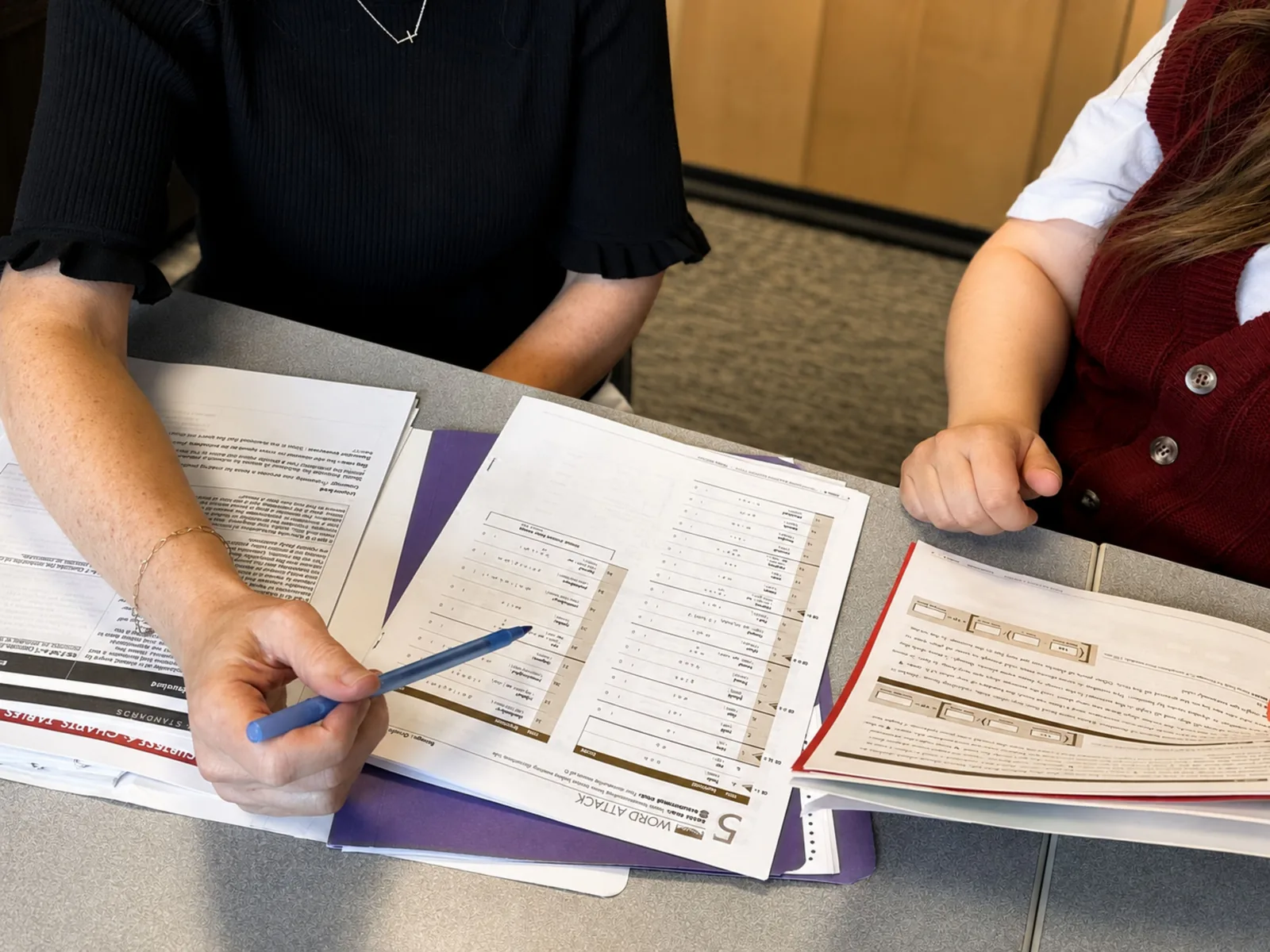
Parent-teacher conferences are short, often just 15 to 20 minutes. However, they can be some of the most valuable conversations you have all year about your child’s education. To make the most of parent-teacher conferences, walk in prepared. Then you will leave with a clear picture of where your child stands. You will know what the teacher is seeing and what you can do at home to support their progress.
If conferences make you nervous, especially when your child is struggling, you are not alone. So the key is to shift the frame. This is not a performance review. Instead, it is a team meeting. In fact, you and the teacher share the same goal: your child’s success. The conference is your chance to agree on how to get there.
Before the Conference: How to Prepare
A little preparation helps you make the most of parent-teacher conferences, even in a short meeting.
Review recent work and assessments. Look through graded work, progress reports, and any notes that have come home. Also, note patterns, not just individual grades, but trends over time.
Write down your questions in advance. It is easy to forget what you wanted to ask once you are sitting across from the teacher. A short written list keeps the conversation focused, so you cover what matters most to you.
Think about what you are seeing at home. Teachers see your child in one setting, while you see them in another. Homework habits and emotional reactions to school matter. So do the subjects your child talks about with excitement or avoids. All of this is valuable information the teacher may not have.
Ask your child what they want you to know. Children often have things they wish their teacher knew about them. For example, you can ask, “Is there anything you’d like me to bring up?” This gives your child a voice in the process, and it can surface concerns they have not felt comfortable raising themselves.
Understanding School Report Cards and Grading Scales
Many elementary schools have moved away from traditional letter grades toward rubric-based reporting systems. If your child’s report card uses a rating scale you do not recognize, ask the teacher to walk you through it.
Rating scales differ from school to school, so ask what each rating means. For example, schools have not formally taught many grade-level skills at the start of the year, so ratings are often lower in the fall. Ask what progress the teacher expects by the end of the year.
Reading levels often use systems like the Developmental Reading Assessment (DRA) or Fountas & Pinnell. If you see a letter or number level and are not sure what it means, ask the teacher which system they use. Then ask where your child falls compared with grade-level expectations.
Make the Most of Parent-Teacher Conferences With These Questions
You will not have time to ask everything, so choose the questions most relevant to your child’s current situation. So here are the ones we recommend most. For a longer list, see our post with 15 parent-teacher conference questions.
About Reading
- What is my child’s current reading level for accuracy, rate, and comprehension, and where should they be at this point in the year?
- What strategies or programs support their reading development?
- If comprehension is a concern, what specific interventions are in place?
- Are there underlying language skills, such as vocabulary, memory, and expressive or receptive language, that may be affecting reading performance?
About Math
- Where is my child performing relative to grade-level math expectations?
- What strategies do you use to support math fact memorization?
- How does the class approach math word problems, and do you use language-based strategies?
- Are there specific concepts where my child is consistently struggling?
About Assessment and Progress Monitoring
- What assessments do you use to determine my child’s abilities, computerized or face-to-face?
- How frequently is progress monitored, and how will I know if the current approach is not working?
- How will you communicate my child’s progress throughout the year, and how often should I expect to hear from you?
About Support and Next Steps
- What specific strategies can I use at home to reinforce what you are doing in class?
- Is my child currently receiving any additional support, such as reading specialists, a resource room, or speech services?
- If my child is struggling, what is the plan, and what timeline are we working toward?
- If my child is excelling, how is the school making sure they stay challenged?
If Your Child Is Struggling: What to Do Next
If the conference shows that your child is significantly behind in reading, math, or another area, do not take a “wait and see” approach. The older a child gets, the faster the curriculum advances. As a result, a gap that seems manageable in second grade can become a major barrier by fourth or fifth.
Ask for a specific plan. Before you leave, make sure you know what the school is doing. Also, know what you can do at home and when you will check back in.
Do not assume the school will catch everything. Schools serve many students and have limited resources. As a result, if your child needs more support than the classroom can provide, private evaluation and therapy can identify the root cause and provide targeted help. Our post on school and private speech services explains how the two can work together.
Act early. Acting early usually leads to better outcomes than waiting. In addition, the CDC’s Learn the Signs. Act Early. program says the same about developmental concerns. If the teacher expresses concern, or your instincts tell you something is off, trust that signal and take the next step.
If Your Child Is Excelling: Questions to Ask
Still, a conference with good news is worth preparing for. If your child is performing at or above grade level, use the time to discuss:
- Whether your child should receive an assessment for gifted programming
- What supplemental activities or enrichment opportunities are available
- How the teacher plans to keep your child challenged as the year progresses
Children who are ahead can become disengaged if school feels too easy. In fact, that disengagement can turn into behavioral or motivational challenges down the road.
After the Conference: Follow Through
The conference is only valuable if something changes because of it. To make the most of parent-teacher conferences, follow through with these steps.
- Share the highlights with your child. Keep it positive. Focus on what their teacher said they do well. Then frame any concerns as things you will work on together.
- Follow up on specific strategies. If the teacher suggested something to try at home, try it, and then report back at the next conference.
- Stay in communication. Do not wait until the next conference to reconnect if concerns arise. In fact, most teachers welcome a brief email or note if something significant changes.
- Track progress. If the school puts a specific support in place, ask how and when you will learn whether it is working.
Frequently Asked Questions
These common questions can also help you make the most of parent-teacher conferences.
What if I disagree with what the teacher is saying about my child?
Stay curious rather than defensive. Ask for the specific evidence behind the concern, such as which assessments and observations the teacher used. Then share what you are seeing at home. It is okay to disagree respectfully. It is also okay to request a follow-up meeting with a reading specialist, school psychologist, or administrator if the concern remains.
What if my child’s teacher doesn’t seem concerned, but I am?
Trust your instincts. You know your child better than anyone, so if something feels off, it is worth pursuing. Then you can request additional assessment through the school, or seek a private evaluation. The Child Mind Institute also offers guidance on when to wait and when to seek care.
Can I bring someone with me to the conference?
Absolutely. You can bring a partner, a family member, or an advocate. However, if your child has an IEP or 504 plan, you have specific legal rights about who can attend those meetings. For a standard parent-teacher conference, letting the teacher know in advance that someone will join you is a courtesy most teachers appreciate. Looking for more guidance on school supports? Our free 504 & IEP Guide can help you better understand these options and feel more prepared for conversations about your child’s needs. Download our free 504 & IEP Guide.
What if the conference time isn’t enough?
Ask to schedule a longer follow-up meeting. That is one more way to make the most of parent-teacher conferences. Most teachers are glad to make time when a child’s needs call for more discussion.
How ETLC Can Help
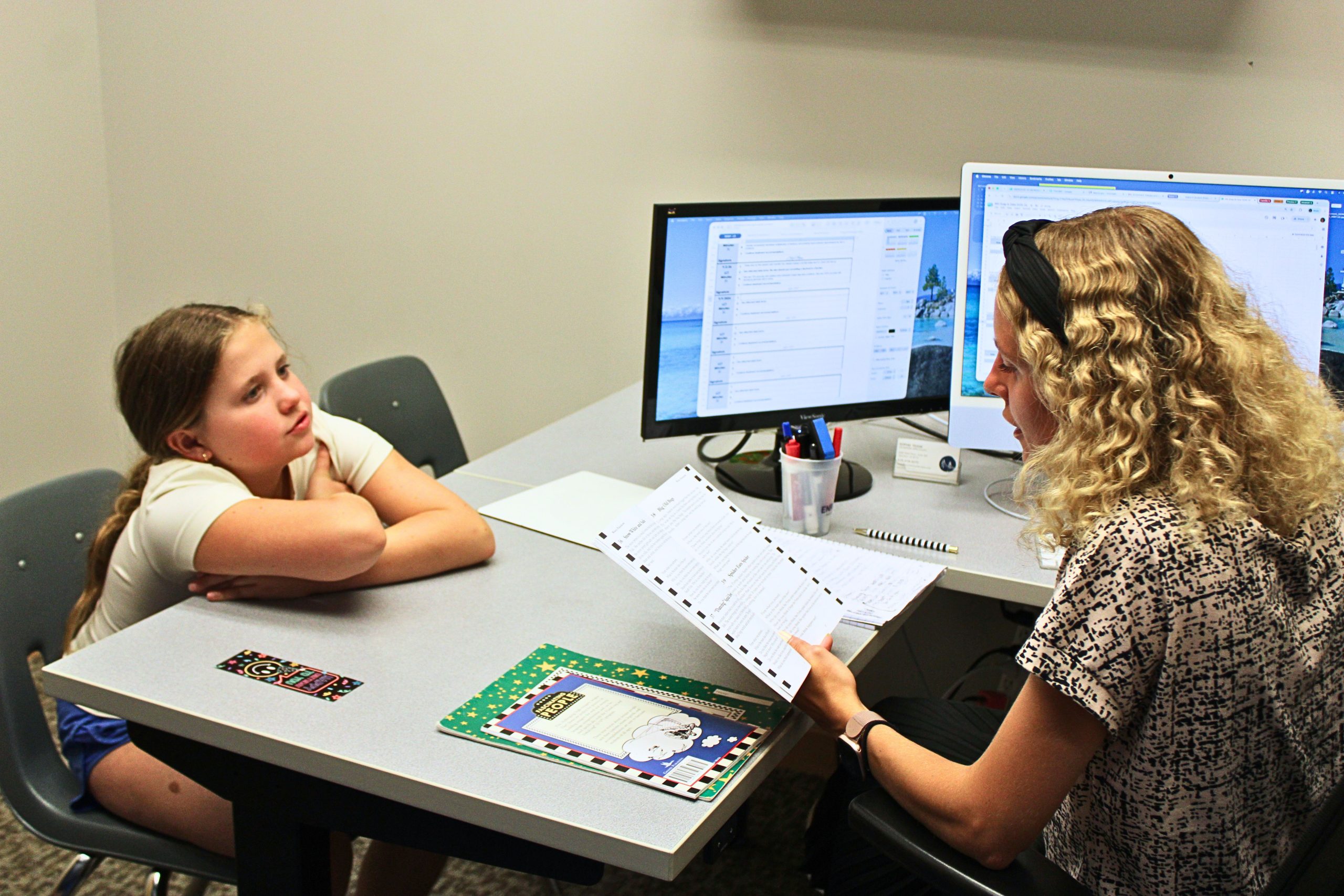
If a parent-teacher conference has raised concerns about your child’s reading, language, or academic skills, our team can help. We can also help you decide whether your child needs more support and how to make the most of parent-teacher conferences going forward.
Learn more about our tutoring and learning specialist services or schedule a free consultation to talk with a member of our team. You may also find these pages helpful:
Enrichment Therapy & Learning Center has locations in Johnston and North Liberty, IA, with virtual services also available.
About the Author
Sonia Strueby, M.A., CCC-SLP, is the founder of Enrichment Therapy & Learning Center. With over 25 years of experience as a speech-language pathologist, Sonia has dedicated her career to helping children overcome complex communication and academic challenges. She has advanced training in treating dyslexia and childhood apraxia of speech, and she is passionate about giving families a clear path to success.


0 Comments