

Originally Published: January 19, 2023 | Updated: September 1, 2026
Attention and executive functioning refer to the cognitive skills we use to initiate and maintain focus, follow directions, remember events and information, organize information, and demonstrate self-control. According to Harvard’s Center on the Developing Child, these are some of the most important skills a child develops for lifelong learning and success.
Trouble with executive functioning can show up in many different ways. Some children may have difficulty transitioning from one activity to another, complete their homework but struggle to turn it in, or find it hard to prioritize tasks efficiently. Here are a few ways you can help improve your child’s attention and executive functioning.
1. Create a Routine
Creating a routine gives children consistency. Even in infancy, it helps your child begin using their working memory to anticipate activities or steps in their routine (like bath, story, then bedtime). A great way to start is by describing the steps or order of an activity out loud:
“It’s time to get ready for bed. First, we take a bath. Then, we read a book. Last, we go to bed.”
“Now it’s time to get ready for school. First, we eat breakfast, brush our teeth, put on shoes, and off to school.”
This helps your child understand the order of events while also expanding their vocabulary.
For older children, routines give them a chance to use and refine their working memory to plan and execute tasks with increasing independence. You might start with a visual schedule or guided reminders, then help them work toward completing tasks without your guidance. Start small so your child can learn while also experiencing success, a strategy sometimes called errorless learning.
2. Break Big Tasks Into Manageable Pieces
Turning a large task into smaller ones lets your child make real accomplishments on their own. If your child can’t complete a task, give them the chance to ask for help while still recognizing their independence in the steps they’ve already finished. Over time, this builds their ability to advocate for themselves, especially in future situations when you’re not there to help.
3. Play Games
Even as an infant, games like peek-a-boo or tickling help build your child’s selective attention. Reading books together is great for both selective attention and divided attention, since your child learns to focus on both you and the words or images in the book.
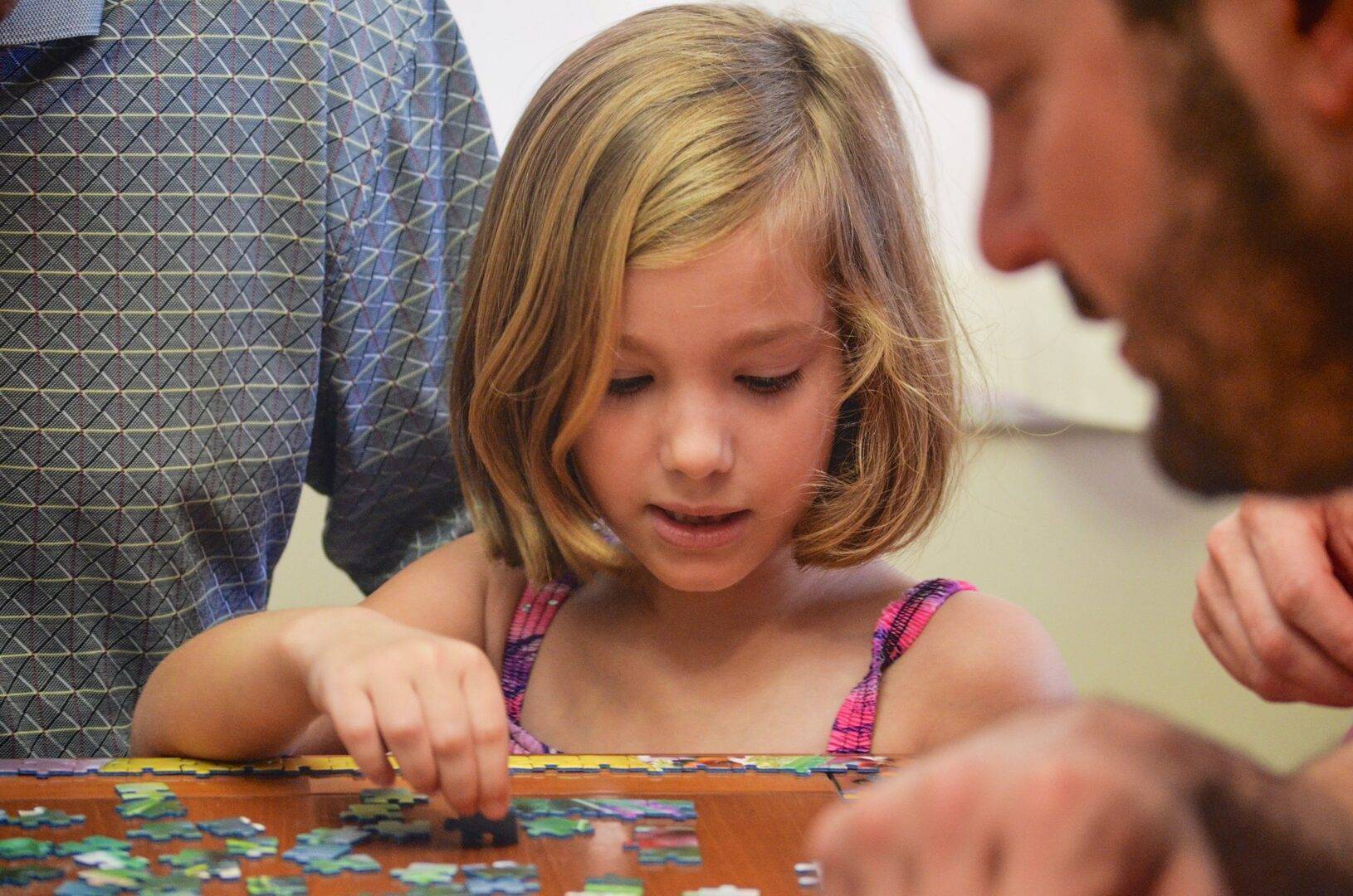
Board games or card games are a great way to teach older children about following rules and practicing impulse control. They also lay the groundwork for turn-taking and patience. For more ideas, check out our post on games for executive functioning.
We’re Here to Help
If you’d like more ideas, our post on recipes for executive functioning is another fun place to start. For questions or concerns about your child’s attention and executive functioning, contact us today.



0 Comments