

Originally Published: June 8, 2023 | Updated: September 2, 2026
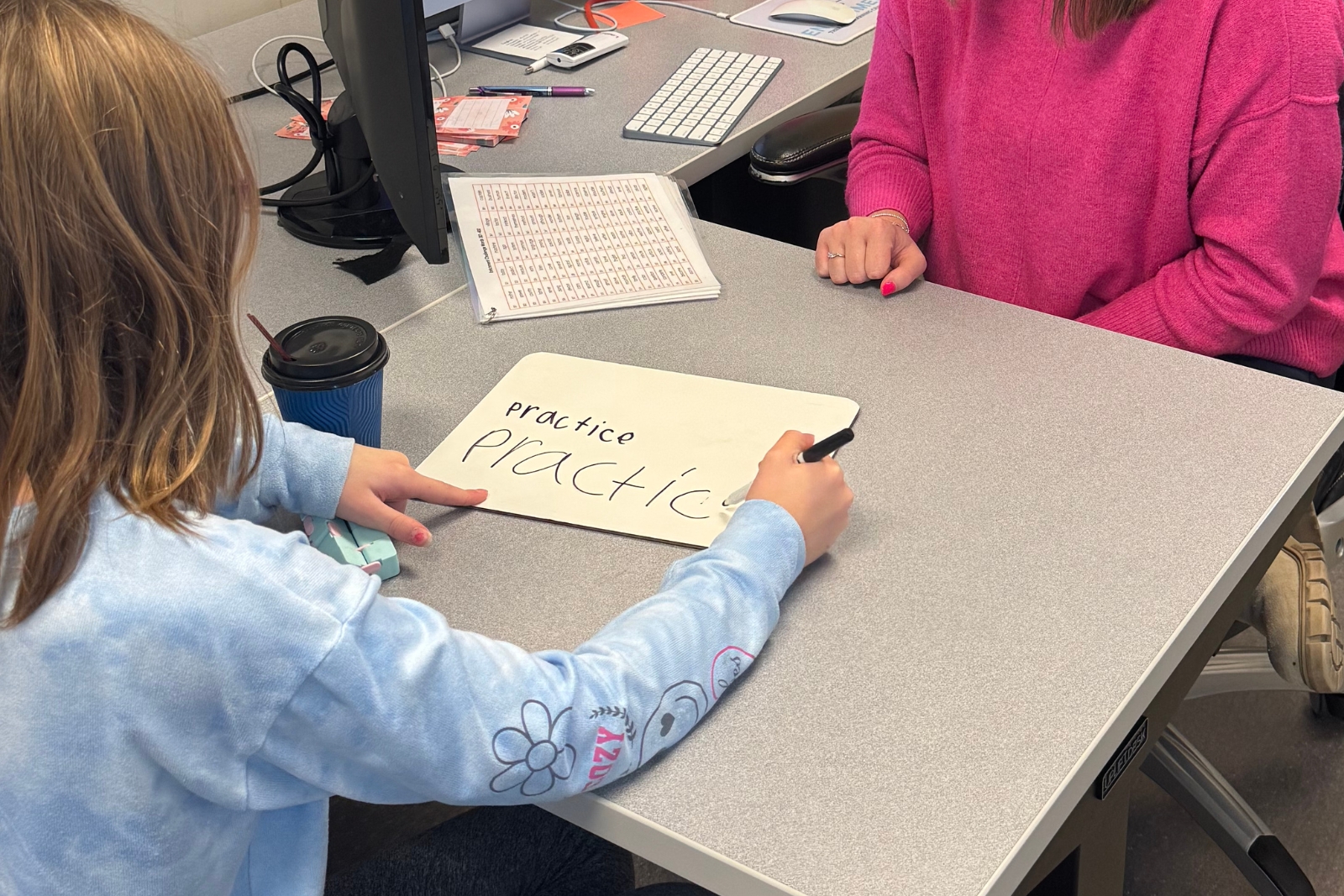
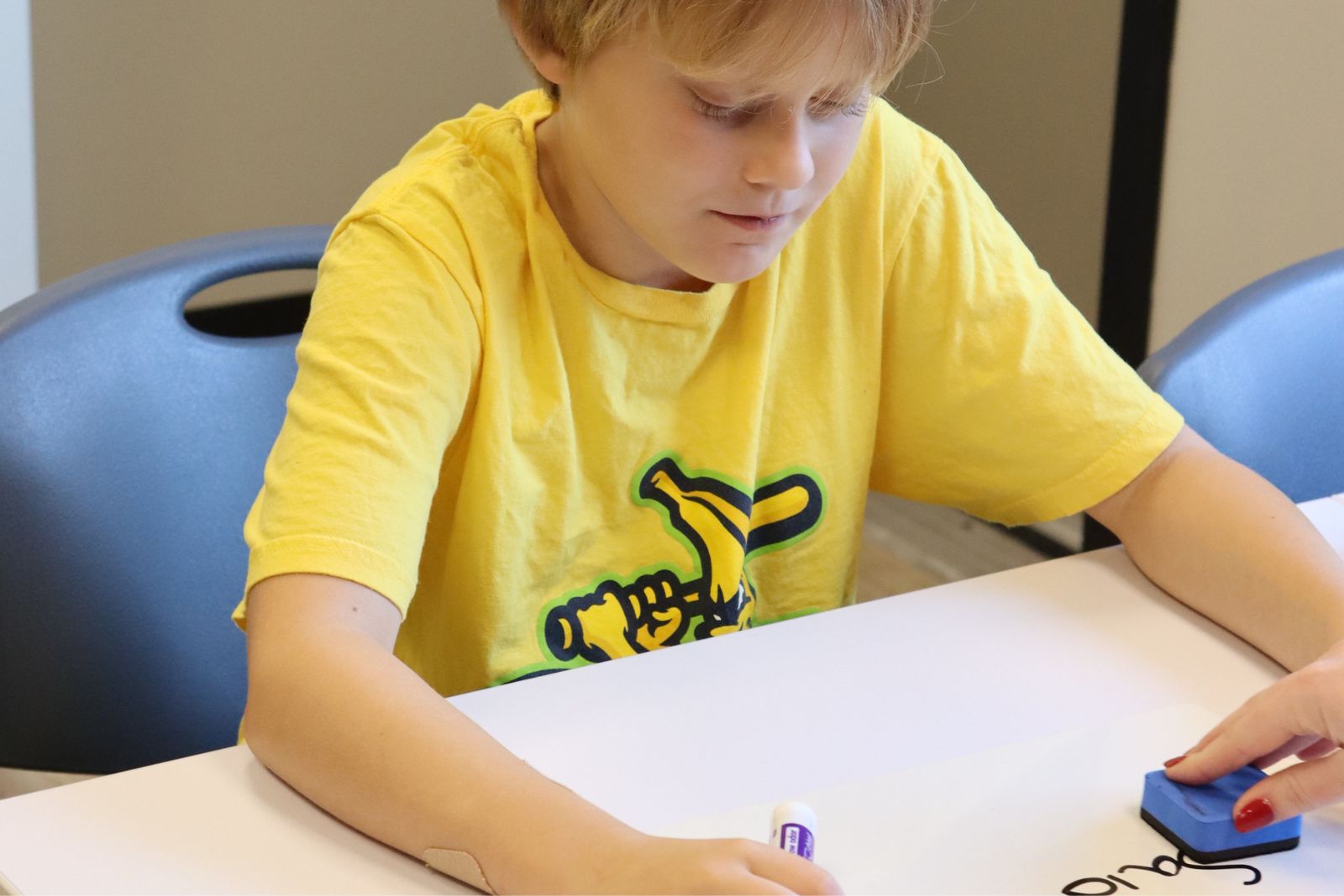
Are you concerned about your child’s handwriting? If your child is struggling with handwriting, Enrichment Therapy & Learning Center can help. Our speech-language pathologists and learning specialists are trained in the Handwriting Without Tears (HWT) program from Learning Without Tears. We can use HWT strategies during speech-language therapy or tutoring sessions.
Why Is It Important to Work on Handwriting?
To become proficient writers, students need to write quickly and automatically. If they have to devote brain power and time to thinking about letter formation during writing assignments, they lose some of the “cognitive resources” they need to plan and organize their writing. In addition, research shows that students with handwriting difficulties often struggle with typing later on. The working memory, attention, and motor planning skills students build while forming written letters also help them learn to type proficiently down the road.
How Old Do Students Have to Be to Work on Handwriting?
Students of all ages can benefit from the HWT program. Most HWT workbooks target pre-K through fifth grade, but the worksheets can also be adapted for middle school and high school students.
For children younger than pre-K, many play activities support later handwriting skills. For example, drawing with chalk, using a magnetic fishing rod to catch fish, and playing games that build body awareness all help develop the foundation needed to become an automatic writer down the road. In fact, simply playing games with your child lets you start building pre-writing skills early on.
What Is Handwriting Without Tears?
HWT is a multi-sensory handwriting program that groups letters by shared formation patterns. For example, the “diver letter” group includes lowercase b, p, m, n, r, and h. All of these letters start at the top, so the child “dives down” with their pencil before “swimming back up” to complete the rest of the letter.
HWT encourages students to form their letters the same way every time, which helps reduce errors and letter reversals, like writing a b instead of a d, or a 9 instead of a p. As part of the program, wooden blocks also help students understand how letter and number parts combine to create the whole shape.
What If We Still Need More Support?
Some students with handwriting difficulties may need a referral to an occupational therapist. For instance, poor grip strength, posture difficulties, or reduced visual-motor integration could all be affecting handwriting ability. In these cases, an occupational therapist should be part of the handwriting intervention plan.
We’re Here to Help
If your child is struggling with handwriting, contact our team at ETLC. We’re happy to help.

0 Comments