

Written by: Sonia Strueby, M.A., CCC-SLP
Originally Published: May 27, 2022 | Updated: August 27, 2026
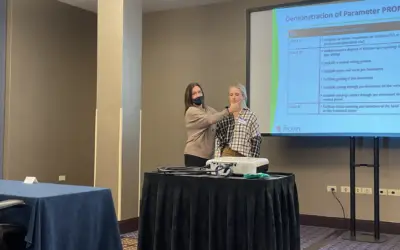
PROMPT is a hands-on speech therapy technique. It uses touch cues to help children learn correct jaw, lip, and tongue placement for clearer speech. Several of Enrichment Therapy & Learning Center’s speech-language pathologists across our Iowa locations have completed PROMPT training. This adds another evidence-based tool to how we support kids with speech and language challenges. Here’s what PROMPT is, how it works, and how to know if it might be a good fit for your child.
What Does PROMPT Stand For?
PROMPT stands for Prompts for Restructuring Oral Muscular Phonetic Targets. In practice, that means a speech-language pathologist uses specific touch cues on a child’s face and jaw. This gives them physical, real-time feedback about how to position their mouth for a sound, word, phrase, or sentence.
How Does PROMPT Therapy Work?
PROMPT uses tactile cues, meaning your child’s SLP gently touches specific facial muscles involved in speech production.
That touch gives your child direct, physical input about how to move their jaw, lips, and tongue. This can be especially helpful for children who struggle to feel or plan those movements on their own.
According to the PROMPT Institute, the approach also looks beyond motor speech alone. It takes a child’s physical, cognitive-linguistic, and social-emotional development into account when planning treatment.
What Can PROMPT Help With?
PROMPT is an evidence-based technique that can treat several conditions, including:
- Childhood Apraxia of Speech (CAS)
- Speech-sound disorders
- Phonological disorders
- Expressive language disorders
How Extensive Is PROMPT Training?
Becoming PROMPT certified is a rigorous, multi-step process. Speech-language pathologists must:
- Complete an introductory course covering assessment and treatment planning
- Apply the technique with a real client during a supervised practicum
- Complete advanced training in comprehensive assessment
- Finish a certification project requiring a high level of accuracy across assessment, technique, and treatment planning
PROMPT training is only open to licensed, master’s-level speech-language pathologists. That’s part of why our team is proud of this achievement.
Why Might My SLP Use PROMPT With My Child?
There are many effective approaches to treating speech-sound and expressive language disorders. No single technique works best for every child, though. Having PROMPT-trained clinicians on staff means your ETLC speech-language pathologist has another well-researched tool available. As a result, they can choose the approach, or combination of approaches, that best fits your child’s specific needs.
When Might My SLP Recommend PROMPT?
Your child’s SLP may suggest PROMPT for a few reasons. For example, your child might be working on motor speech planning. In other cases, a child may have a Childhood Apraxia of Speech diagnosis, or be in the process of being evaluated for one. Additionally, your child might simply benefit from added tactile feedback to build clearer, more consistent speech sounds. If you’re curious whether PROMPT could help your child, it’s a great question to bring to your next session.
Have Questions About PROMPT?
If you have questions about PROMPT or want to know more about how it could fit into your child’s therapy plan, contact us. We’re always happy to talk through the approaches we use and why.




0 Comments