

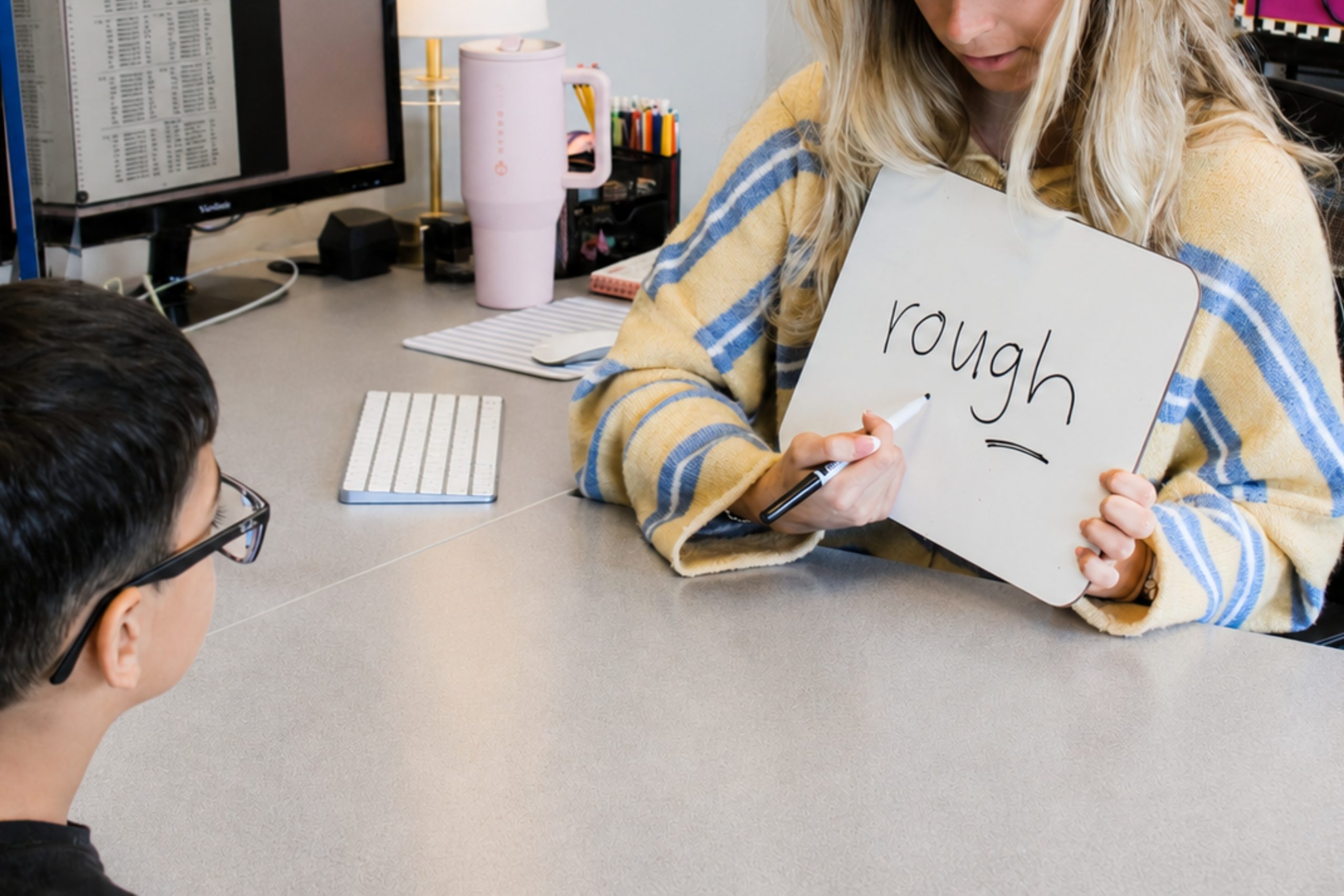
At first, it may seem odd to practice reading nonsense words, which are words that are “not real” or “made up.” However, the ability to decode nonsense words lays an excellent foundation for future reading success. Because these words have no meaning, children have to rely on the letters and sounds in front of them, and that is exactly the skill strong readers use every day.
What Are Nonsense Words?
Nonsense words are words without meaning in our traditional spoken and written language. They follow predictable phonics rules and patterns, which is why a child can learn to read them.
A beginning nonsense word might look like this: id, pak, cit, oop.
A higher-level nonsense word might look like this: pech, tigup, nizure, repa.
Why Do We Read Words That Aren’t Real?
According to Reading Rockets, accuracy in decoding a nonsense word gives insight into whether a child can recognize and say individual phonemes (letter-sound correspondence), blend them together, and identify the most common sounds for groups of letters.
Nonsense words are especially useful for students who tend to guess at new words or only read the first or second half of a word. Since these words don’t carry any real meaning, students are more likely to focus on the individual sounds they see rather than guess at a predictable or logical word.
How Do Nonsense Words Support Reading Skills?
Throughout reading and learning, students will always encounter new words, especially as they build their vocabulary. Knowing how to read unfamiliar words, even ones that have no meaning to the student yet, is part of becoming a fluent reader.
Nonsense words should be practiced alongside common, familiar sight words. They work as a supportive tool to build automatic recognition of short vowels, long vowels, digraphs, and other phonics rules. Mastering the ability to manipulate sounds within words also sets a strong foundation for future reading and spelling success.
How Can I Practice Nonsense Words at Home?
Keep practice short and playful. A few minutes a day is plenty, and a silly tone helps. Here are a few ideas to try:
- Write five or six nonsense words on index cards and mix in a few real words, then have your child read them all. Calling them “alien words” makes it fun.
- Add a sound to turn a nonsense word into a real one. For example, “oop” plus /h/ at the beginning becomes “hoop.”
- Change one letter at a time to make new words, such as pak, pack, pick.
- Start with simple patterns like id and pak, then move to harder ones like pech and nizure once your child reads the easier ones accurately.
Frequently Asked Questions
Isn’t it confusing for my child to read words that don’t mean anything?
Not usually. Because the words follow real phonics patterns, children are practicing the same skills they use to read new words in books. Just tell your child ahead of time that these words are made up, and the game is to sound them out.
Should nonsense words replace real words in reading practice?
No. Nonsense words are one tool among many. They work best alongside real words, sight words, and books, so your child connects decoding to actual reading.
Why does my child’s school test nonsense words?
Many early reading screeners include a nonsense word task because it shows whether a child can apply letter-sound knowledge to a word they could not have memorized. If your child struggles with these tasks, a closer look at their decoding skills can show where extra practice would help.
How ETLC Can Help
If your child guesses at words, skips parts of them, or has trouble sounding out new words despite practice, our team can help find out why. Enrichment Therapy & Learning Center has locations in Johnston and North Liberty, IA, with virtual services also available.
Learn more about dyslexia therapy at ETLC or schedule a free consultation to talk with a member of our team.
You may also find these pages helpful:
- What Is Phonological Awareness and Why Does It Matter for Reading?
- How to Teach Your Child Decoding Skills
- Reading Strategies for Kids
About the Author
Sonia Strueby, M.A., CCC-SLP, is the founder of Enrichment Therapy & Learning Center. With over 25 years of experience as a speech-language pathologist, Sonia has dedicated her career to helping children overcome complex communication and academic challenges. She has advanced training and a special focus on treating dyslexia and childhood apraxia of speech, and she is passionate about providing families with a clear path to success.

0 Comments