

If your child’s speech is delayed, you might wonder whether there is anything you can do to support their development. The good news is that there are many ways to help, and one of the best is simply playing with them. You can support speech and language through play more effectively than you might expect.
How to Support Speech and Language Through Play
Play plays an important role in a child’s development. It lets children explore the world around them and connect their experiences and knowledge to real life. It also builds problem-solving, imagination, willingness to try new things, social skills, and flexibility. Here are five suggestions to guide you when you play with your child.
1. Encourage Speech Sounds
Getting down on your child’s level can make a big difference. Your child will hear the sounds you make more clearly than if you are across the room, and they can see how you make certain sounds. Being at their level also invites them to play with you, which naturally leads to more speech and language-rich activities.
2. Remember to Wait
Wait time can be challenging, but it is so important for early communicators. According to the Hanen Centre, pausing during a repetitive activity, like tickles or swinging, gives your child space to communicate. While you pause, wait and look at your child expectantly. This encourages your child to “tell” you to continue, and it teaches them the power of communication.
3. Model New Words
No matter what activity or toy your child chooses, you can model new words and sounds. Repetition is key, so pick one or two words or phrases to repeat during a play session. If the word or phrase can work in many settings, even better. A few examples include “go fast,” “my turn,” and “I like it!” Short phrases and clear speech help a lot too.
4. Offer Choices
Your child may feel empowered by choices, since they get to share their preference and then receive what they asked for. When you offer choices, say the words for the items clearly, and repeat them. You can say the word before they choose, as they choose, and again after they choose.
5. Ask Fewer Questions and Talk More
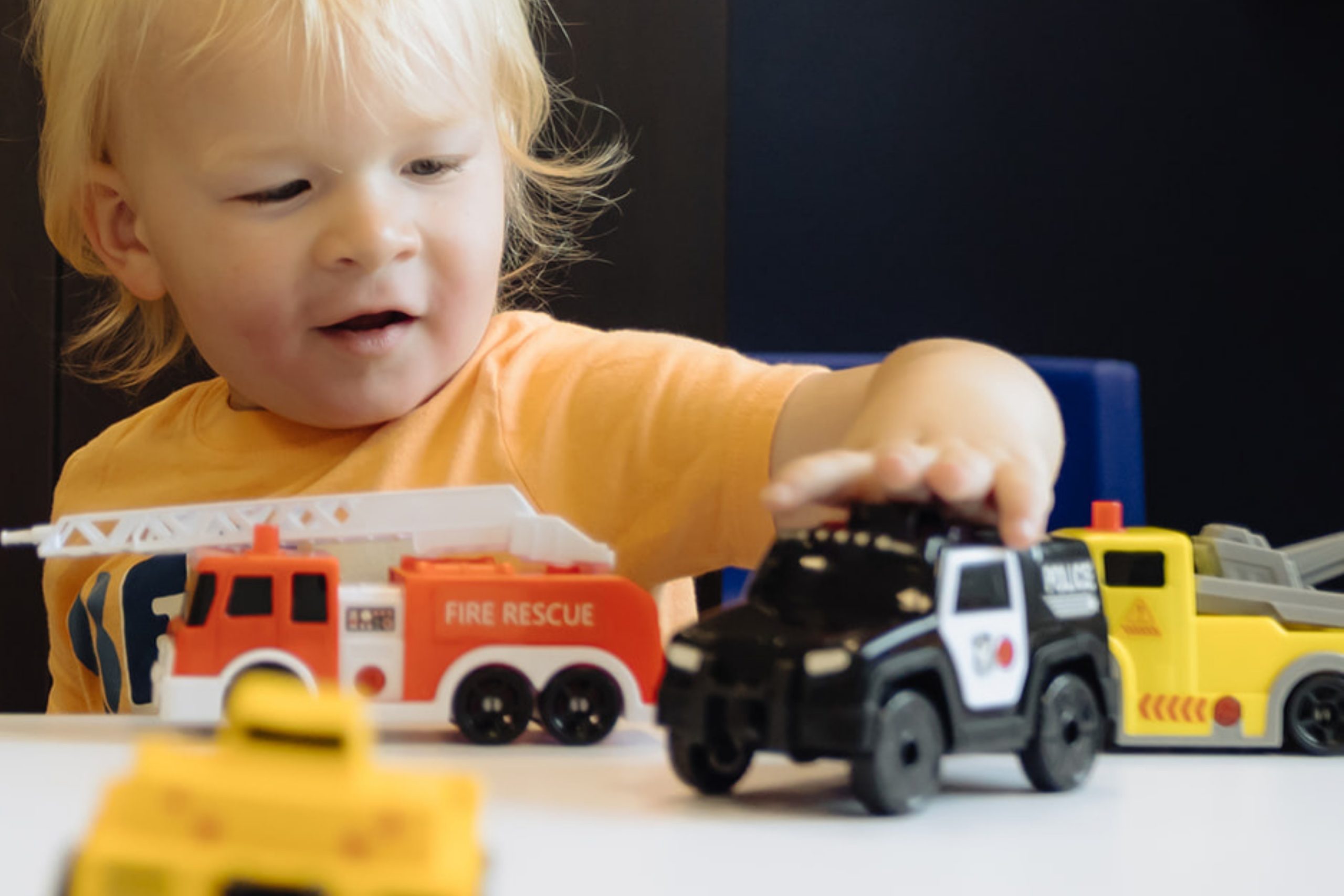
It can be tempting to ask a lot of questions when you want your child to say new words and sounds. However, your child learns more when you give information rather than ask for it. Instead of asking, “What are you doing?” try commenting, “Oh, you’re making the car go fast!” Commenting on what your child is already interested in keeps the activity fun and exciting.
Frequently Asked Questions
How can I support speech and language through play?
Get down on their level, wait for them to communicate, repeat a few new words, offer choices, and comment instead of quizzing. These simple habits help your child hear and use new sounds and words.
Why should I ask fewer questions during play?
Questions can feel like a test. Comments give your child words to copy and keep the play fun, so they are more likely to talk.
When is play at home not enough?
If your child’s speech is hard to understand or they use fewer words than expected for their age, an evaluation can show what extra support would help.
How ETLC Can Help
If you have questions about your child’s speech and language development, our team is here to help. Enrichment Therapy & Learning Center has locations in Johnston and North Liberty, IA, with virtual services also available.
Learn more about speech and language services at ETLC or schedule a free consultation to talk with a member of our team.
You may also find these pages helpful:
- Build Language Skills During Play
- Late Talkers: When to Seek Help
- Speech and Language Practice at Home
About the Author
Sonia Strueby, M.A., CCC-SLP, is the founder of Enrichment Therapy & Learning Center. With over 25 years of experience as a speech-language pathologist, Sonia has dedicated her career to helping children overcome complex communication and academic challenges. She has advanced training and a special focus on treating dyslexia and childhood apraxia of speech, and she is passionate about providing families with a clear path to success.


0 Comments