


Originally Published: August 16, 2024 | Updated: September 2, 2026
Your child’s first three years of life are full of growing, changing, and learning. You may have heard the saying “kids are like sponges,” and it’s true. They learn by observing and absorbing information from their surroundings. That’s why kids develop these skills best in an environment full of sounds, sights, vocabulary, and exposure to speech and language. However, even with the optimal environment, some children still struggle to gain words and communicate effectively.
Perhaps your child communicates primarily through gestures. Maybe they were babbling and saying words, then suddenly stopped. It can be hard to know whether to wait and see, or seek a professional opinion, when it comes to your child’s development, especially if they’re one of the many late talkers parents worry about. Below, we’ll cover developmental milestones related to speech and language, along with when to reach out for extra support.
What Speech and Language Milestones Should I Look For?
It’s genuinely difficult to tell the difference between typical development and a delay. Every child grows at their own pace, so it never hurts to raise concerns with your child’s pediatrician at any point along the way.
According to ASHA’s typical speech and language development milestones, by six months old, a child should be babbling. By their first birthday, they should have spoken their first real word. Between their first and second birthdays, their vocabulary should be growing steadily, and they should be using words more often.
By age two, they should be putting words together to communicate. The following year brings a lot of growth in speech and language. By age three, children should be communicating clearly with others and able to say sentences with four or more words. At this point, they should have developed many sounds and be easily understood by family and friends.
My Child Is Delayed in Developing These Skills. What’s My Next Step?
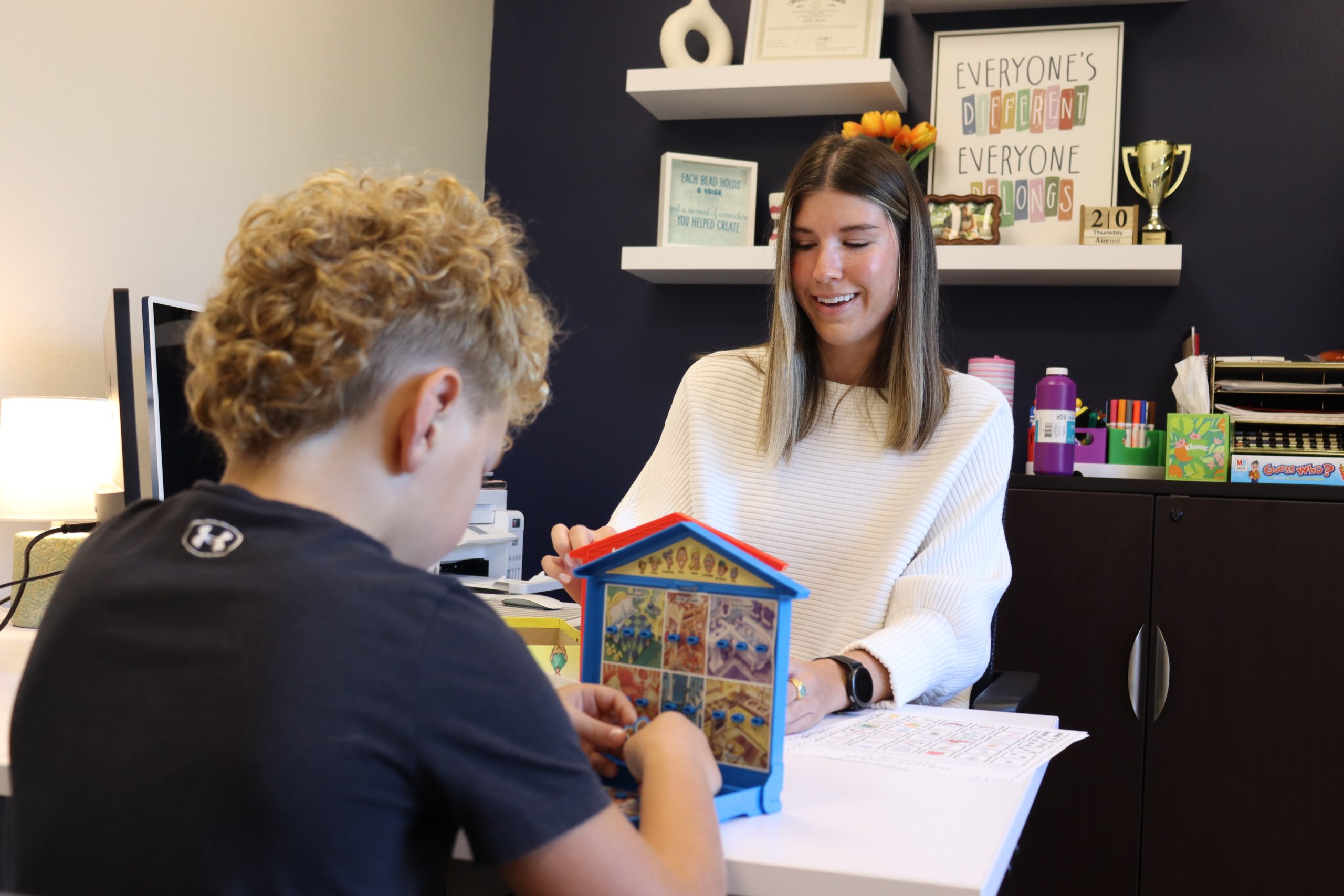
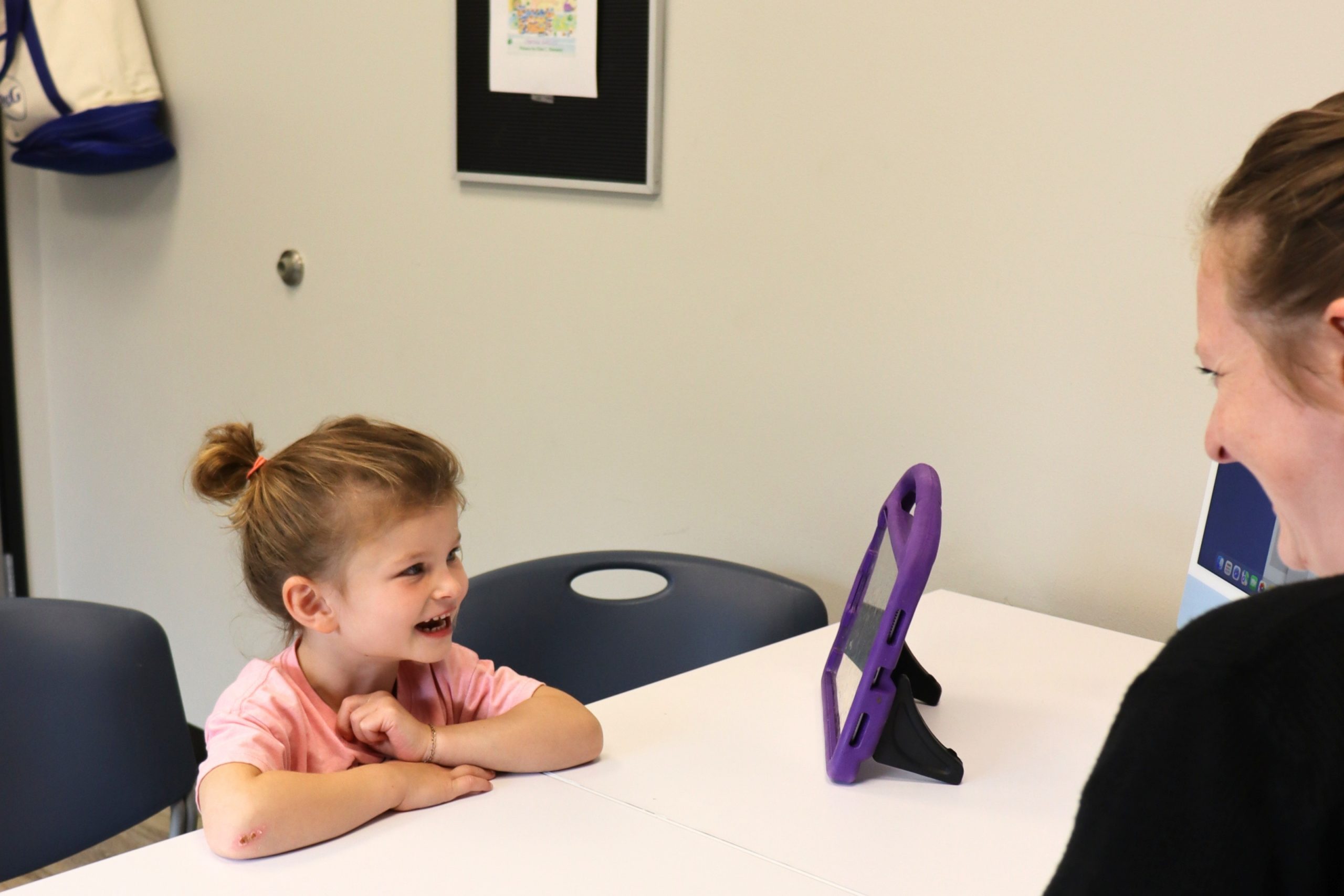
If you notice your child falling behind in developing these skills, bring it up at their next doctor appointment. Your doctor will likely refer you to a speech-language pathologist (SLP). An SLP will discuss your child’s communication, use assessments to evaluate them, and determine the next steps to encourage speech and language development. If appropriate, they may recommend weekly therapy sessions, along with activities to practice at home.
Many parents lean toward a “wait and see” mentality, believing their child will eventually grow out of it or catch up to peers on their own. While that’s true in some cases, it never hurts to consult a professional about your child’s overall development. Research has shown that early intervention is crucial. As mentioned above, a child’s first three years are packed with learning and growth, which is exactly why getting help early has proven so beneficial.
We’re Here to Help
If you’re wondering whether your child’s language development is on track, contact our team at ETLC. We’re happy to help you find answers and support.


0 Comments