

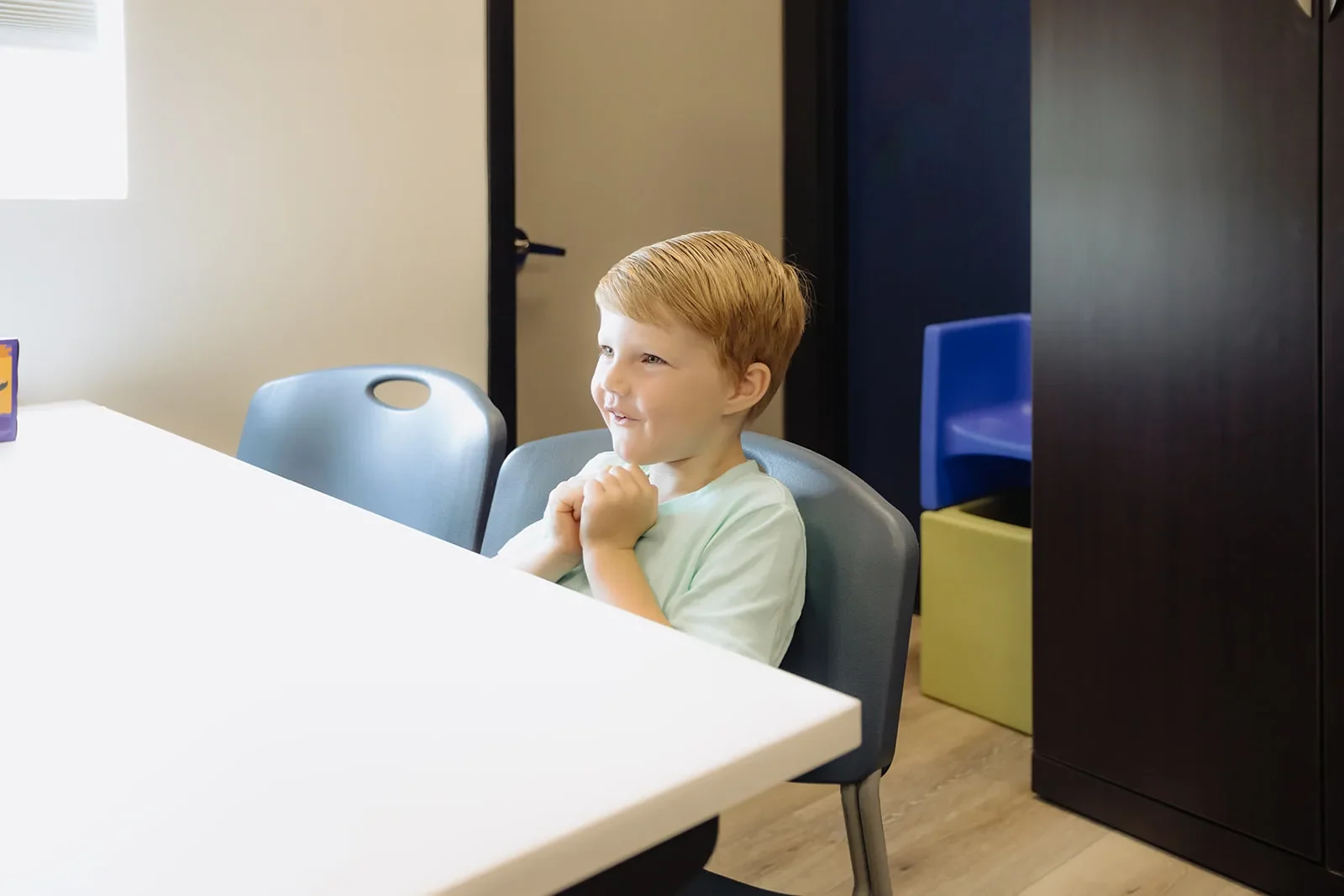
There are two main ways children learn language. Children are either analytic language processors, or they’re gestalt language processors. Understanding gestalt language processing, and knowing which way your child processes language, can help you create an environment that supports their development.
What Is Analytic Language Processing?
Analytic language processing is what people often call “typical” language development. A child learns language in small units, starting with single words, then moving to phrases, and eventually building up to full sentences with correct grammar.
What Is Gestalt Language Processing (GLP)?
Gestalt language processing is a form of language development where a child learns language in gestalts, or chunks, rather than single words. These chunks could be a memorized phrase from a movie or something a family member said. Many children with autism spectrum disorder are gestalt language processors, though other children can also begin learning language this way. You may have heard gestalts called “scripts” or “echolalia.” To learn more about the framework behind this idea, visit Meaningful Speech.
This differs from analytic processing, where a child starts with single words. For example, a gestalt language processor might say, “Let’s go get some snacks!” when they’re hungry, while an analytic processor might say, “Can I have a snack, please?” The first phrase may be something they picked up from TV or a friend, but they understand it as something you say when you’re hungry.
What Are the Characteristics of GLP?
Gestalt language processors echo speech they’ve heard before. They often use strings of language repeated from a variety of sources, including movies, caregivers, TV shows, and songs, like “Chase is on the case” or “to infinity and beyond.” A child may show immediate echolalia, which means repeating a phrase they just heard. They may also show delayed echolalia, which means repeating a phrase from a movie they watched days earlier.
For example, you might ask your child, “Are you thirsty?” when they seem to want a drink. From there, your child may start using the phrase “Are you thirsty?” every time they want water. They know the phrase gets them a drink, even if they don’t yet understand what the individual words mean.
In other children, their speech may not be understood by others, even though it looks like they’re communicating. They may use natural intonation, which leads people to say something like, “They’re speaking gibberish.”
How Can I Support My Child at Home?
If your speech-language pathologist has shared that your child is a gestalt language processor, you may feel both curious and eager to help. The good news is that there are a few simple things you can do before you ever set foot in a therapy session.
Identify the Phrases You Hear Most Often
Your child may repeat gestalts that don’t seem to fit the situation. This is called echolalia. Your first reaction may be to tell them their phrase doesn’t make sense. However, when we put on our detective hat, these gestalts can tell us a lot about what a child is thinking or feeling.
For example, we once worked with a student who often said, “We don’t hit,” at times that didn’t make sense at first. As we heard the phrase again and again, it seemed the student said it when play got tense or someone was becoming upset. He may have been thinking back to a time when someone used that phrase to calm things down. Maybe it was his way of saying, “Let’s calm down,” or “This is getting stressful.”
Play With Intonation
Gestalt language processors often learn a great deal of language from phrases that carry emotion in the speaker’s voice. For that reason, playing with intonation can help children begin to understand the meaning of individual words. When you play with your child, you can try:
- Silly voices: Use a funny tone of voice.
- Volume: Move from whispering to shouting.
- Emotion: Show feelings through your tone of voice.
- Stretching: Make your syllables longer or shorter.
- Pitch: Switch between low and high tones of voice.
Notice whether your child plays with intonation or tries to copy your rhythm.
Acknowledge and Praise Communication Attempts
Sometimes a gestalt language processor says something that is completely or partly hard to understand, and it can be tough to know how to respond. It’s important to let them know you appreciate their attempt, even when it doesn’t sound like an analytic processor. You can give eye contact, say “mhmm,” smile, or say, “What else?” You can also repeat the same phrase back to show you’re listening.
Once your child begins therapy, their speech-language pathologist will help you learn specific gestalts or grammar concepts to model. Until then, focus on figuring out what the early gestalts might mean, have fun with intonation, and celebrate communication attempts and the overall message instead of perfection.
Frequently Asked Questions
Is gestalt language processing a problem?
No. It is a different way of learning language. Children who communicate using gestalts are still communicating, and there is meaning behind their messages.
Should I correct my child when they repeat a phrase?
Try not to. Instead, think about what the phrase might mean in that moment, and respond to the message behind it.
How do I know if my child is a gestalt language processor?
If your child often repeats phrases from movies, songs, or people around them, it may be worth talking with a speech-language pathologist. They can look at how your child uses language and suggest next steps.
How ETLC Can Help
It’s important to remember that children who communicate using gestalts are still communicating. The goal is to find the meaning behind a child’s gestalt and help them reach self-generated language, where they break larger chunks down into meaningful words of their own. At Enrichment Therapy & Learning Center, our speech-language pathologists are trained in gestalt language processing. We have locations in Johnston and North Liberty, IA, with virtual services also available.
Learn more about language therapy at ETLC or schedule a free consultation to talk with a member of our team.
You may also find these pages helpful:
- Speech-Language & Social Skills
- Build Language Skills During Play: A Therapist’s Guide
- Language Development by Age: Building the Basics
About the Author
Sonia Strueby, M.A., CCC-SLP, is the founder of Enrichment Therapy & Learning Center. With over 25 years of experience as a speech-language pathologist, Sonia has dedicated her career to helping children overcome complex communication and academic challenges. She has advanced training and a special focus on treating dyslexia and childhood apraxia of speech, and she is passionate about providing families with a clear path to success.



0 Comments