

Did you know one of the most powerful tools for teaching your child to read is already right in front of them: their own name? Your child’s name literacy starts here, with letters that are personal and meaningful from day one.
Between ages 3 and 4, children begin to recognize letters and make their first letter-sound connections. This is a key pre-literacy milestone. Because strong knowledge of letter names and sounds builds the foundation for reading, spelling, and even speech clarity, it is worth starting early. Once children understand that sounds connect to letters, we can use written cues to help them say speech sounds more accurately.
Children are also naturally motivated to learn the letters in their own name first. It’s personal and meaningful, which makes it a perfect starting point. Try these hands-on activities to build your child’s name literacy.
Four Fun Activities to Build Your Child’s Name Literacy
1. Shaving Cream Letters
Spread a thin layer of shaving cream on a smooth surface, like a tray, table, or cookie sheet. Write the first letter of your child’s name in the cream and describe it as you go. For example: “Look! I made a big line down and a little line across. This is a T. The letter T is in your name, T is for Tommy!”
Then invite your child to trace or write the same letter. Once you have worked through the whole name, let them swipe it all away and play in the shaving cream. Because it engages the senses, this activity helps learning stick, and cleanup is half the fun.
2. Magnet Letter Hide and Seek
If you have a set of magnetic letters, this activity turns name recognition into a game. To set it up:
- Fill a small bin with rice, beans, or cotton balls.
- Hide the letters of your child’s name in the bin, along with a few small toys or other objects.
- Arrange a matching set of your child’s name letters in front of the bin, so they can see what they are looking for.
- Challenge your child to dig through the bin and find the letters one by one, then match them to the set in front.
To make it harder, add letters that aren’t in your child’s name. You can also remove the matching set so they rely on memory, or ask them to put the found letters in the right order and say the sound each one makes.
3. Play-Doh Shaping
Use Play-Doh to form the letters of your child’s name, describing each one as you shape it: “I’m making your name, T-o-m-m-y. That spells Tommy!” Then invite your child to copy your letters with their own dough. Because this combines seeing, saying, and physically forming letters, it engages several senses at once, which is one of the most effective ways young children learn.
To make it even more special, try making your own dough. Here is a simple 3-ingredient edible recipe that is gluten-free and safe for little ones who put everything in their mouths:
- 1 tub whipped topping
- Half a box of cornstarch
- 2 tablespoons olive oil
Fold the cornstarch into the whipped topping until crumbly, drizzle with olive oil, and then work the dough with your hands until it forms a ball.
4. Cookie Sheet Literacy
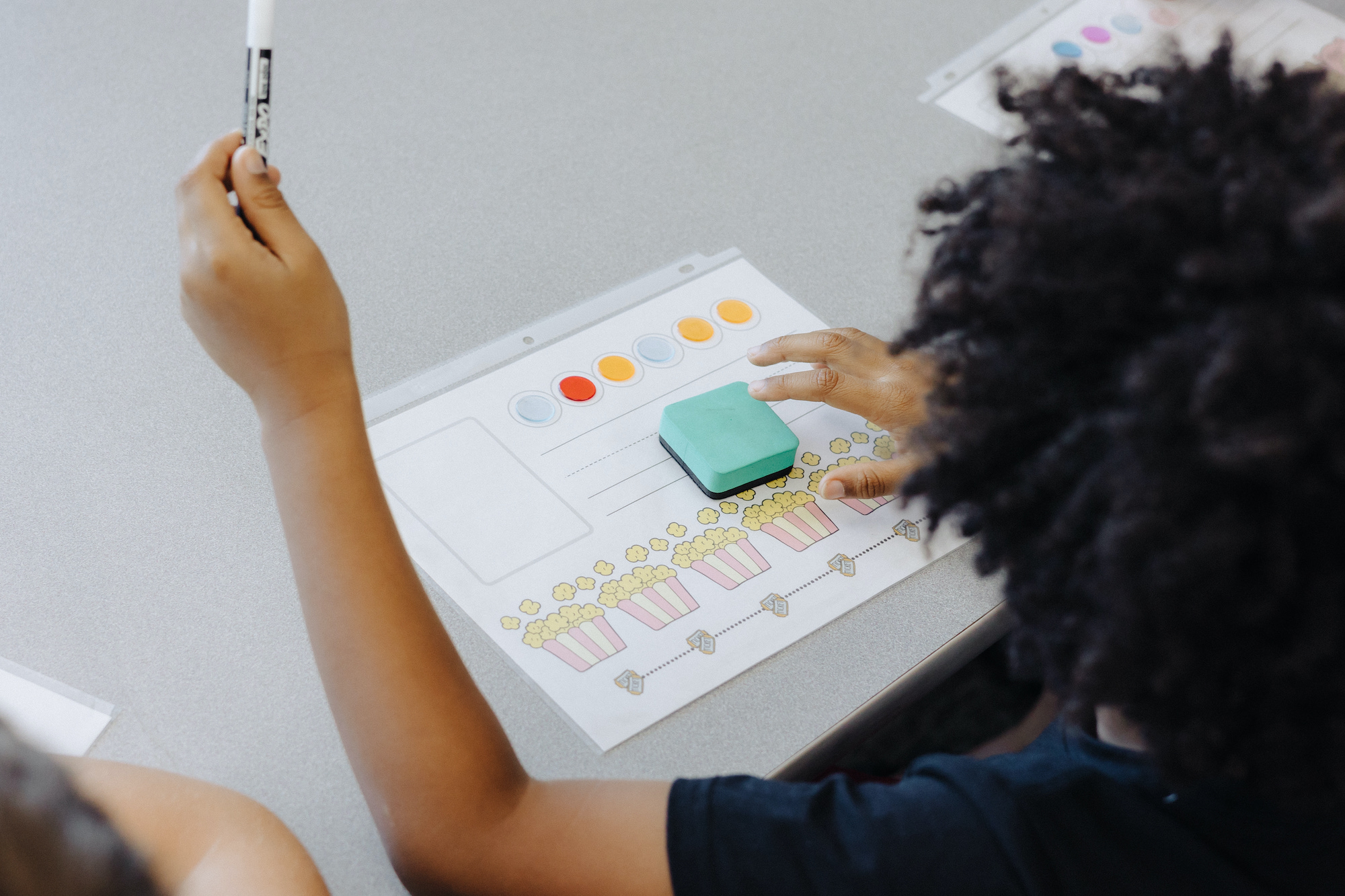
A cookie sheet makes a great base for pre-literacy and number activities, and you probably already have one in the kitchen. First, print or write your child’s name and the alphabet on separate pieces of paper and laminate them. Then gather magnet letters, play dough, and dry erase markers, and try these:
- Magnet letters: give your child the magnet letters for their name and have them match each one and say its sound. You can also give them a big pile of letters and have them find the ones in their name. Try the same activity with the whole alphabet.
- Play dough: have your child form each letter with play dough and say the letter’s name and its sound.
- Dry erase marker: have your child trace the letters with a dry erase marker.
You can do all of these activities with numbers, too.
Why Name Literacy Starts With Their Name
A child’s name is the first word that truly belongs to them. It appears on their cubby, their lunchbox, and their artwork. Because of this, children are primed to notice and remember the letters in their name before almost any other word.
As a result, name-based activities are a highly effective way into phonological awareness, which is the ability to hear and work with the individual sounds in words. In fact, this skill is one of the strongest predictors of reading success.
Frequently Asked Questions
At what age should my child start name literacy and letter recognition?
Most children begin to recognize some letters, especially those in their own name, between ages 3 and 4. By kindergarten, children are typically expected to recognize and name most letters of the alphabet. Every child develops at their own pace, so if you have concerns, it’s worth talking with a speech-language pathologist or early childhood specialist.
What if my child isn’t interested in these activities?
Follow their lead. For example, try a different activity, use a favorite character or color of Play-Doh, or keep sessions very short, since even 3 to 5 minutes counts. Engagement matters more than duration at this age.
How does letter knowledge connect to speech sounds?
Once children understand that letters represent sounds, we can use written letters as visual cues to help them say speech sounds more accurately. This link between print and sound is a key part of both early literacy and speech development.
What if my child is older and still struggling with letter recognition?
Difficulty with letter recognition beyond kindergarten can sometimes signal an underlying challenge, such as signs of dyslexia or a language-based learning difference. If you have concerns, an evaluation can help identify what is going on and what support would help.
How ETLC Can Help
If you have questions about your child’s letter knowledge or early reading skills, our team is here to help. Enrichment Therapy & Learning Center has locations in Johnston and North Liberty, IA, with virtual services also available.
Learn more about speech-language therapy at ETLC or schedule a free consultation to talk with a member of our team.
You may also find these pages helpful:
- Prepare Your Preschooler for Reading
- Is My Child Ready for Preschool or Kindergarten?
- Phonological Awareness Hierarchy
About the Author
Sonia Strueby, M.A., CCC-SLP, is the founder of Enrichment Therapy & Learning Center. With over 25 years of experience as a speech-language pathologist, Sonia has dedicated her career to helping children overcome complex communication and academic challenges. She has advanced training and a special focus on treating dyslexia and childhood apraxia of speech, and she is passionate about providing families with a clear path to success.
0 Comments