

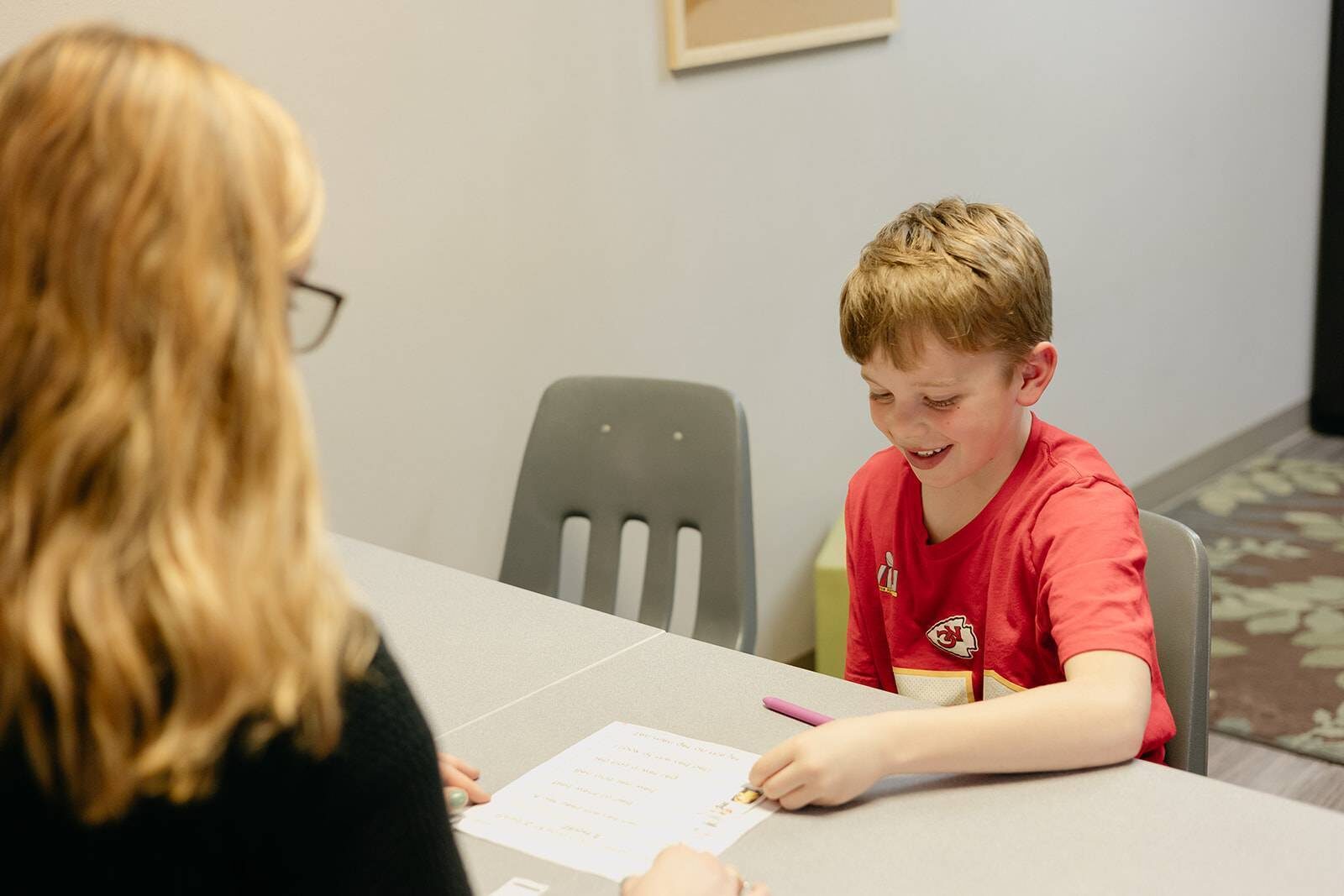
As your child moves through early elementary school, they will shift from “learning to read” to “reading to learn.” Parents can help encourage reading comprehension and set a framework for how their children learn from the words they read. Here are simple ways to build reading comprehension before, during, and after reading.
1. Before You Open the Book
Even before you turn the first page, stop to look at the book’s cover. Ask your child what pictures they see, and then read the title together. Next, think about any past experiences that might set the stage for what you are about to read.
Practice making predictions, or guesses, about what might happen in the story. A prediction gives reading the book a purpose, because you have to finish the book to find out if your guess was right. That purpose helps your young reader stay engaged.
2. While You Read
The first few sentences or pages of a book often answer basic “who, what, where” questions that establish the characters and setting. Point these out to your child, and connect them to personal experiences whenever you can.
As the story goes on, point out any emotions the characters feel and talk about why they feel that way. Practice retelling and sequencing by summarizing what has happened so far, since new information may change your child’s original prediction. Along the way, check new vocabulary by asking your child to explain a word’s meaning or suggest a synonym.
3. After You Read
Model a brief summary of events, and then ask your child to retell the main details. If there is a theme or moral, take a moment to explain it. Try asking, “What did you learn?” “What was your favorite part?” or “Do you want to read it again?” Finally, go back to your first prediction and talk about how what you guessed compared with what really happened.
Build Comprehension With Visualizing
Visualizing, or making a picture in your mind, is one of the most effective ways to improve reading comprehension. Encourage your child to “make a movie in their head” as they read or listen. You can learn more about this strategy in our post on Visualizing and Verbalizing.
More Reading Comprehension Tips
It’s important to include informal “knowledge checks” as you read, so you know your child is actively engaged with the story. If the reading level is too high or too low, engagement drops. For early readers, parents play a huge role in modeling an internal dialogue for comprehension, which is what the shift from learning to read to reading to learn depends on.
Reading comprehension also helps children build vocabulary, understand story structure, and pull information together, which are all needed for language development and school success.
Frequently Asked Questions
Why does my child read well but not understand what they read?
Reading words accurately and understanding them are separate skills. A child may decode well but not picture or connect the ideas. Strategies like predicting, visualizing, and retelling can help.
How can I check my child’s reading comprehension at home?
Ask your child to retell the story in order, answer who, what, where, and why questions, and explain new words. Keep it conversational and fun, not like a test.
When should I be concerned about reading comprehension?
If your child struggles to retell stories, answer simple questions, or follow what they read even at an easier level, an evaluation can help find out why. Our post on a child struggling with reading explains what to look for.
How ETLC Can Help
If you’d like more support building your child’s reading skills, our team is here to help. Enrichment Therapy & Learning Center has locations in Johnston and North Liberty, IA, with virtual services also available.
Learn more about reading and tutoring services at ETLC or schedule a free consultation to talk with a member of our team.
You may also find these pages helpful:
- What Is Visualizing and Verbalizing?
- Reading Rate, Accuracy, and Comprehension: What the Scores Mean
- Executive Function While Reading
About the Author
Sonia Strueby, M.A., CCC-SLP, is the founder of Enrichment Therapy & Learning Center. With over 25 years of experience as a speech-language pathologist, Sonia has dedicated her career to helping children overcome complex communication and academic challenges. She has advanced training and a special focus on treating dyslexia and childhood apraxia of speech, and she is passionate about providing families with a clear path to success.


0 Comments