


Is your child struggling in school? Do changes need to be made? Learning accommodations or modifications may help your child succeed. As educators and parents, we share the same goal. We want each child to learn, to be successful, and to reach their highest potential. This guide explains accommodations and modifications, the difference between them, and examples for reading and math.
What Are Accommodations and Modifications?
Concerns arise when a child struggles in a traditional classroom. When that happens, we need to decide what to change so the child can succeed.
- Accommodations are changes to HOW a child learns.
- Modifications are changes to WHAT a child learns.
Accommodations: Four Ways to Change How a Child Learns
Accommodations remove barriers and give each child equal access to learning. They do not change the content or lower expectations for what is learned. There are four types.
Presentation
This is a change in how information is presented. For example, a child with dyslexia can listen to reading material in audio format instead of reading printed text. The material is the same, and only the delivery changes.
Response
This is a change in how a child completes work or shows what they know. For instance, a child who struggles with handwriting can use a keyboard, or answer out loud instead of in writing.
Setting
This is a change in the environment. For example, a child with ADHD can take a test in a quiet room with fewer distractions.
Timing and Scheduling
This is a change in the time a child has to finish a task. For example, a child with slower processing speed can have extra time on work.
Modifications: Changing What a Child Learns
Modifications change what a child is taught or expected to do, such as simpler assignments or less work. They make sense when a child cannot complete work at the expected level. Teachers need to meet the child where they are in the learning hierarchy, so each child has the foundational skills in place before moving on. For example, if a third grader has not yet mastered addition while the class learns multiplication, her work can be modified so she keeps working on addition.
However, modifications can be controversial because they change what the child is learning. Over time, they can put students at a disadvantage, since they miss content that other children are taught. They could also affect a child’s ability to meet standards for a lesson. For this reason, we recommend that families also seek extra support, such as tutoring or specialized instruction outside school, to help close the learning gap. In the best case, the curriculum does not need to be modified for long, because extra support helps your child reach grade-level expectations.
Accommodations for Students Who Struggle With Reading
If your child struggles with reading, it can affect everyday life. These accommodations make learning more accessible.
- Audiobooks and text to speech: Bookshare is an online library for children with reading barriers. A reading pen, which reads scanned words aloud, can also help. Our post on audiobooks for struggling readers has more.
- Simplified text: offer a shorter text with the main ideas highlighted instead of a whole page or chapter.
- Graphic organizers: a word web or organizer can improve comprehension.
- Partner reading: one child reads while the other writes.
- Oral directions: give directions out loud, then have the student repeat them back.
- Adapted books: these have simpler text, picture symbols, or tactile parts. Learn more in our post on adapted books.
- Visualizing: this strategy can improve comprehension. See visualizing and verbalizing.
Accommodations for Students Who Struggle With Math
For kids with learning difficulties, math can be challenging. These accommodations make many concepts more accessible.
- Allow a calculator when students are not being assessed on computation, such as for word problems.
- Offer a hundreds chart or multiplication grid for addition, subtraction, multiplication, and division.
- Use graph paper to help students line up digits.
- Let students draw pictures, or add images to word problems.
- Give a list of relevant equations instead of asking students to memorize formulas.
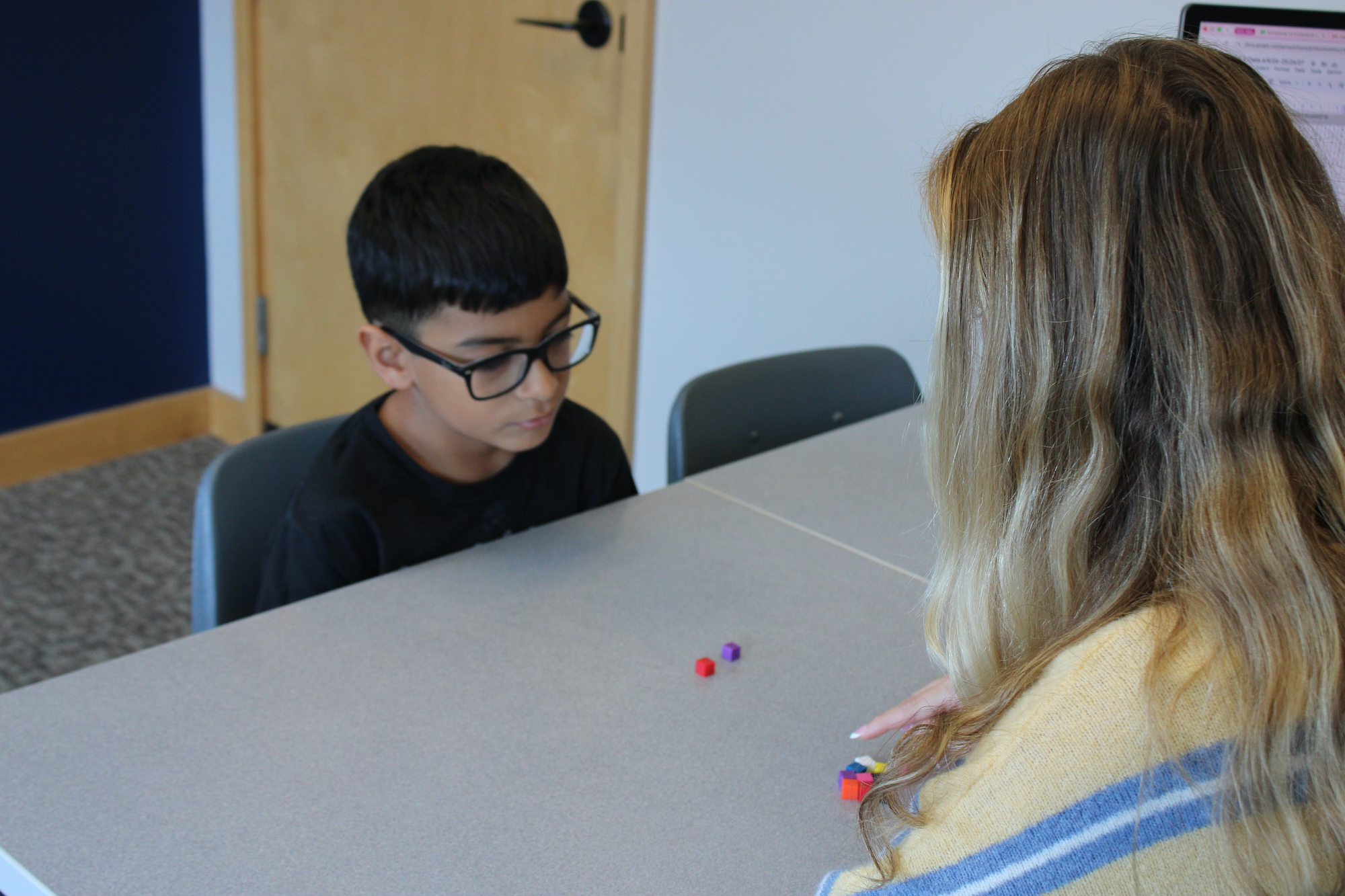
- Use manipulatives, as described in our post on math manipulatives.
With the right accommodations and modifications in place, all children can be successful.
Frequently Asked Questions
What is the difference between accommodations and modifications?
Accommodations change how a child learns, such as extra time or audiobooks. Modifications change what a child is taught or expected to do.
What are examples of accommodations for reading?
Audiobooks, text to speech, simplified text with main ideas highlighted, graphic organizers, and giving directions out loud all help.
Can modifications hurt my child over time?
They can, because a child may miss content that classmates learn. Because of this, outside tutoring can help your child close the gap.
How ETLC Can Help
If your child needs support to meet grade-level goals, our learning specialists and speech-language pathologists can help, from age 2 through college. Enrichment Therapy & Learning Center has locations in Johnston and North Liberty, IA, with virtual services also available.
Learn more about tutoring and academic support at ETLC or schedule a free consultation to talk with a member of our team.
You may also find these pages helpful:
About the Author
Sonia Strueby, M.A., CCC-SLP, is the founder of Enrichment Therapy & Learning Center. With over 25 years of experience as a speech-language pathologist, Sonia has dedicated her career to helping children overcome complex communication and academic challenges. She has advanced training and a special focus on treating dyslexia and childhood apraxia of speech, and she is passionate about providing families with a clear path to success.

0 Comments