


Originally Published: February 16, 2022 | Updated: September 1, 2026
“My child struggles with reading and sounding out words. What can I do to help?” It’s one of the most common questions we hear from parents. Many children struggle with reading, and as a parent, you may be wondering how to build reading skills at home. Here are five things you can do with your child to help build their confidence and success as a reader.
Read With Your Child
Read with your child every day. Model good speed and expression as you go, and think out loud to show your child how to make connections with the story. For example, play audiobooks during car rides, since many libraries offer them for free, and invite older siblings to read out loud to the whole family.
Focus on Repetition
Repeated readings of a story can help improve a child’s speed and accuracy. Ask your child to re-read a page a couple of times to help them feel more fluent as they read.
Practice Recalling Consonant and Vowel Combinations
[Note to editor: The original post references a chart of consonant/vowel combinations to practice. That chart wasn’t included in this draft, please add it back in before publishing.]
According to Reading Rockets, these sounds should generally be mastered by the end of first grade. At that point, children should be able to read a variety of one-syllable words containing these combinations.
Play Word Games
Playing “word games” with your child is a fun way to boost phonological awareness. These games can improve your child’s foundational skills in rhyming, alliteration, syllable counting, word awareness, and manipulating sounds in words. Check out our post on phonological awareness for more information about these skills.
Encourage Your Child to Write
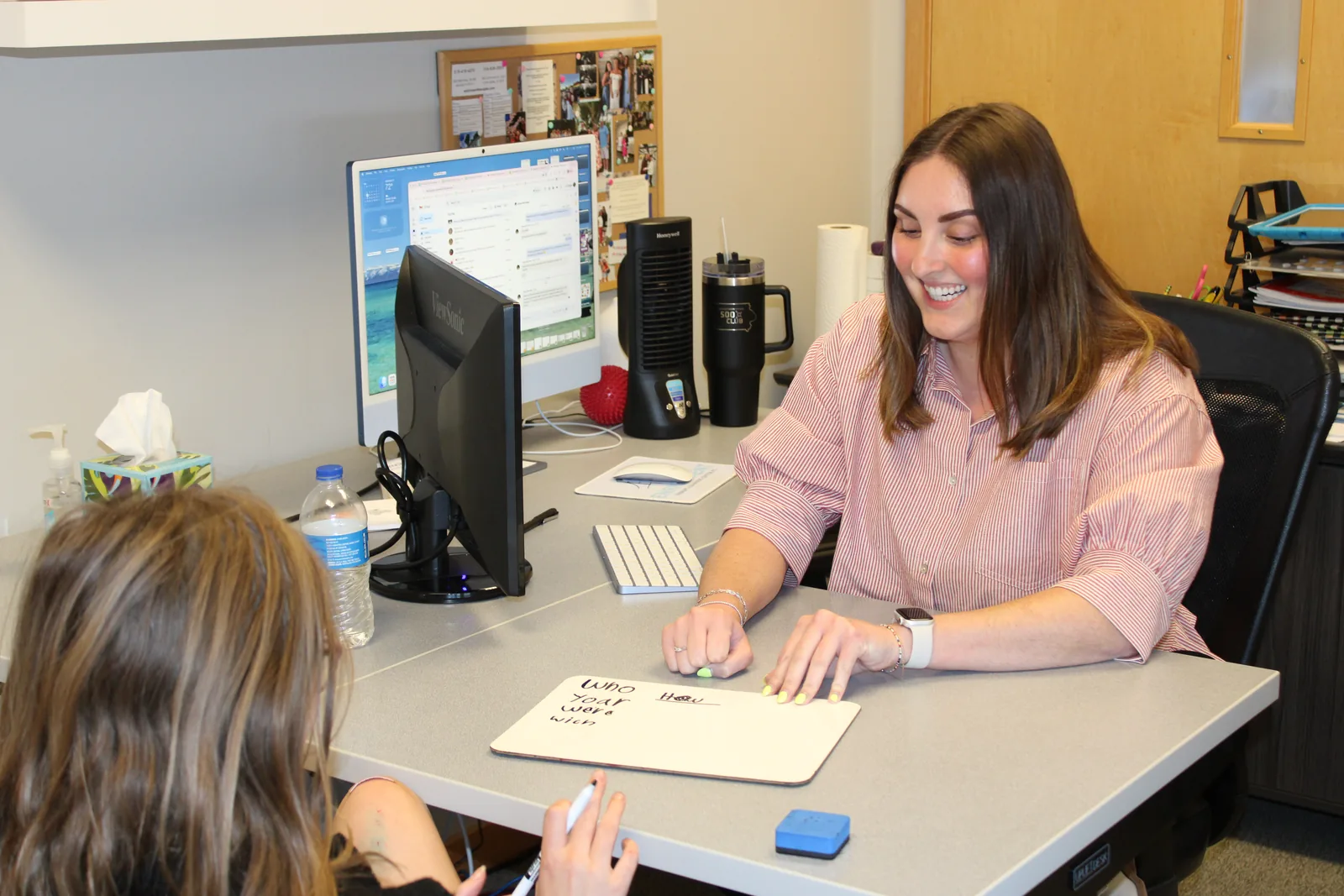
Writing helps your child apply what they know about letters and sounds. This can be as simple as writing out the dinner menu or a reminder on a sticky note. Your child could also write a letter to a friend or relative. Since many children practice spelling words each week at school, have your child write out their words and talk through the patterns, especially ones that make expected or unexpected sounds. For example, in the word “said,” the “ai” makes an unexpected sound.
We Can Help
If you’d like to help your child succeed in school and become a confident, successful reader, we’re here to help. Our individual and small-group sessions teach children to improve their word recognition and decoding skills. Contact us to learn more.

0 Comments