

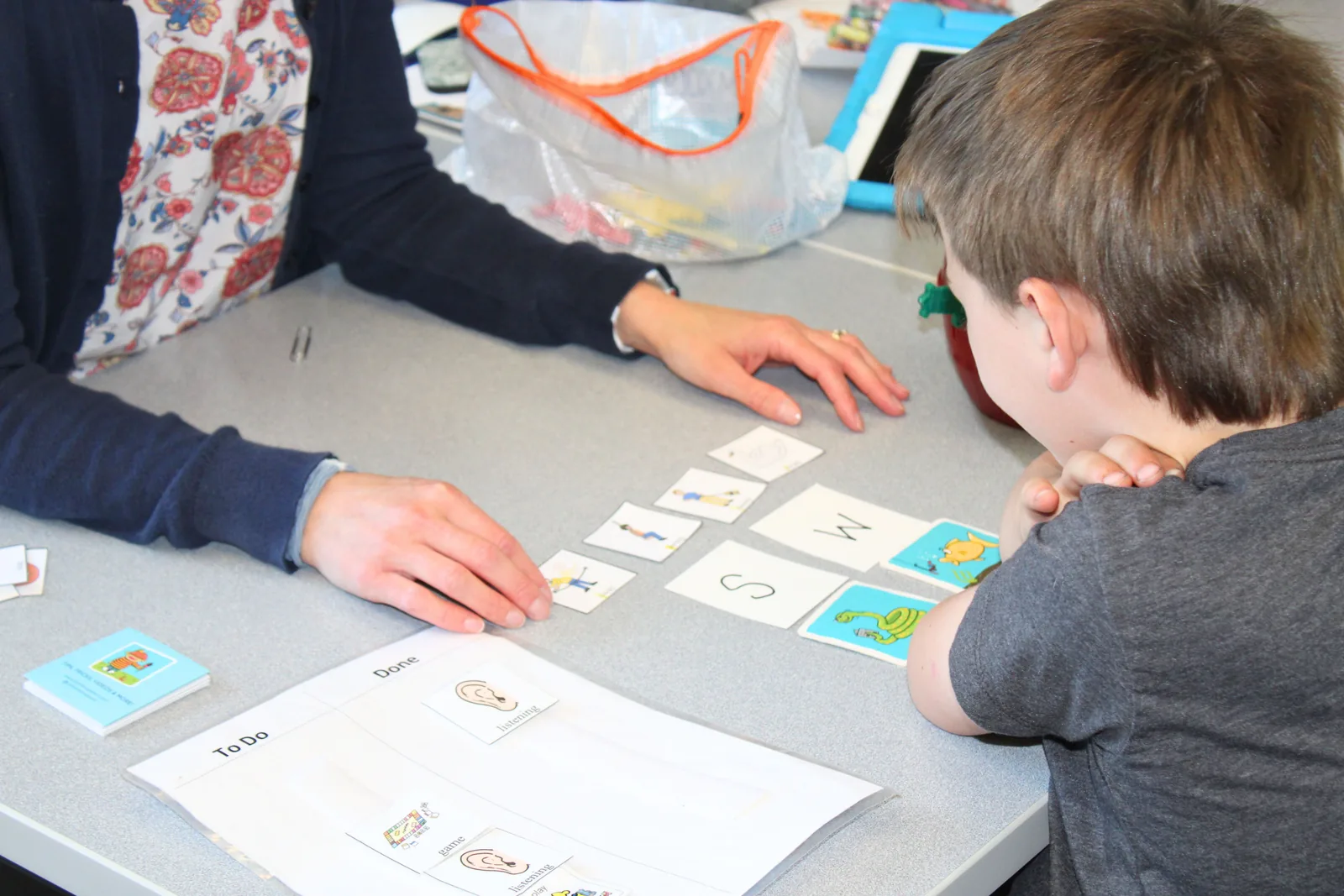
Did you know you can start building literacy skills long before your child ever sets foot in a kindergarten classroom? In fact, the foundation for reading begins in infancy — through play, conversation, books, and everyday experiences that expose children to language and print.
Letter knowledge — knowing the names of letters and the sounds they make — is one of the most important pre-literacy skills a child can develop. It directly supports reading, spelling, and even speech clarity. And the best part is that building it doesn't require flashcards or formal lessons. It happens naturally through the right kinds of play and interaction.
This guide walks through what to focus on at each stage, how to handle common letter confusions, and practical activities you can do at home starting right now.
Why Letter Knowledge Matters
When children understand that letters represent sounds, a whole world of literacy opens up. They can begin to decode written words, connect what they hear to what they see in print, and use letters as tools for communication.
Letter knowledge also supports speech development. Once children understand that sounds are associated with letters, speech-language pathologists can use written visual cues to help children produce speech sounds more accurately. The connection between letters and sounds runs in both directions.
Most children begin to recognize letters and make their first letter-sound connections between ages 3 and 4 — and they almost always start with the letters in their own name.
Building Letter Knowledge by Age
Babies and Toddlers
Early letter knowledge starts with shape recognition — learning to notice that objects can look different from one another. You don't need to introduce the alphabet yet. Instead:
- Play with toys of different shapes, sizes, and colors and describe them out loud: "Here's a round, blue ball."
- Read books together and talk about what you see: "Look at that big square window!"
- Sing songs and rhymes that feature colors, sizes, and shapes
- Narrate your day: "Mommy is cooking dinner" or "Look at that big red truck!"
Repetition is key at this stage. Reading the same book ten times isn't boring for a toddler — it's how they learn.
Preschoolers (Ages 3–4)
This is the prime window for introducing letters, starting with the ones in your child's name. Children are naturally motivated to learn their own name first — it's personal, it's meaningful, and it appears everywhere in their world.
A few things to keep in mind as you introduce letters:
- Teach letter names and sounds together. Research supports learning both simultaneously. Most letter names give a clue to the sound they make — the letter P starts with the /p/ sound, for example.
- Focus on lowercase letters first. Lowercase letters are far more common in everyday print than uppercase.
- Pair upper and lowercase letters together so children learn to recognize both forms of the same letter.
School-Age Children
As your child enters kindergarten and beyond, they'll be exposed to more letters and words than ever. You can reinforce this at home by:
- Pointing out letters on signs, labels, and everyday items
- Doing an alphabet activity or craft for each letter (decorate an alligator for A, blow bubbles for B)
- Going on letter scavenger hunts — how many words can you find that start with /s/?
- Encouraging your child to write — grocery lists, sticky note messages, letters to family
Fun Activities for Teaching Letter Names and Sounds
Tape Letters on the Floor. Use masking tape to make large letter shapes on the floor, or use sidewalk chalk outside. Call out a letter name or sound and have your child jump, hop, or run to it. "Find the letter P!" or "Hop to the one that says /b/!"
Magnet Letters. Keep a set of magnetic letters on the refrigerator or a baking sheet. Play matching games, spell simple words, or sort letters by sound. Ask your child to find all the letters that make the /m/ sound, or build their name and then scramble it.
Shaving Cream Writing. Spread shaving cream on a smooth surface and practice writing letters. Describe each stroke as you go: "Big line down, little line across — that's a T!" When you're done, let your child swipe it all away. The sensory experience makes the learning memorable.
Play Dough Letters. Shape letters out of play dough, narrating as you go: "I'm making an S — it curves this way, then back the other way." Your child can copy your letters or trace over yours. The physical act of forming the letter reinforces its shape in memory.
Letters in Context. Weave letter sounds into everyday moments: "Dolls — d, d, doll — that start with the /d/ sound, letter D!" Connecting letters to real objects and experiences makes them stick far better than isolated drill.
Visualization for Phonics. For school-age children working on phonics, visualization is a powerful tool. Ask your child to picture a word in their mind — then erase one letter and replace it with another. "Picture the word 'tap.' Now erase the /t/ and replace it with /m/. What's the new word?" This kind of mental letter manipulation builds phonemic awareness and long-term phonics memory simultaneously.
How to Fix the b/d Confusion
Mixing up b and d is one of the most common early literacy challenges — and one of the most fixable. These two letters are mirror images of each other, which genuinely confuses many young readers. Here are the most effective strategies:
The Bat and Ball Trick. When writing b, tell your child: "First you grab the bat (the tall line), then you hit the ball (the bump on the right)." The b starts with the straight line, and the bump goes to the right.
The Doorknob and Door Trick. When writing d, tell your child: "First you grab the doorknob (the round part on the left), then you open the door (the tall line on the right)." The d starts with the round part, and the line goes to the right.
The Bed Trick. Write the word bed and show your child how it looks like an actual bed:
- The lowercase b forms the headboard — and makes the first sound in bed
- The lowercase d forms the footboard — and makes the last sound in bed
This visual anchor is one of the most memorable strategies for children who continue to mix up these letters.
Build Speed and Accuracy. Once your child can correctly identify b and d, practice building speed. Create a simple chart with a mix of both letters in random order. Have your child read across each row, saying the sound each letter makes (not the name). As accuracy improves, add a metronome beat to build fluency. You can also incorporate movement — jump with feet apart for /b/, feet together for /d/ — which engages both sides of the brain and reinforces the distinction.
Frequently Asked Questions
When should my child know all their letters? Most children are expected to recognize and name most letters of the alphabet by the end of kindergarten. By the end of first grade, children are typically expected to know both letter names and the sounds they make reliably. Every child develops at their own pace, so don't panic if your child is slightly behind — but if there's a significant gap, early support is worth exploring.
Should I teach uppercase or lowercase letters first? Focus on lowercase first. Lowercase letters make up the vast majority of print your child will encounter in books, signs, and screens. Introduce uppercase alongside lowercase so children recognize both — but don't wait until uppercase is mastered before moving to lowercase.
My child still confuses b and d in second grade. Is that a red flag? Occasional reversals in early elementary are normal. Persistent reversals beyond second grade — especially alongside other reading or spelling difficulties — can sometimes signal dyslexia or a language-based learning difference. It's worth mentioning to your child's teacher or a speech-language pathologist if it continues.
How long should letter practice be each day? Short and playful beats long and formal every time. Five to ten minutes of engaged, multisensory practice — singing, moving, building, writing — is more effective than 30 minutes of drills. Consistency over time is what builds lasting knowledge.
How ETLC Can Help
If your child is struggling with letter knowledge, early literacy skills, or reading readiness, our team can help. We provide evaluations and individualized support for children from preschool through the school-age years.
Learn more about Early Intervention at ETLC orschedule a free consultation to talk with a member of our team.
You may also find these pages helpful:
About the Author
Sonia Strueby, M.A., CCC-SLP, is the founder of Enrichment Therapy & Learning Center. With over 25 years of experience as a speech-language pathologist, Sonia has dedicated her career to helping children overcome complex communication and academic challenges. She has advanced training and a special focus on treating dyslexia and childhood apraxia of speech, and she is passionate about providing families with a clear path to success.

0 Comments