

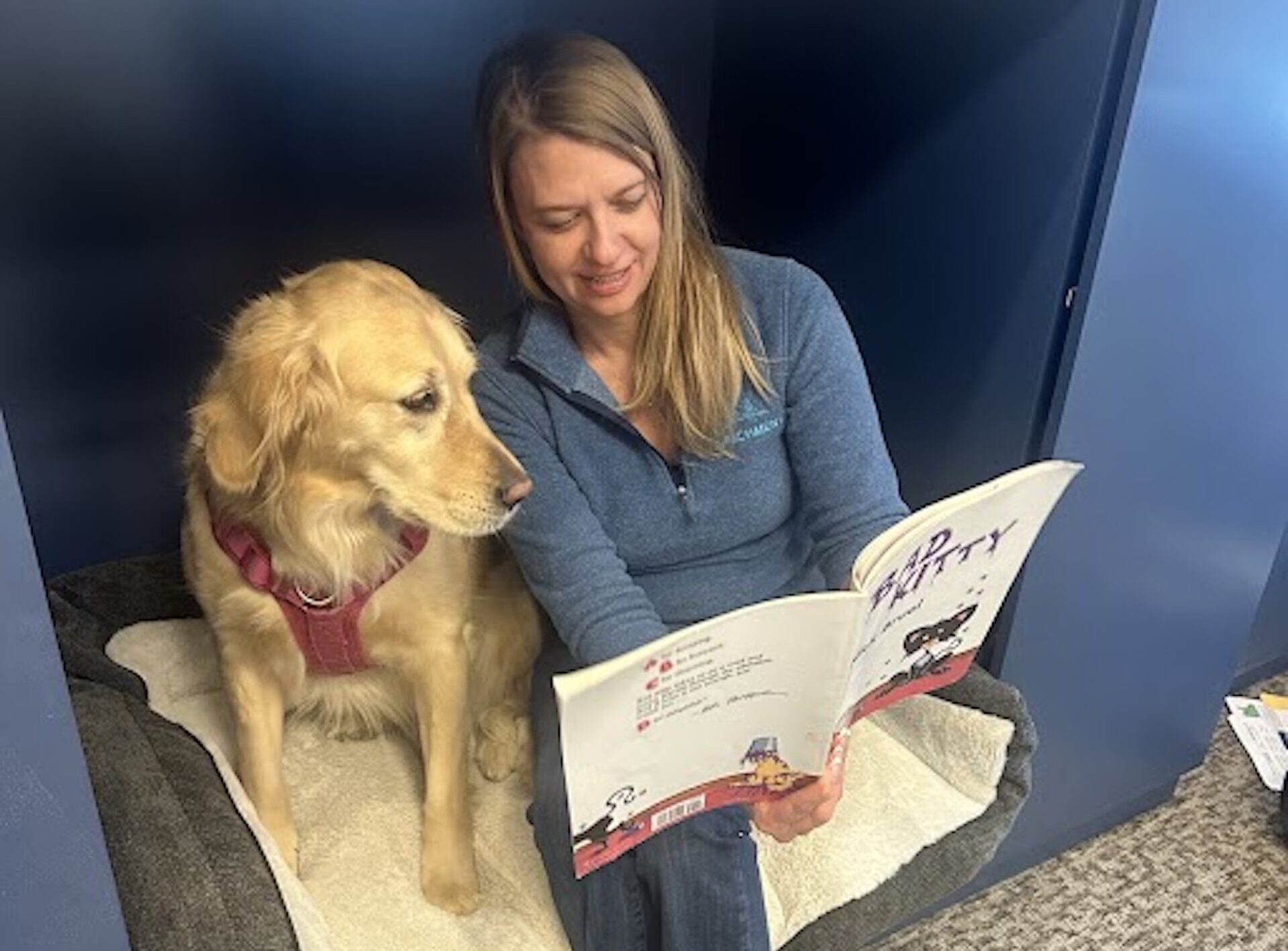
Is your child having trouble reading at the same speed as their peers? Is their teacher reporting that they are below the reading benchmark? Once a student has learned the rules of reading, we can work on reading fluency. These reading fluency activities can help your child increase their speed and accuracy in a fun way.
Reading Fluency Activities to Try at Home
Inhale and Exhale
It’s very important that your child is relaxed, especially when working on reading speed. Tell them to get the wiggles out, relax their body, and take a few deep breaths. When they are relaxed, they are more likely to keep reading through a sentence or paragraph instead of sounding choppy. We want students to read smoothly, without stopping or repeating words.
Echo Reading
Echo reading helps your child take sight words into their reading. First, read a sentence aloud and have your child read it back to you. As your child becomes fluent reading a sentence back to you, increase the number of sentences they echo. Be sure to model good expression and tone, because that is what your child will repeat back.
Repeated Readings
Challenge your child to beat their own reading time by rereading the same passage. Choose a short paragraph that fits their reading level, or let your child choose. Record your child reading it the first time, and then have them read it several times until it sounds fluent. You can compare this to athletes who practice the same movement until it is quick and effortless. Finally, record a last reading and listen to the difference between the two. Celebrate the progress!
Metronome Reading
Set a timer and have your child read for one minute. When the timer goes off, set a metronome to the number of words read in that minute. For example, if your child read 70 words in one minute, set the metronome to 70 beats per minute. Ask your child to read one word for each beat. Once they are used to this, increase the beats per minute. Do this two or three times until your child can read the passage at a faster rate.
Punctuation Taps
As your child reads, ask them to tap on their lap or the table when they get to periods or commas. This helps them notice punctuation, and it improves phrasing and expression.
Vowel Tracking Exercises for Accuracy and Speed
Does your child know their vowels and vowel combinations but still need to improve their reading speed and accuracy? Try this vowel tracking exercise:
- Choose one of the four vowel tracking levels based on your child’s needs. List 1 reviews short vowels. List 2 reviews short vowels and vowel combinations, like “when two vowels go walking, the first one does the talking.” Lists 3 and 4 review all vowels and vowel combinations.
- Have your child place the page in front of them with their hands in their lap or beside the paper. They should say the sound the letter or combination makes, not the letter names.
- Start with only 4 to 5 lines at a time. If your child gets frustrated, do 2 to 3 lines and work up from there.
- Once your child can get through the list with better accuracy, work on speed. Have them try to finish each list in one minute or less with two errors or fewer, and let them time themselves to beat their own record.
You can print the vowel tracking pages and the vowel cheat sheet for parents.
Ways to Make Vowel Tracking More Fun
Hang a tracking page on the wall and have your child stand about 3 to 5 feet away. Then try these levels:
- Start: stand in front of the page and follow the steps above.
- Next: have your child say the sounds to a metronome beat, and gradually raise the speed to a level that is challenging but not frustrating.
- Then, add movement, like jumping on a mini-trampoline or the floor. Try one sound for each jump, and if that’s too hard, do one sound for every two jumps and then gradually speed up.
- Finally, when your child sees and says a short vowel sound, they jump with their legs apart. When they see and say a long vowel combination sound, they jump with their feet together.
Visual Tracking Activities for Keeping Your Place
Does your child lose their place while reading, skip lines, skip or swap words, point with a finger, or read slowly? Visual tracking may be part of the problem. To use our vision efficiently, our eyes have to move quickly and accurately from one word to the next and from one line to the next. Children with tracking difficulties may have slow or inaccurate eye movements, or may need their head or finger to help their eyes keep their place. This can affect reading fluency, comprehension, and handwriting.
These two activities use the visual tracking paragraphs. Your child should keep their head still, since these activities are just for the eyes.
ABC Tracking
- Time the activity.
- Have your child place a penny or a felt square beside the paper on the side of their writing hand. This is “home base,” where their hand rests so they don’t use the pencil or fingers to track.
- Your child starts at the top of one paragraph and circles each letter in order, starting with “a,” then “b,” then “c,” all the way to “z.”
- If your child moves their head, rest a bean bag or quarter on their head as a reminder to track with only their eyes.
- After circling each letter, your child returns their hand to home base. Then see how fast they can go.
Line Tracking
This quick exercise builds accuracy moving from line to line. Have your child start at the top of any paragraph and say the first and last letter of each line, moving as fast as they can.
Frequently Asked Questions
How fast should my child be reading?
It depends on grade level and time of year, and schools usually compare students to benchmarks. If your child’s teacher says they are below benchmark, ask what the benchmark is and how your child is doing against it.
Does reading faster mean reading better?
Not by itself. Accuracy and understanding matter just as much as speed. These activities aim for smooth, accurate reading with good expression, not racing through the text.
When should I get help for my child’s reading speed?
If your child is still reading slowly after steady practice, loses their place often, or avoids reading, an evaluation can help. If you suspect an eye or vision problem, also see an eye doctor. Our post on a child struggling with reading can help you decide what to do next.
How ETLC Can Help
Helping your child with reading rate can be challenging, and these activities are just a few ways to help. If you are concerned that your child could use more reading support, our team is here to help. Enrichment Therapy & Learning Center has locations in Johnston and North Liberty, IA, with virtual services also available.
Learn more about dyslexia and reading therapy at ETLC or schedule a free consultation to talk with a member of our team.
You may also find these pages helpful:
- Decodable Readers: What Are They?
- Reading the Same Book Repeatedly
- Confident Reading Aloud: 5 Tips to Help Your Child Read With Confidence
About the Author
Sonia Strueby, M.A., CCC-SLP, is the founder of Enrichment Therapy & Learning Center. With over 25 years of experience as a speech-language pathologist, Sonia has dedicated her career to helping children overcome complex communication and academic challenges. She has advanced training and a special focus on treating dyslexia and childhood apraxia of speech, and she is passionate about providing families with a clear path to success.

0 Comments