

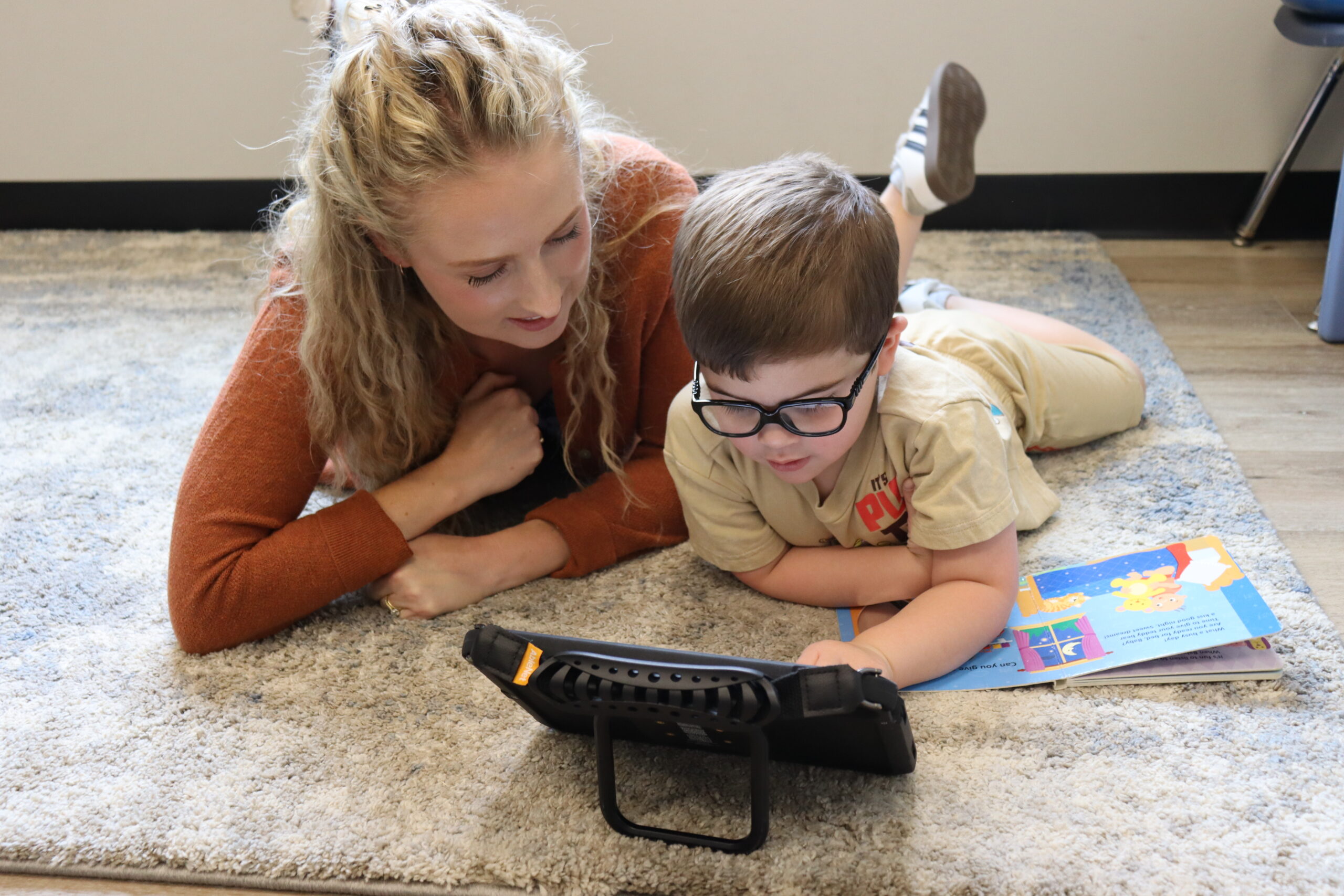
It is so important to expose children to reading from a young age. Shared book reading supports speech, language, and literacy skills in young children. There are so many books out there, though, that it can be overwhelming to choose which ones to read with your child. So use these four guidelines to pick the best books for early childhood learners, and you can feel confident the book will help your child learn and grow, and that they will love it too.
Best Books for Early Childhood Learners: Books With Movements
Children learn to imitate actions before they readily imitate words. As a result, building your child’s imitation of actions supports their ability to learn new speech sounds and words. Here are five books I recommend:
- Elmo Says by Sarah Albee and Tom Leigh
- Shake a Leg (Sesame Street) by Constance Allen and Maggie Swanson
- Shake My Sillies Out by Raffi
- From Head to Toe by Eric Carle
- Eyes, Nose, Fingers, Toes: A First Book All About You by Judy Hindley and Brita Granstrom
Best Books for Early Childhood Learners: Books With Sound Effects
Before children readily imitate words, they imitate sound effects. You can support your child’s language development by reading books with sound effects and encouraging your child to copy them. Here are five books I recommend:
- Poke-a-Dot: Old MacDonald’s Farm by Melissa and Doug (or any Poke-a-Dot book)
- Moo, Baa, La La La by Sandra Boynton
- Noisy Things That Go by Libby Walden and Tiger Tales (or any book in this series)
- The Can You Say It Too? series by Sebastien Braun
- Roadwork by Sally Sutton
Best Books for Early Childhood Learners: Interactive Books
Because little ones have short attention spans, we want to teach them that reading is fun, not boring. So the best way to keep them engaged is with interactive books. Here are five books I recommend:
- Wheels on the Bus by Paul O. Zelinsky: this book has moving parts, so it is great for imitating actions from the song.
- Peekaboo: Bear (Peekaboo You) by Camilla Reid (or any book in this series, or any flap or slide book): children love sliding open the flaps and seeing themselves in the mirror at the end.
- Press Here by Herve Tullet: this book feels like magic, because when your child follows the directions to touch certain things on the page, “magic” happens on the next page.
- That’s Not My Dinosaur by Fiona Watt (or any in this series, or any touch-and-feel book): children feel different textures, and they build descriptive vocabulary, like shiny, squishy, and rough.
- Busy Train Book by Fiona Watt: this book comes with a wind-up train that travels along tracks in the pages. Also, you can use it to teach location words like “next to” and “around.”
Best Books for Early Childhood Learners: Pre-Reading Skills
Pre-reading skills include rhyming, noticing parts of words and the sounds they make, counting syllables, and learning letter names and numbers. Together, most of these fall under phonological awareness, which is a crucial early step toward becoming a strong reader. Here are seven books that foster pre-literacy and language development:
- Chicka Chicka Boom Boom by Bill Martin Jr. and John Archambault: colorful illustrations, the alphabet, and fill-in-the-blank rhymes make this a great read, since it works for any little one.
- Goodnight, Goodnight, Construction Site by Sherri Duskey Rinker and Tom Lichtenheld: big-machine fans will love saying goodnight to the equipment, while parents will enjoy the rhyming text.
- One Fish, Two Fish, Red Fish, Blue Fish by Dr. Seuss: this classic is good for rhyming awareness, and it also builds descriptive language and imagination.
- Jamberry by Bruce Degen: this is a silly tale of a boy and a friendly bear on a journey to make jam, with playful language and rhymes.
- Five Little Monkeys Jumping on the Bed by Eileen Christelow: a classic rhyme that invites participation, wordplay, counting, and cause and effect.
- Brown Bear, Brown Bear, What Do You See? by Bill Martin Jr. and Eric Carle: once you have read it a few times, then pause after “What do you…” and let your child fill in “see!”
- Madeline by Ludwig Bemelmans: this classic also plays with descriptive language, rhyming, and story concepts like characters, setting, problem, and solution.
Frequently Asked Questions
How often should I read with my toddler or preschooler?
Aim for a little every day. For example, even 10 to 15 minutes of shared reading adds up, and it works best when your child is interested and having fun.
Should I read the words or just talk about the pictures?
Both are helpful, because talking about the pictures, pausing for your child to fill in a word, and copying sounds and actions all build language, so don’t worry about reading every word.
When should I worry about my child’s speech or language?
If your child is not using words as expected for their age, is hard to understand, or has trouble following simple directions, then a consultation can help you decide whether an evaluation makes sense.
How ETLC Can Help
Because early skill building matters for a child’s speech, language, and literacy skills, and fun, interactive books are a great way to help, so if you have questions or concerns, our team is here to help. Enrichment Therapy & Learning Center has locations in Johnston and North Liberty, IA, with virtual services also available.
Learn more about speech-language therapy at ETLC or schedule a free consultation to talk with a member of our team.
You may also find these pages helpful:
- Using Books for Speech and Language Practice: Ideas for Parents
- What Are Adapted Books?
- Prepare Your Preschooler for Reading
About the Author
Sonia Strueby, M.A., CCC-SLP, is the founder of Enrichment Therapy & Learning Center. With over 25 years of experience as a speech-language pathologist, Sonia has dedicated her career to helping children overcome complex communication and academic challenges. She has advanced training and a special focus on treating dyslexia and childhood apraxia of speech, and she is passionate about providing families with a clear path to success.


0 Comments