

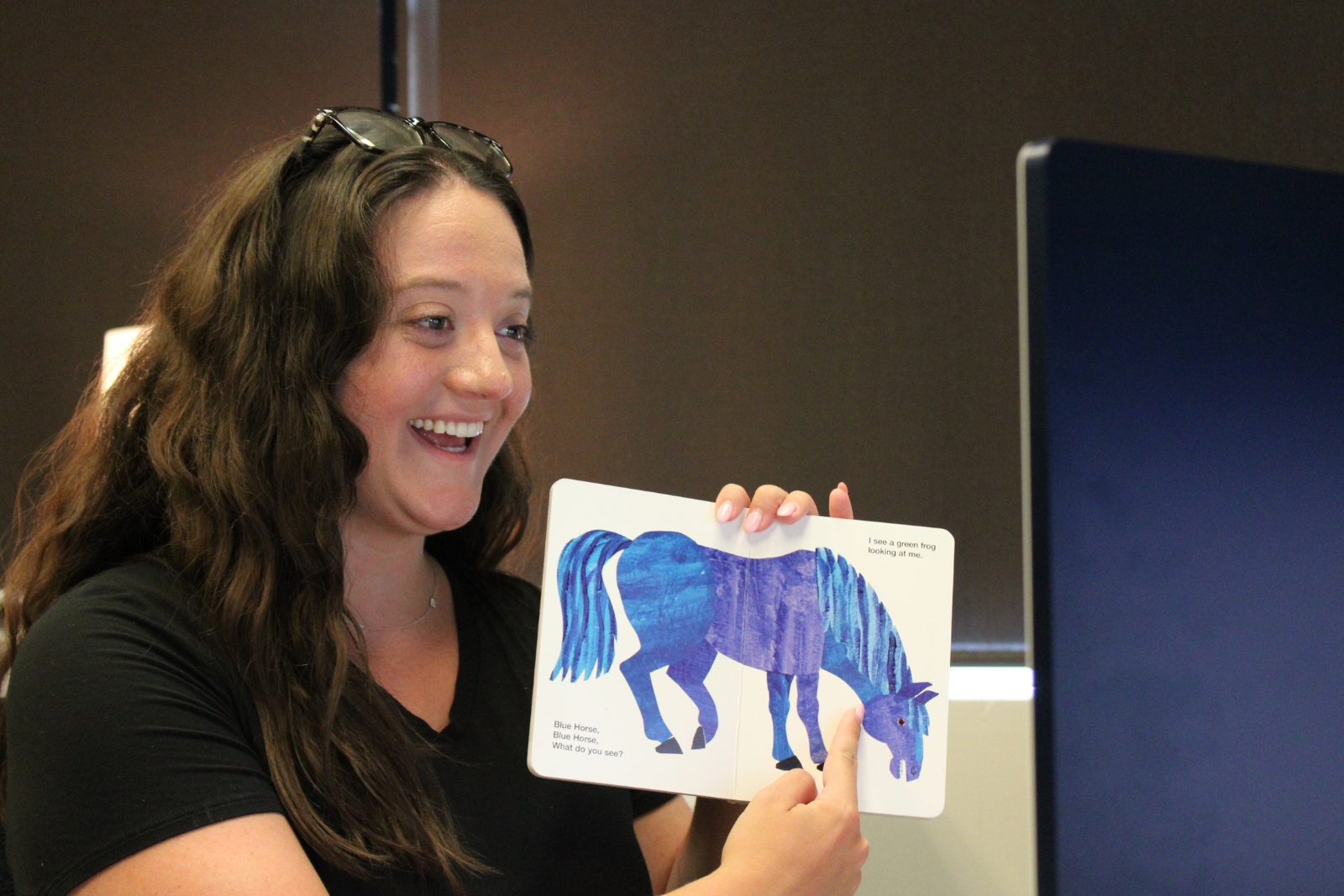
“How do I choose a book for my child? Is this the right level? What series do you recommend?” We’ve heard these questions many times. It can feel overwhelming to walk into a library or bookstore hoping to find a book your child will enjoy, one that is age-appropriate, not too easy, not too difficult, and maybe even something they’ll read on their own. We get it, and here are six tips to make choosing a book for your child a little less daunting.
1. Do Your Research
Before you arrive at the library or bookstore, know the layout. Head to the section where you expect to find books at the right level. Most bookstores have sections for picture books, board books, easy readers, fiction and chapter books, nonfiction, and audiobooks.
Doing your research also means asking your child’s teacher or checking a recent progress report to see what level of books your child has been reading. Levels vary by program, but they give you a general idea of where to start. Many schools use the Developmental Reading Assessment (DRA) or the Fountas and Pinnell system, which is also called Guided Reading. If you aren’t sure what your child’s scores mean, our post on making the most of parent-teacher conferences has questions to ask. You can also check the Scholastic Book Wizard to find book ideas before you step into the store.
2. Know Your Child’s Reading Skills
Four skills affect how easy a book will be for your child:
- Accuracy: how well your child pronounces each word in the story
- Rate: how long your child takes to read a story
- Fluency: a mix of accuracy and rate
- Comprehension: how well your child understands details, main ideas, and inferences in what they read
For more on these skills, see our post on reading rate, comprehension, and accuracy.
3. Test Your Child’s Reading in the Moment
Choose a book that fits your child’s interests, then open it to the middle. Have your child read the page, and mentally note any words they misread. We want children to read most words with little effort. If your child is sounding out every word on the page, the book may be too hard. If they zip through the page without errors, try something a little harder.
4. Check Your Child’s Comprehension
Ask your child to tell you about the page they just read. Can they give you the general storyline or the main idea? Choose a book at your child’s comprehension level, not only their grade level, because without understanding, a book is just words. In kindergarten through second grade, students are learning to read, and in third grade and beyond, they are reading to learn. If your child is behind in reading by third grade, it can be harder for them to keep up in other subjects.
5. Support Your Child’s Interests
If your child has their heart set on a specific book, get it. If it’s too hard for them to read alone, tell them you can’t wait to read it aloud together. Then pick up some books your child can read on their own as well. Choosing books that match their interests, or what is happening in the world right now, makes reading more interesting. The Scholastic website has book lists you can browse by grade level and genre or theme.
6. Talk About the Book
Kids learn best when they hear, see, and experience topics in more than one way. After reading, try drawing pictures related to the story, watching a movie or documentary on the same topic, or asking who, what, where, when, and why questions. The more kids learn about a topic, the more they tend to care about it.
Frequently Asked Questions
What if my child can’t read the book they want?
Read it aloud together. Reading aloud lets your child enjoy a harder book, and you can also pick up books at their reading level for independent reading.
What if my child seems to be struggling with reading fluency or comprehension?
It helps to look into it early. If a reading delay is caught early, it can often be addressed with specialized reading instruction. When a child keeps struggling, reading can start to feel like a chore, and their confidence may drop.
Are audiobooks okay?
Yes. Audiobooks can be a good way to build vocabulary and enjoyment of stories, especially for struggling readers. Read more in our post on audiobooks for struggling readers.
How ETLC Can Help
If you feel your child isn’t reading at the level they should be, our team is here to help. We have worked with many families to build foundational reading skills and confidence. Enrichment Therapy & Learning Center has locations in Johnston and North Liberty, IA, with virtual services also available.
Learn more about reading support at ETLC or schedule a free consultation to talk with a member of our team.
You may also find these pages helpful:
- Build Reading Skills at Home: 5 Ways to Help
- Encourage Reading Comprehension in 3 Key Steps
- The Best Books for Early Childhood Learners
About the Author
Sonia Strueby, M.A., CCC-SLP, is the founder of Enrichment Therapy & Learning Center. With over 25 years of experience as a speech-language pathologist, Sonia has dedicated her career to helping children overcome complex communication and academic challenges. She has advanced training and a special focus on treating dyslexia and childhood apraxia of speech, and she is passionate about providing families with a clear path to success.

0 Comments