

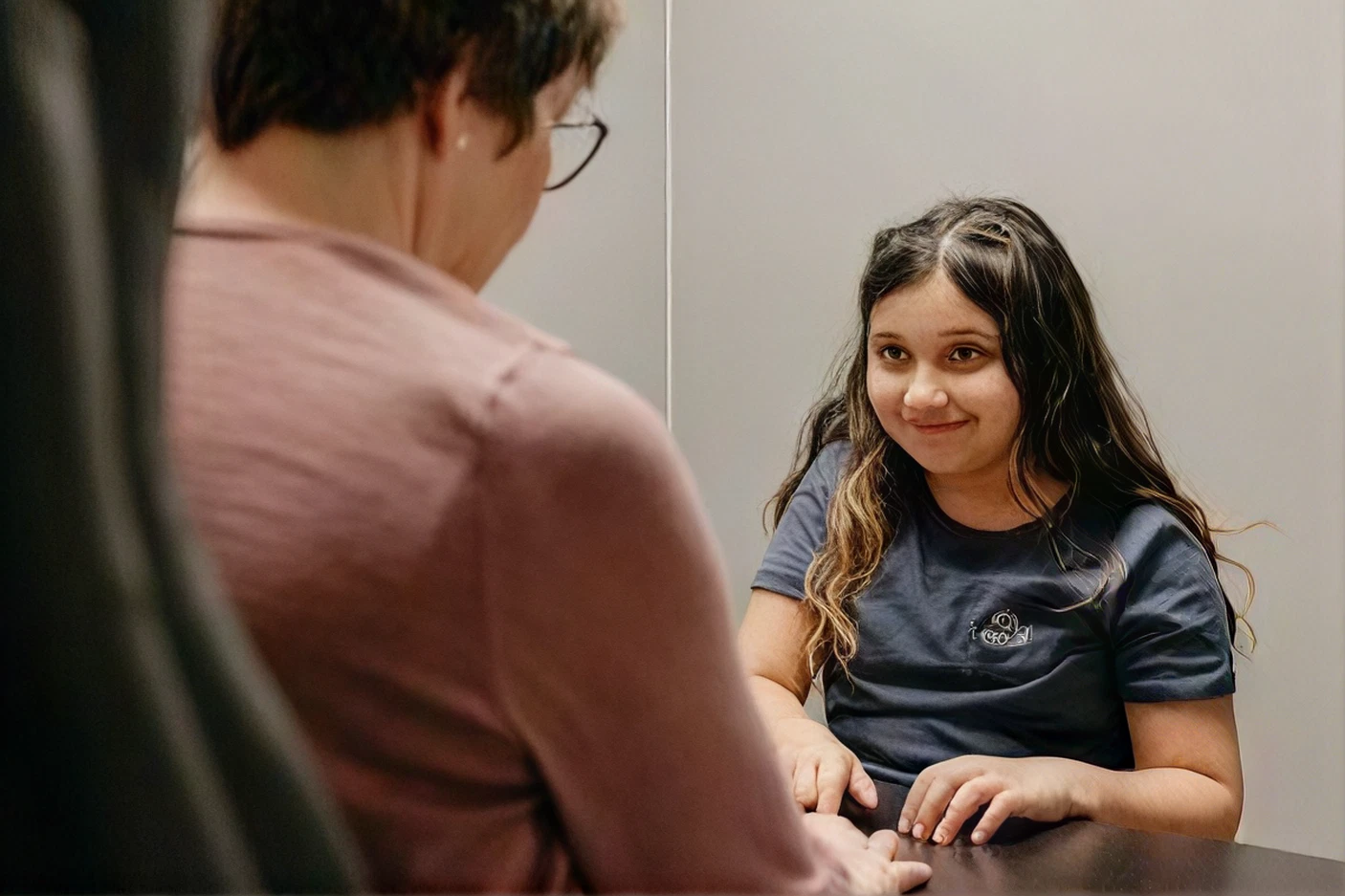
In any relationship, conflict will happen. Learning how to understand and solve social conflicts is an important life skill that helps your child build and maintain meaningful, lasting friendships. This skill often isn’t explicitly taught in a classroom, yet for many children and adults, the rules of the social world can feel confusing. When you discuss thoughts, feelings, and behaviors openly, and how they connect, you build social perspective-taking skills and help your child work through conflicts.
Michelle Garcia Winner and Pamela Cooke developed the Social Thinking Curriculum, and many of the concepts below can be credited to their work.
Step 1: Understand Thoughts and Feelings
First, make sure your child understands what thoughts and feelings are and how the two differ.
What Is a Thought?
Thoughts are quiet words or pictures in our brain. We can often tell what someone is thinking about by following their gaze, since people are usually thinking about whatever they are looking at.
What Is a Feeling?
Feelings form in our brain but show up in our body. Try acting out different emotions, like happy, sad, or angry, and ask your child to notice how their body feels during each one.
We have thoughts and feelings even when we are alone. For example, while reading a favorite story to ourselves, we might be thinking about the story and feeling happy at the same time. We also have thoughts and feelings when we are with others, because we form them about other people based on what they look like, say, and do. In turn, other people form thoughts and feelings about us the same way, and those can be good, neutral, or bad. Because of this, if we want to make and keep friends, it helps to do and say things that leave others feeling good and thinking kindly of us.
Step 2: Practice Social Perspective Taking
To solve a social conflict, your child needs to guess what thoughts or feelings others might be having. When your child tries to take someone else’s perspective, talk through these questions:
- Consider the situation, who is involved, and the words, behaviors, and facial expressions you noticed.
- Think about what you already know about the people involved.
- Ask whether you have had a similar experience, and how you felt in that situation.
By combining what we know about the situation, the people involved, and our own life experiences, we can make an educated guess about how someone else feels and thinks. Use these questions to help your child guess how the other people in the conflict might feel.
Step 3: Put It Together With the Behavioral Chain Reaction
Our actions toward others shape their thoughts and feelings. Those thoughts and feelings shape how they act toward us, which then shapes how we feel about ourselves.
Start by helping your child identify their own behavior that led to the conflict, and place that in the first column of a chart. Then help them fill out the rest of the chart so they can see how their behaviors, thoughts, and feelings connected during the conflict.
Next, fill out the chart again, this time listing potential solutions in the “my behavior” column. Help your child brainstorm behaviors they could try, placing each one in the first column. Then work through the rest of the chart for each option and help them choose the best one.
Six Ways to Help Your Child Make Lasting Friendships
Building friendships is an important part of a child’s social development. Along with the steps above, these six strategies support positive connections with peers:
- Teach and discuss social skills. Active listening, sharing, and empathy form the foundation for successful interactions.
- Be a positive role model. Children often learn by example, so model good communication, cooperation, and kindness.
- Facilitate play opportunities. Playdates provide a relaxed setting where friendships develop naturally, so offer a variety of activities that fit different interests.
- Discuss conflict resolution. Help your child understand that conflicts are a normal part of friendships, and teach them to express feelings calmly, listen actively, and find compromises. Create an open environment where they feel comfortable talking about challenges, and then work together to resolve the conflict.
- Support extracurricular activities. Sports, arts, and clubs let kids connect with peers who share similar passions.
- Build self-confidence. Highlight your child’s strengths and accomplishments, because a confident child is more likely to start social interactions and approach new friendships positively.
Frequently Asked Questions
At what age can my child start learning to solve social conflicts?
Children can begin learning about thoughts and feelings as early as the preschool years, using simple language and play. The chart and perspective-taking questions work best once children can talk about what happened, which is often in the early elementary years.
What if my child doesn’t want to talk about the conflict?
Wait until everyone is calm, and keep the conversation low pressure. Some children open up more while drawing, walking, or playing, so try talking in a relaxed setting. You can also start with a story or movie character’s conflict before moving to your child’s own.
When should I seek help for my child’s friendships?
If your child has trouble understanding thoughts and feelings, keeps running into the same conflicts, or struggles to make and keep friends despite practice at home, extra support can help. A speech-language pathologist can work directly on these skills.
How ETLC Can Help
If you have tried these steps at home but feel your child could use more help understanding thoughts, feelings, and how to maintain strong relationships, our specialists can work directly with your child on solving social conflicts. They also give your child chances to practice in a supportive environment. Enrichment Therapy & Learning Center has locations in Johnston and North Liberty, IA, with virtual services also available.
Learn more about social skill development at ETLC or schedule a free consultation to talk with a member of our team.
You may also find these pages helpful:
- Boost Social Skills: Activities to Try at Home
- Help Your Child Talk to New People
- How to Help Your Child Manage Big Emotions and Anxiety
About the Author
Sonia Strueby, M.A., CCC-SLP, is the founder of Enrichment Therapy & Learning Center. With over 25 years of experience as a speech-language pathologist, Sonia has dedicated her career to helping children overcome complex communication and academic challenges. She has advanced training and a special focus on treating dyslexia and childhood apraxia of speech, and she is passionate about providing families with a clear path to success.

0 Comments