

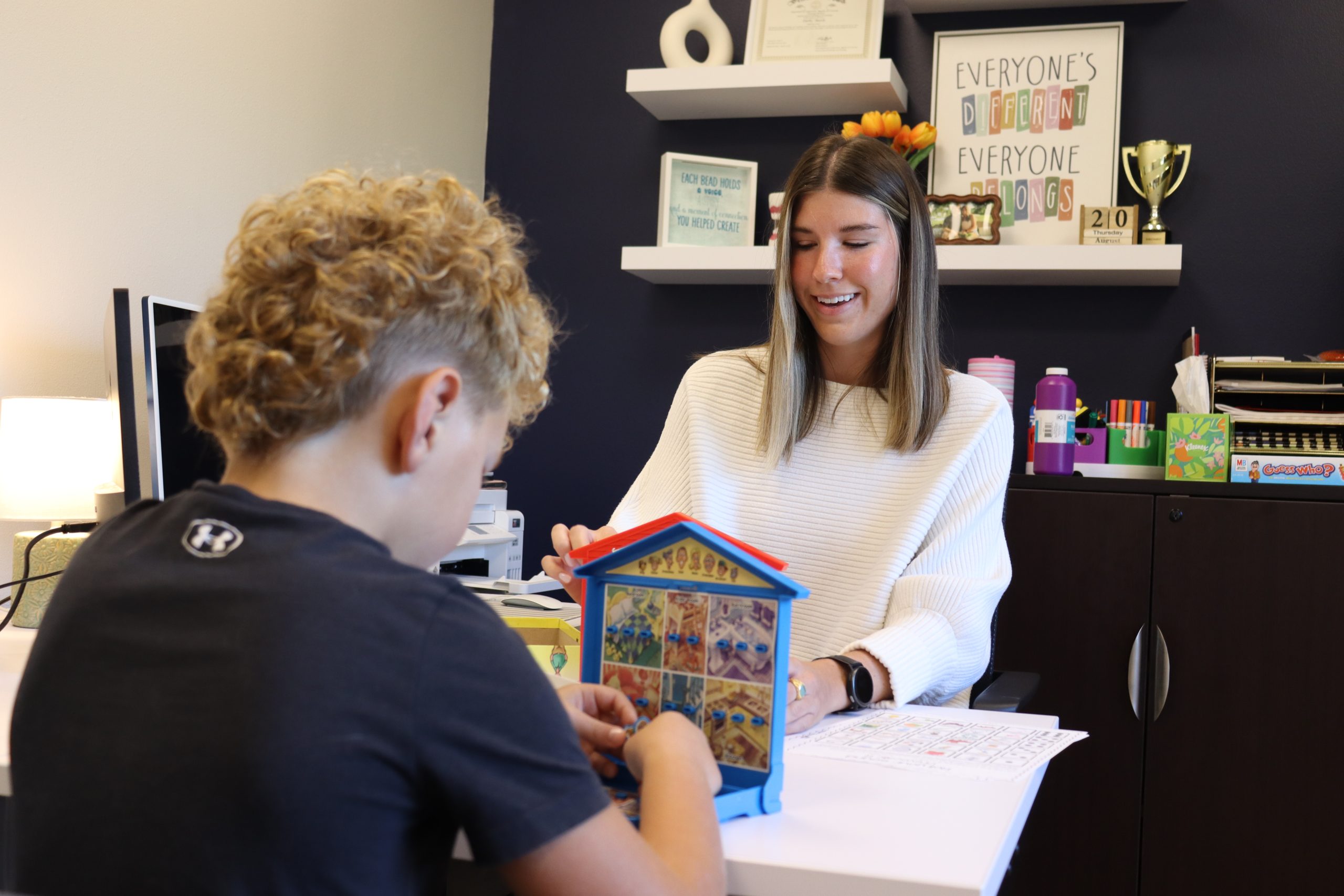
Social skills develop through everyday interaction, so it’s worth building intentional opportunities for connection into your child’s routine. If you’re looking for simple social skills activities to try at home, this guide covers play, games, books, movies, science experiments, and community events. Each one is easy to fit into the day, and each helps your child practice talking, listening, and understanding others.
What Is Social Communication?
Social communication goes by many names, including pragmatic language, social language, social skills, social thinking, and social cognition. It means using language for a variety of reasons, changing language based on the environment, and following “hidden” rules in conversation. We use language to ask questions, get our needs met, and share our emotions. We also use different language depending on who we are talking to. For example, a child might tell a teacher about a birthday party very differently than they tell a friend.
Social communication matters because it helps children build relationships and succeed in school. It begins at birth, and the chart below shows social communication milestones up to age 6.
Build Early Social Skills Through Play
For younger children, play is a great tool for developing social communication. Simply playing with your child can improve their social skills, and it teaches them to take turns, be a good sport, and communicate appropriately with others.
- Peek-a-boo and other social games: build in anticipation by waiting with excitement, which gives your child the chance to start the game. They may initiate by babbling, grabbing your hands to put them over your eyes, or saying “more.”
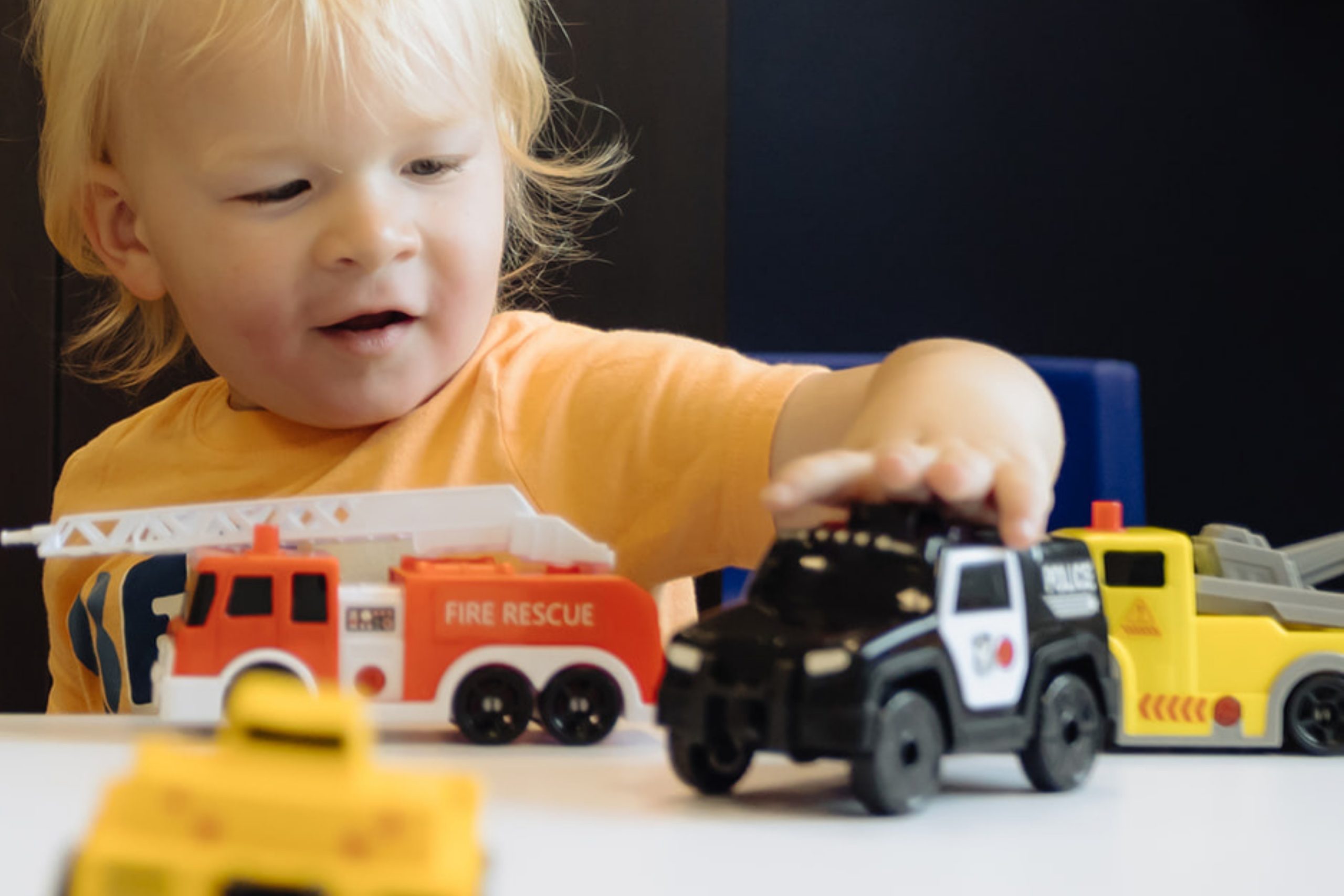
- Turn-taking: turn-taking in play is the foundation for turn-taking in conversation. Take turns blowing bubbles, sending a car down a ramp, or throwing a ball, and say “my turn” and “your turn” while you point. If your child has trouble sharing, use two similar toys and trade them to practice taking turns.
- Pretend play: it helps children understand the social world. Start simple, like feeding stuffed animals with bowls and spoons. Then try a pretend birthday party, with a play-dough cake and a birthday song.
Games That Build Social Skills
Almost any turn-taking activity works for younger kids. Alternate stacking blocks onto a tower, or take turns adding pieces to a puzzle. Learning to share and cooperate with siblings or adults is a first step in understanding the social world.
- Younger children: simple games like Candyland are a good start. If your child needs practice working together, try cooperative games like Feed the Woozle or Snail Pace Race.
- Older children: charades practices sending social messages without words, and Guess Who? builds simple conversation and question asking. Sorry is a good choice for practicing being a good sport when winning and losing. Apples to Apples and Hedbanz encourage perspective taking, because players think about what others would find funny or interesting.
Books and Movies That Start Social Conversations
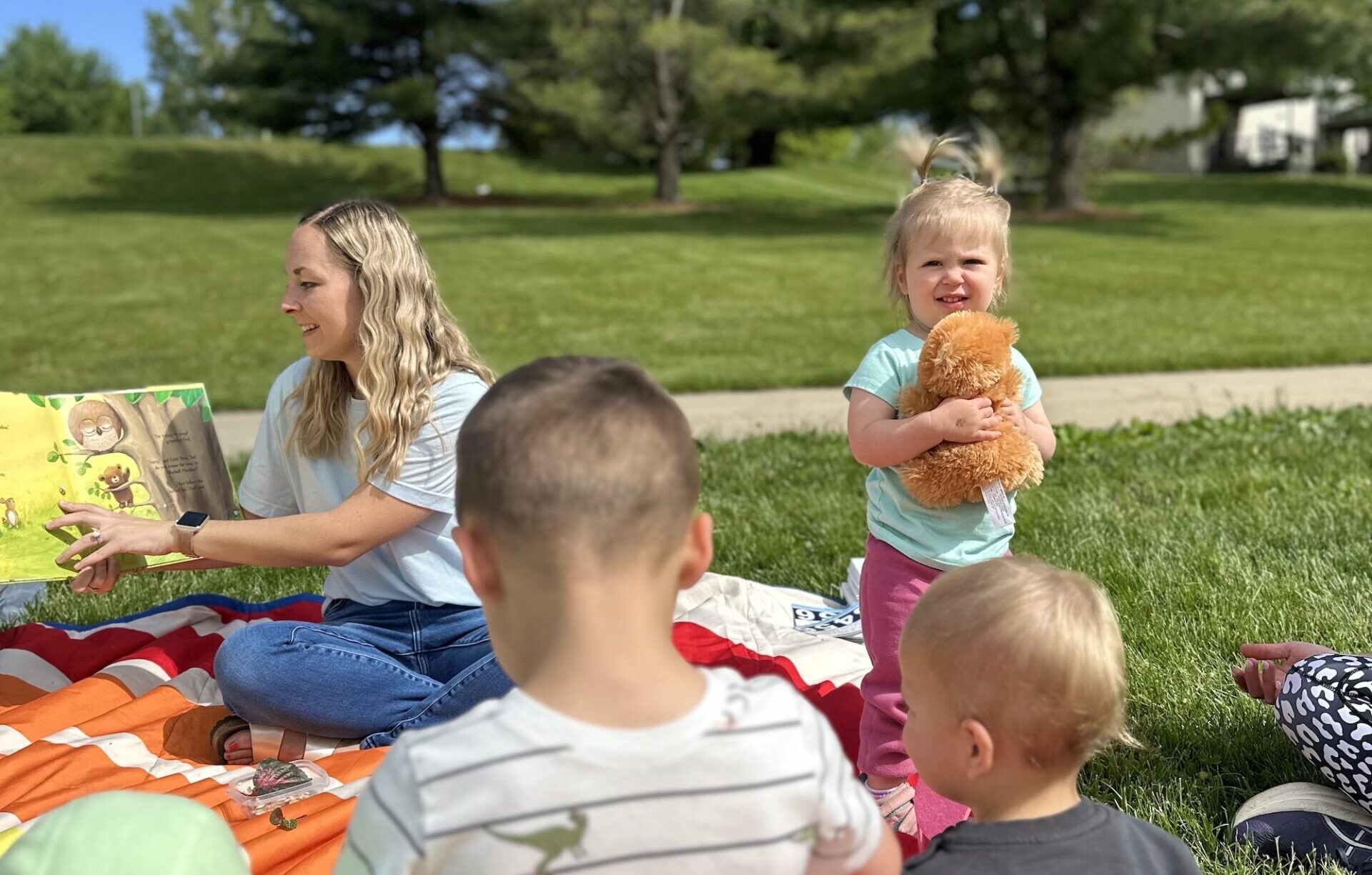
Reading stories together is a great way to talk through perspective taking, conflict resolution, and emotions. While you read, pause to talk about how the characters might be feeling and whether your child would react the same way. You can also invite your child to come up with a solution when two characters are in conflict. A few picture books that lend themselves to these discussions:
- I Was So Mad by Mercer Mayer
- My Space Your Space by Sandra Athans
- Join In and Play by Cheri J. Meiners
- Unicorn and Horse by David W. Miles
For older kids, movies can be an engaging way to tap into social conversations. Elf is a favorite of ours. Buddy the Elf grew up at the North Pole, so when he arrives in New York City, his social knowledge is lacking, to say the least. Each time he acts outside of social norms, pause the movie and talk about the thoughts and feelings of the people around him. Encourage your child to use their eyes to see facial expressions and body language, their ears to hear tone of voice, and their brain to think about what a character is thinking or feeling.
Practice Conversation and Perspective Taking
For older children, talking about thoughts and feelings is a good place to start. Introduce the idea that other people have thoughts and feelings too, because identifying the thoughts and emotions of others is important for social language development.
You can also practice turn-taking in conversation with a ball. When you have the ball, it is your turn to speak. Before you start, explain the difference between a comment and a question, and keep track of how many of each every player makes during the game.
Use Science Experiments to Practice Social Skills
If your child loves to mix, measure, and build, science experiments are a fun way to practice social skills. To succeed, children have to work as a team and communicate clearly.
- Requesting help: while reading the directions, your child may discover that they need help finding materials. Prompt them to ask for help in a specific, appropriate way.
- Compromise: experiments offer many chances to make choices and compromise. In the expanding balloon experiment from PBS Parents, children can agree on who adds the vinegar to the bottle and who adds the baking soda to the balloon.
- Compliments: model specific, direct compliments, such as “I love how you read all the directions before starting step one. Nice work!” Your child learns what they did well and why, and then they can practice giving compliments to others.
Join Community Events and Stay Connected
Community events give your child chances to interact with others. Team sports, story time, craft time at the library, swimming at the community pool, a visit to the zoo, or a playdate with a neighbor all work. This is especially valuable for kids who aren’t regularly around other children their age, such as those who are homeschooled or not yet school age.
If your child can’t see peers in person, think creatively. Virtual playdates can include cooperative games you can play over video chat with screen sharing, like Connect Four, Foosball, Checkers, and Snakes and Ladders. Writing letters is another option, so consider finding a pen pal or mailing cards and pictures to loved ones.
Frequently Asked Questions
What social skills should my child have by age 6?
Social skills build gradually from birth, starting with eye contact and social games, then turn-taking, pretend play, and conversation. The milestone chart above shows what to expect at each age. Every child develops at their own pace, so use it as a guide instead of a checklist.
My child plays alone. Is that a problem?
Some children prefer solo play, and that can be perfectly normal. However, if your child avoids peers, has trouble taking turns, or seems frustrated by interactions with other kids, extra practice or support may help.
When should I seek help for my child’s social skills?
Consider an evaluation if your child struggles to make friends, take turns, or understand how others feel despite practice at home. Speech therapists provide pragmatic language therapy both one-on-one and in groups. Individual sessions target specific skills like turn-taking, conversation, and perspective taking, while group sessions give your child a supported place to practice with peers.
How ETLC Can Help
If you need extra support, our specialists work one-on-one with your child on the specific social skills they are struggling with, and give them chances to practice in a safe, supportive environment. Enrichment Therapy & Learning Center has locations in Johnston and North Liberty, IA, with virtual services also available.
Learn more about social skill development at ETLC or schedule a free consultation to talk with a member of our team.
You may also find these pages helpful:
- How to Help Your Child Solve Social Conflicts
- Help Your Child Talk to New People
- Social Struggles During the Holidays
About the Author
Sonia Strueby, M.A., CCC-SLP, is the founder of Enrichment Therapy & Learning Center. With over 25 years of experience as a speech-language pathologist, Sonia has dedicated her career to helping children overcome complex communication and academic challenges. She has advanced training and a special focus on treating dyslexia and childhood apraxia of speech, and she is passionate about providing families with a clear path to success.

0 Comments