


Originally Published: October 11, 2023 | Updated: October 5, 2026
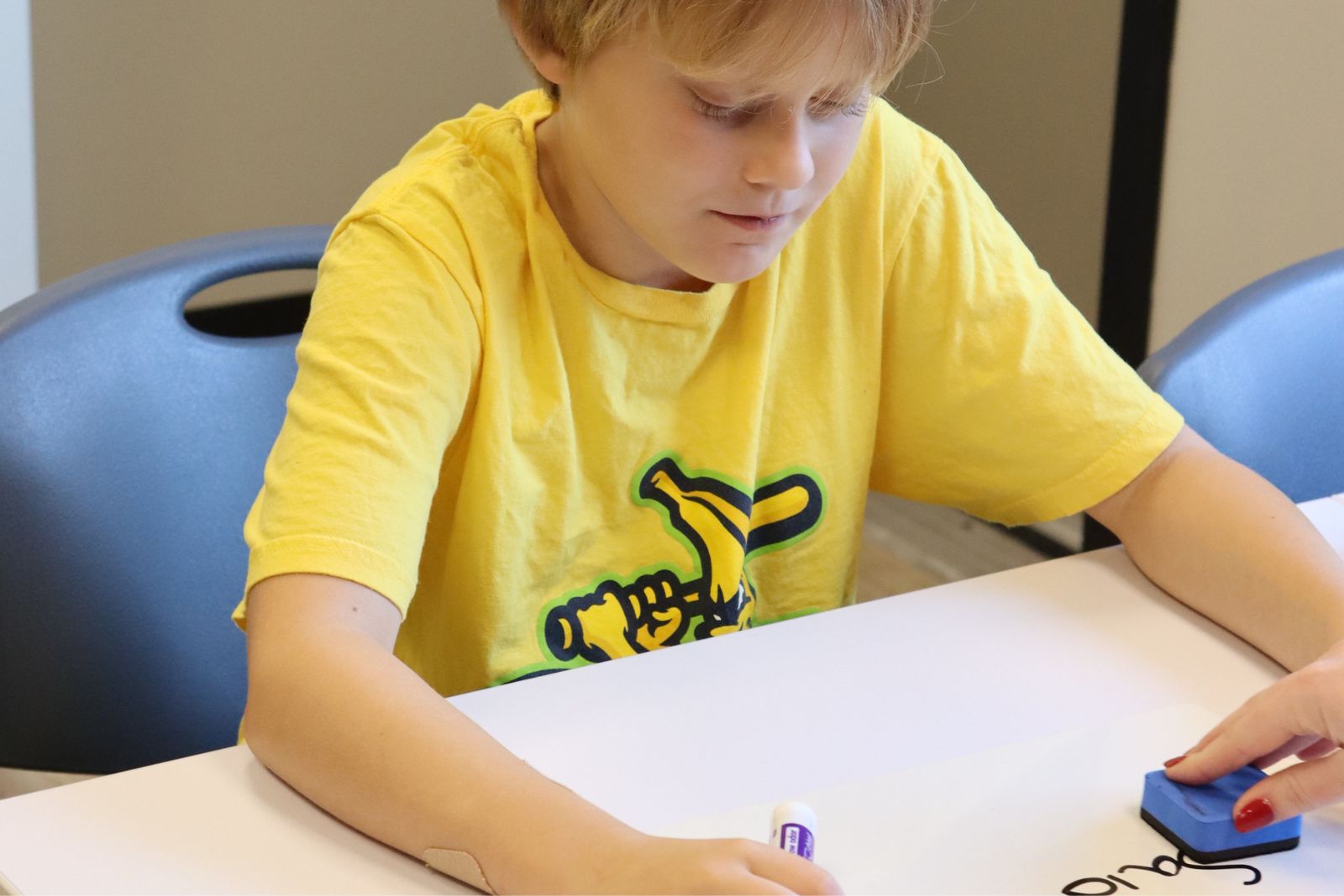
I often hear people ask, “Does handwriting really matter anymore, now that students are using computers earlier and earlier? Can’t they just learn to type?” These are great questions, but why handwriting matters goes far beyond just improving legibility.
Let’s look at the ways handwriting connects to other academic skills.
Visual Recognition of Letters
Handwriting plays a large role in the visual recognition of letters. Rapid letter recognition is key for developing readers, since students need to see a letter and quickly recall its name and sound as they learn to “sound out” words.
If a student’s brain takes too long to recall each letter, their working memory may not hold all the individual sounds in the word long enough to blend them back together and read it.
The good news is that learning letter formation through handwriting provides multisensory input that helps students remember letters long-term, with greater automaticity. According to a 2024 Frontiers in Psychology study, forming letters by hand creates more widespread brain connectivity than typing does. Think about it this way: if you were learning a new Chinese symbol, would you remember it better by forming it with a pencil, or by pushing a button with that symbol on it?
Improve Expressive Writing
Automatic handwriting leads to better expressive writing. Imagine trying to write an email, a quick note before running out the door, or even a five-paragraph essay if you had to consciously think about forming every single letter.
When students form letters automatically, they can devote more cognitive resources to other important parts of writing, like grammar, spelling, sentence structure, and ideas. Expressive writing already takes a massive amount of brain power for students. Why spend that effort on letter formation too?
Avoid Future Difficulty With Typing
Children with handwriting difficulties may also struggle with typing. Some students who find handwriting hard don’t automatically succeed just because they’re given the option to type instead.
Difficulties with memory and attention that affect handwriting can also make learning to type harder. If we notice a student struggling with handwriting, it’s worth thinking early about how to support them as they begin typing, but that doesn’t mean abandoning handwriting intervention altogether.
Limit the Frequency of Letter Reversals
Building a “motor plan” for letter formation can help reduce letter reversals. Honestly, someone should have a stern conversation with whoever decided to make lowercase b, d, and p look and sound so much alike.
Thankfully, the skills students learn while writing these letters also help them read them accurately. If a child knows that a “d” starts with a “magic c,” goes up like a helicopter, and comes back down to bump the line, they’ll be far less likely to write a “b” when they mean “d.”
The more consistently they write letters the correct way, the less likely they are to reverse them when reading and spelling.
Create a Plan for Success With ETLC
Overall, reading, spelling, handwriting, typing, and writing are all linked and shape one another. Working on handwriting consistently for short amounts of time, even just 10 minutes a day, can set students up for success across several academic skills.
At Enrichment Therapy & Learning Center, we can help students who are struggling with handwriting and build an individualized plan for success. For more on our handwriting approach, check out our post on helping a child struggling with handwriting, or contact our team to learn more.


0 Comments